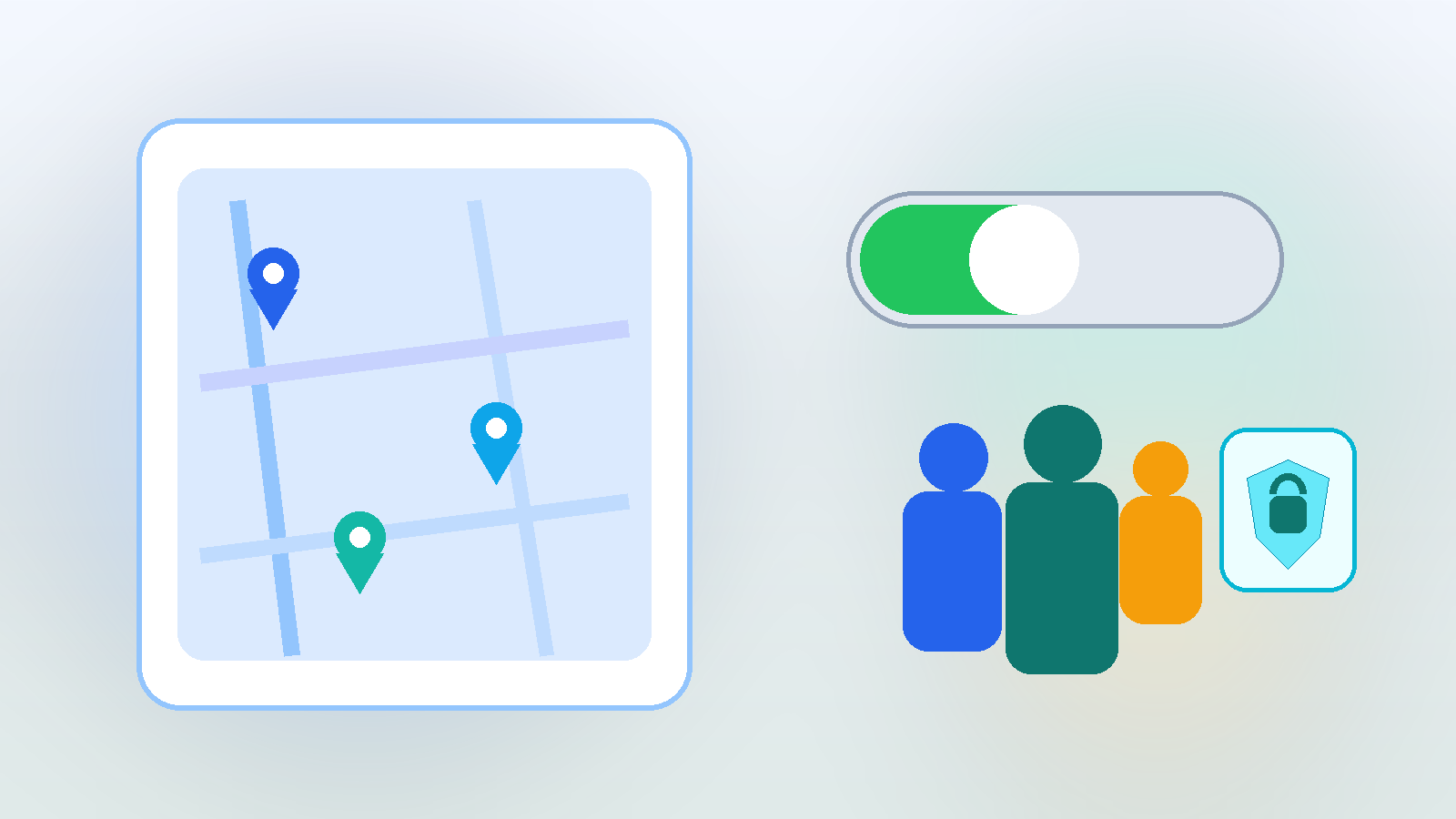
Family location sharing can be genuinely useful. It helps parents confirm that a child got to practice, lets a spouse know the other person is still on the road, and makes it easier to coordinate pickups when plans shift at the last minute. In the right context, it reduces friction and adds peace of mind.
The trouble starts when a practical safety tool quietly becomes permanent background surveillance. A feature that feels reassuring during travel or emergencies can become invasive when it stays on all the time without clear boundaries. Families usually do better when location sharing is treated like a situational tool, not a default entitlement.
Useful Does Not Mean Unlimited
Location sharing often gets framed as a simple choice between safety and privacy, which is a lazy way to think about it. Real family life is more nuanced than that. A teenager walking home after a late event is different from a teenager sitting in class. A partner on a road trip is different from a partner trying to have a quiet hour without being tracked by default.
That is why families need rules about when location sharing helps and when it stops being appropriate. The point is not to reject the feature. The point is to keep it aligned with actual needs instead of letting the app decide the social norm.
School Time Is Not the Same as Travel Time
Many parents turn on location sharing for a good reason, then forget to revisit the setting once the immediate reason passes. Over time, that can normalize checking on someone who is simply going through an ordinary school day. For younger children, some visibility may make sense. For older kids, constant passive monitoring can create tension without adding much real safety.
A better approach is to tie the setting to context. Big transitions, late pickups, long drives, public events, and unfamiliar routes are strong reasons to use it. Sitting in algebra class usually is not. Families that name the difference out loud tend to build more trust than families that leave the setting permanently enabled and never discuss it again.
Sleep and Downtime Need Privacy Too
Tech boundaries are not only for children. Adults also deserve parts of the day that are not quietly translated into data points for everyone else. If someone is home for the night, asleep, or simply having private downtime, constant location visibility often adds more habit than value. People should not have to justify every still moment on a map.
This matters because family trust is shaped by defaults. When every movement is visible all the time, it becomes easy to ask low-value questions just because the information exists. That can make normal life feel strangely audited. A small off switch restores the idea that care does not require perpetual observation.
Private Time Is Not Suspicious Time
One of the worst habits around location sharing is treating any desire for privacy as proof that something is wrong. That logic poisons the entire tool. Wanting space, wanting to meet a friend without commentary, or wanting a quiet errand without live updates is not the same thing as deception. Healthy families leave room for ordinary privacy.
If the household rule implies that turning off sharing always triggers conflict, then the feature is no longer serving coordination. It is serving control. That is the moment to step back and reset expectations before resentment becomes the real outcome.
Make the Boundaries Simple Enough to Use
Most families do not need a giant policy document. They need a rule simple enough to remember in real life. For example: use location sharing for travel, pickups, and unusual situations; turn it off during normal school hours, sleep, and routine private time unless everyone agrees otherwise. That kind of rule is practical because it matches actual use cases.
- Turn sharing on for rides, events, late arrivals, and unfamiliar destinations.
- Review which apps have location access and whether they really need it.
- Talk about what counts as a normal privacy window instead of making people guess.
- Revisit the settings after emergencies so temporary tracking does not become permanent habit.
Those steps are not complicated, but they do something important. They make the feature intentional again. Intentional tools create confidence. Unexamined defaults create friction.
Final Takeaway
Family location sharing works best when it is tied to specific moments that actually benefit from visibility. It works worst when it becomes a silent expectation that everyone should always be trackable. Safety matters, but so does dignity, and strong households need both.
The smart default is not “always on” or “never use it.” It is simpler than that: share location when the situation calls for coordination or protection, and keep an obvious off switch for school, sleep, and private time.
Leave a Reply