Tag: best-practices

  • Why Every Family Password Manager Needs a Home Base

    Why Every Family Password Manager Needs a Home Base

    A password manager is one of the best upgrades a family can make, but installing the app is only the beginning. The real test comes later, when someone gets locked out, a phone dies, a parent is traveling, or nobody can remember where the backup codes went.

    That is why a family password manager needs a home base. Think of it as the household system around the tool: who has emergency access, where recovery details live, and how everyone handles new accounts without sliding back into shared notes, reused passwords, or frantic text messages.

    The App Is Not the System

    Many families adopt a password manager after one bad scare, like a hacked email account or a forgotten streaming login. That solves the most visible problem, but it does not automatically create a reliable process for everyday life. A vault full of strong passwords can still become a mess if only one person understands how it is organized.

    The healthier mindset is to treat the password manager like shared household infrastructure. It should be easy enough for the least technical person in the home to use, recover, and trust. If the system only works when the “tech person” is available, it is not finished.

    Decide What Belongs in the Shared Layer

    Not every login should be visible to every person, but some accounts are clearly household assets. Internet billing, utilities, shared shopping accounts, school portals, streaming services, smart home administration, and travel bookings all create friction when they live inside one person’s private mental map.

    A good family setup usually includes one shared collection for true household accounts and private vault spaces for individual logins. That balance keeps personal boundaries intact while still making sure the important family accounts do not disappear into a single phone or browser profile.

    Build an Emergency Access Plan Before You Need One

    The worst time to talk about recovery is after someone has already lost a device or failed a two-factor challenge too many times. Families should decide in advance who can request emergency access, how long the waiting period should be, and which accounts matter most in a real problem.

    This is also where passkeys, backup codes, and recovery email addresses need attention. A password manager can store those details safely, but only if the family intentionally puts them there and keeps them current. Otherwise the vault holds the front door key while the real lockout happens somewhere else.

    Make New Accounts Follow the Household Rule

    Most password chaos does not come from old accounts. It comes from new ones created in a hurry. A coupon app gets signed up with the wrong email address. A smart home service gets attached to one phone. A school portal lands in a browser that nobody else uses. Over time, those little shortcuts become hidden dependencies.

    A simple family rule fixes a lot of this: if the account affects more than one person, it gets created from the shared system on day one. That means generating the password in the manager, deciding who needs access, and saving any recovery details before moving on. It takes an extra minute up front and saves a surprising amount of future frustration.

    Keep the Setup Simple Enough to Survive Busy Weeks

    The best family security routine is not the most advanced one. It is the one people will still follow when they are tired, late, or distracted. That usually means fewer exceptions, clearer naming, and a short recurring review instead of a giant once-a-year cleanup that never happens.

    • Review shared accounts whenever a new device or service is added.
    • Check that recovery methods still point to the right phone numbers and email addresses.
    • Remove old logins for services the household no longer uses.
    • Confirm that at least two trusted adults can reach the important family accounts.

    That checklist is short on purpose. Families do not need a security department. They need a routine that lowers stress instead of adding more of it.

    The Real Goal Is Resilience, Not Perfection

    A family password manager works best when it reduces dependence on memory, heroics, and one highly technical person. The win is not just stronger passwords. It is a calmer household where account access keeps working even when devices change, people are busy, or something goes wrong.

    That is what a home base provides. It turns a security app into a family habit, and family habits are what actually hold up under pressure.

  • QR Code Scams Are Getting Better: A Family Guide to Safer Scanning

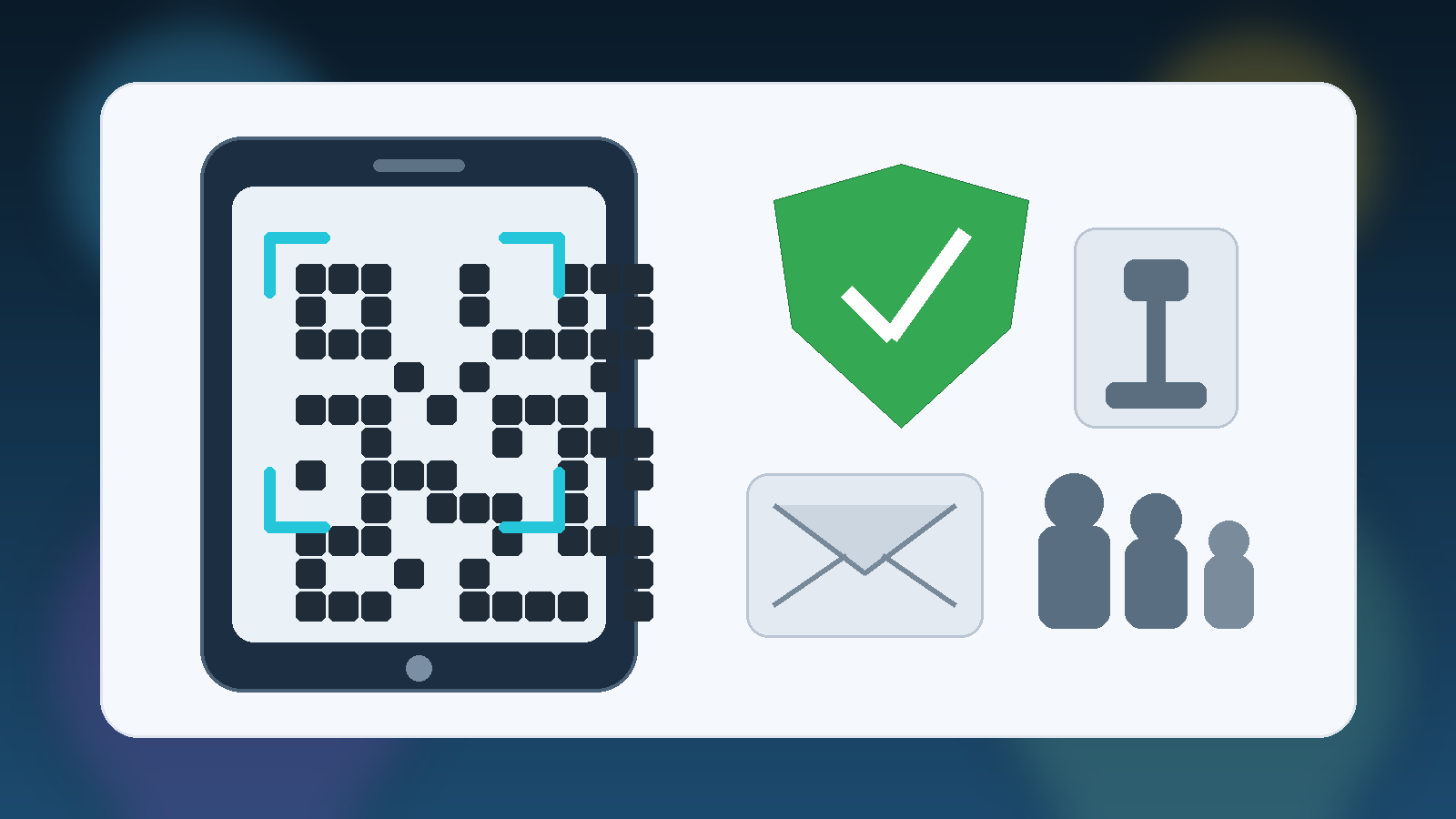
    QR Code Scams Are Getting Better: A Family Guide to Safer Scanning

    QR codes have become part of everyday life. Families see them on restaurant tables, parking meters, school flyers, utility notices, and random signs taped to storefront windows. That convenience is exactly why scammers like them. A QR code hides the destination until after the camera opens it, which means people often trust the square before they know where it leads.

    The good news is that safer scanning does not require technical expertise. Most of the protection comes from a handful of habits that slow the moment down just enough to avoid the obvious traps. If a family can learn not to click every suspicious email link, it can learn not to scan every convenient-looking QR code either.

    Why QR Codes Are Attractive to Scammers

    Phishing used to rely mostly on bad links in texts and emails. QR codes give scammers another delivery method that feels more physical and therefore more trustworthy. A fake sticker on a parking kiosk or a polished code in an email can look harmless because it does not resemble the usual blue underlined link people were taught to avoid.

    That is the trick: the code itself is not dangerous, but the destination may be. Once a phone opens the link, the victim can land on a fake payment page, a login prompt, or a download page designed to steal information. The code is just camouflage.

    Start With Context Before You Scan

    The first question is not ?Does this QR code work?? It is ?Why is this code here at all?? Context matters more than the graphic. A school event sign with a code that matches the school?s branding and appears in a place where families expect it is different from a lonely sticker slapped on top of another sticker at a parking meter.

    Families should get comfortable pausing for two seconds before scanning. If the code appears in an odd location, looks tampered with, or feels inconsistent with the situation, it is better to navigate to the organization?s official website manually. That tiny pause defeats a surprising number of scams.

    Preview the Link Instead of Opening It Blindly

    Many phones now show at least part of the destination URL before fully opening it. That preview is worth using. It gives people a chance to notice when a code claiming to belong to a bank, school, or payment service actually points somewhere unrelated or misspelled.

    This matters because scammers depend on speed. They want the user to act on autopilot, not to read carefully. Teaching kids and adults to inspect the web address before tapping through is one of the simplest upgrades a family can make, and it works whether the code came from a poster, an email, or a text message.

    Be Extra Careful With Payments and Logins

    QR codes become much riskier when money or credentials are involved. A code that opens a restaurant menu is one thing. A code that asks for a parking payment, a package redelivery fee, or a sign-in to ?confirm your account? deserves much more skepticism.

    A good family rule is simple: if scanning a code leads to a payment page or a login screen, stop and switch to a known-good path. Open the official app, type the trusted website manually, or use a bookmarked page. Scammers succeed by inserting themselves between the user and the legitimate service, so removing that shortcut is often enough to stay safe.

    Public Places Deserve More Suspicion Than Trusted Spaces

    Codes in public places are easier to tamper with. A scammer can place a fake sticker over the original code on a parking machine, a bulletin board, or a restaurant table. From a distance it still looks official. Up close, it may redirect to a convincing fake site that only exists to collect card details.

    That does not mean families should treat every public QR code as malicious. It means they should use more caution in places where anyone could have modified the sign. If there is any doubt, ask an employee, compare the code to the business?s official site, or skip the scan entirely.

    Kids Need a Rule, Not Just a Warning

    Telling kids ?be careful online? is too vague to help in the moment. A better rule is specific: do not scan codes that ask for money, passwords, downloads, or private information without checking with a parent first. That rule is easy to remember and covers most of the harmful cases.

    It also helps to explain why the rule exists. Kids are more likely to follow a safety habit when they understand the scam, not just the command. QR codes feel modern and harmless, so they need the same kind of suspicion families already apply to weird texts, pop-ups, and rushed requests.

    Use a Short Family Checklist

    If a household wants one repeatable system, this is enough:

    • Ask whether the code makes sense in that location.
    • Preview the destination before opening it.
    • Avoid entering passwords or payment details from a scanned link.
    • Use the official app or website instead when something feels off.
    • Teach kids to ask first when a code involves money, login details, or downloads.

    That checklist is short on purpose. Security habits only work if ordinary people will actually use them. A five-step routine that takes a few seconds is much more realistic than expecting families to become amateur forensic analysts.

    Final Takeaway

    QR codes are not inherently unsafe, but they deserve the same level of caution people finally learned to use with links in email and text messages. The square pattern may look neutral, yet the destination can still be manipulative, fake, or costly.

    The healthiest family habit is to treat scanning as the start of a decision, not the end of one. A brief pause, a URL preview, and a willingness to use the official site instead can block most QR-code scams before they ever get momentum.

  • Prompt Engineering After the Hype: What Still Works in 2026

    Prompt Engineering After the Hype: What Still Works in 2026

    Prompt engineering is no longer the whole story, but it still matters. In 2026, the useful part is not clever phrasing. It is clear task structure.

    What Still Works

    • Clear role and task framing
    • Well-defined output formats
    • Examples for edge cases
    • Explicit constraints and refusal boundaries

    What Matters More Now

    Context quality, retrieval, tooling, and evaluation now matter more than micro-optimizing wording. Good prompts help, but system design decides outcomes.