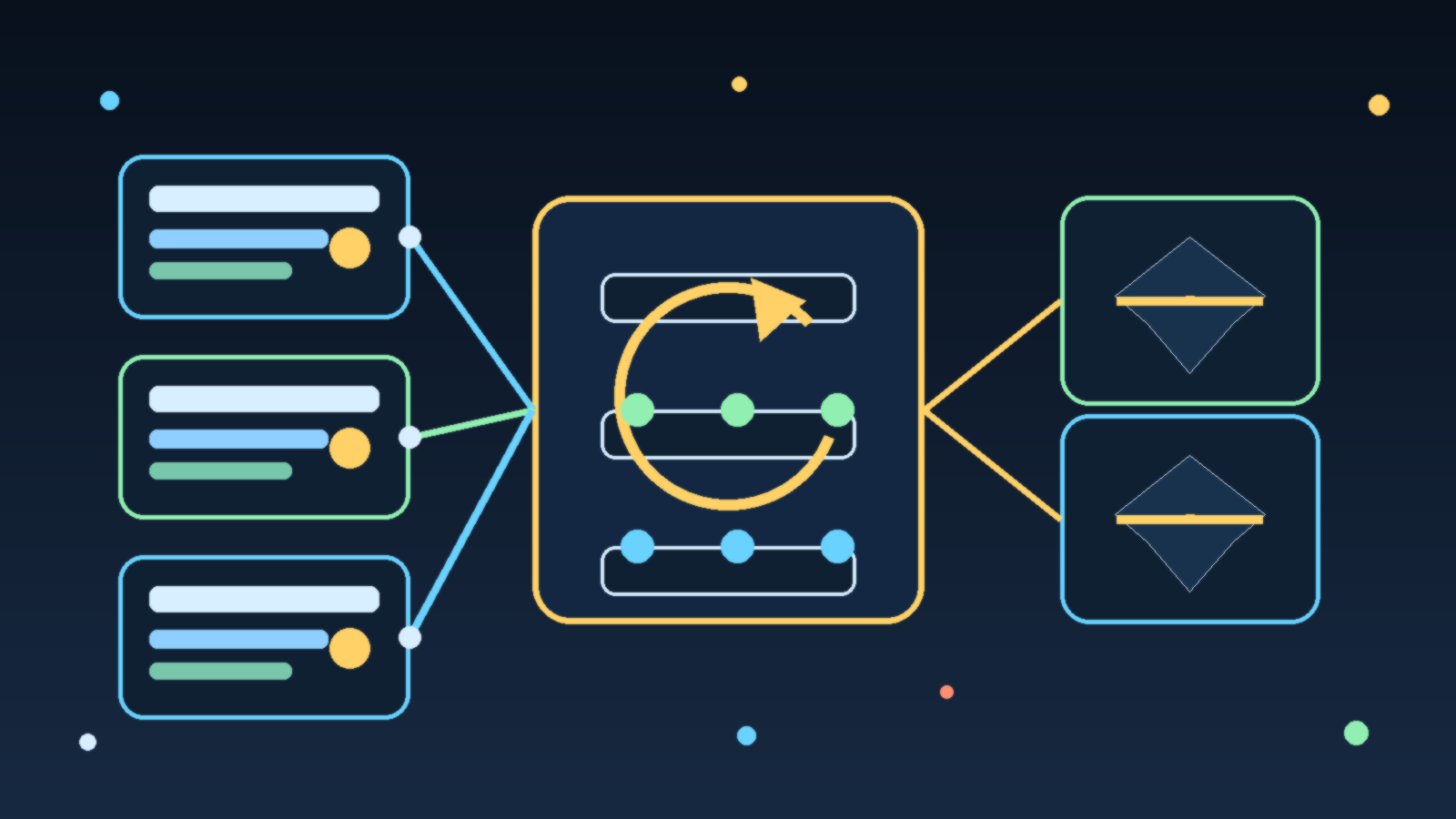
AI teams love connecting models to storage accounts, vector databases, ticketing systems, cloud services, and internal tools. Then the uncomfortable part arrives: those connections depend on credentials that eventually need to change. Secret rotation sounds like a security housekeeping task until a production workflow breaks at 2 AM because one forgotten connector is still using the old value.
The fix is not to rotate less often. The fix is to treat secret rotation as an operational design problem instead of a once-a-quarter scramble. If your AI workflows depend on API keys, service principals, app passwords, webhooks, or database credentials, you need a rotation plan that assumes connectors will be missed, caches will linger, and rollback may be necessary. The teams that handle rotation cleanly are not luckier. They are just more deliberate.
Start by Mapping Every Dependency the Secret Actually Touches
A single credential often reaches more places than people remember. The obvious path might be an application setting or secret vault reference, but the real blast radius can include scheduled jobs, CI pipelines, local environment files, monitoring webhooks, serverless functions, backup scripts, and internal admin tools. AI platforms make this worse because teams often wire up extra connectors during experimentation and forget to document them once the prototype becomes real.
Before rotating anything, build a dependency map. Identify where the credential is stored, which services consume it, who owns each consumer, and how each component reloads configuration. A connector that only reads its secret on startup behaves very differently from one that pulls fresh values on every request. That distinction matters because it tells you whether rotation is a config update, a restart event, or a staged cutover.
Prefer Dual-Key or Overlap Windows Whenever the Platform Allows It
The cleanest secret rotations avoid hard cutovers. If a platform supports two active keys, overlapping certificates, or parallel client secrets, use that feature. Create the new credential, distribute it everywhere, validate that traffic works, and only then retire the old one. This reduces the rotation from a cliff-edge event to a controlled migration.
That overlap window is especially helpful for AI connectors because some jobs run on schedules, some hold long-lived workers in memory, and some retry aggressively after failures. A dual-key period gives those systems time to converge. Without it, you are counting on every service to update at exactly the right moment, which is a fantasy most production environments do not deserve.
Separate Rotation Readiness From Rotation Day
One reason secret updates go badly is that teams combine discovery, implementation, validation, and the actual cutover into the same maintenance window. That is backwards. Readiness work should happen before the rotation date. Config paths should already be known. Restart requirements should already be documented. Owners should already know what success looks like and what rollback steps exist.
On rotation day, the goal should be boring execution, not detective work. If engineers are still trying to remember where an old key might live, the process is already fragile. A good runbook breaks the event into phases: prepare the new credential, distribute it safely, validate connectivity in low-risk paths, switch production traffic, monitor for failures, and then revoke the retired secret only after you have enough confidence that nothing critical is still leaning on it.
Design AI Integrations to Fail Loudly and Usefully
Many secret rotation incidents become painful because connectors fail in vague ways. The model call times out. A background job retries forever. An ingestion pipeline quietly stops syncing. None of those symptoms immediately tells an operator that a credential expired or that a downstream service is rejecting the new authentication path.
Your AI connectors should emit failures that make the problem legible. Authentication errors should be distinguishable from rate limits and payload issues. Health checks should exercise the real dependency path, not just confirm that the process is still running. Dashboards should show which connector failed, which environment is affected, and whether the issue began at the same time as a rotation event. If the system cannot explain its own failure, rotation will feel much riskier than it needs to be.
Use Staged Validation Instead of Blind Trust
After distributing a new secret, prove that each important path still works. That does not mean only testing one happy-path API call. It means validating the real workflows that matter: model inference, document ingestion, retrieval, outbound notifications, scheduled maintenance jobs, and any approval or handoff processes tied to those connectors.
Staged validation helps because it catches environment-specific drift. Maybe development was updated but production still references an older variable group. Maybe the background worker uses a separate secret store from the web app. Maybe one serverless function still has an inline credential from six months ago. These are ordinary problems, not rare disasters, and they are exactly why a rotation checklist should test each lane explicitly instead of assuming consistency because the architecture diagram looked tidy.
Rollback Must Be Planned Before Revocation
Teams sometimes think rollback is impossible for secret rotation because the point is to retire an old credential. That is only partly true. If you use overlap windows, rollback can mean temporarily restoring the prior active key while you fix the consumers that missed the change. If you do not have that option, then rollback needs to mean a fast path to issue and distribute another replacement credential with known ownership and clear communication.
The important thing is not pretending that revocation is the final step in the story. Revocation should happen after validation and after a short observation period, not as a dramatic act of confidence the moment the new secret is generated. Security is stronger when rotation is reliable. Breaking production just to prove you take credential hygiene seriously is not maturity. It is theater.
Final Takeaway
Secret rotation for AI connectors works best when it is treated like controlled change management: map dependencies, use overlap where possible, separate readiness from execution, validate real workflows, and delay revocation until you have evidence that the new path is stable.
That approach is not glamorous, but it is the difference between a responsible security practice and a self-inflicted outage. In production AI systems, the goal is not just to rotate secrets. It is to rotate them without teaching the business that every security improvement comes with avoidable chaos.
Leave a Reply