Tag: Risk management

  • Why AI Gateway Failover Needs Policy Equivalence Before It Needs a Traffic Switch

    Why AI Gateway Failover Needs Policy Equivalence Before It Needs a Traffic Switch

    Teams love the idea of AI provider portability. It sounds prudent to say a gateway can route between multiple model vendors, fail over during an outage, and keep applications running without a major rewrite. That flexibility is useful, but too many programs stop at the routing story. They wire up model endpoints, prove that prompts can move from one provider to another, and declare the architecture resilient.

    The problem is that a traffic switch is not the same thing as a control plane. If one provider path has prompt logging disabled, another path stores request history longer, and a third path allows broader plugin or tool access, then failover can quietly change the security and compliance posture of the application. The business thinks it bought resilience. In practice, it may have bought inconsistent policy enforcement that only shows up when something goes wrong.

    Routing continuity is only one part of operational continuity

    Engineering teams often design AI failover around availability. If provider A slows down or returns errors, route requests to provider B. That is a reasonable starting point, but it is incomplete. An AI platform also has to preserve the controls around those requests, not just the success rate of the API call.

    That means asking harder questions before the failover demo looks impressive. Will the alternate provider keep data in the same region? Are the same retention settings available? Does the backup path expose the same model family to the same users, or will it suddenly allow features that the primary route blocks? If the answer is different across providers, then the organization is not really failing over one governed service. It is switching between services with different rules.

    A resilience story that ignores policy equivalence is the kind of architecture that looks mature in a slide deck and fragile during an audit.

    Define the nonnegotiable controls before you define the fallback order

    The cleanest way to avoid drift is to decide what must stay true no matter where the request goes. Those controls should be documented before anyone configures weighted routing or health-based failover.

    For many organizations, the nonnegotiables include data residency, retention limits, request and response logging behavior, customer-managed access patterns, content filtering expectations, and whether tool or retrieval access is allowed. Some teams also need prompt redaction, approval gates for sensitive workloads, or separate policies for internal versus customer-facing use cases.

    Once those controls are defined, each provider route can be evaluated against the same checklist. A provider that fails an important requirement may still be useful for isolated experiments, but it should not sit in the automatic production failover chain. That line matters. Not every technically reachable model endpoint deserves equal operational trust.

    The hidden problem is often metadata, not just model output

    When teams compare providers, they usually focus on model quality, token pricing, and latency. Those matter, but governance problems often appear in the surrounding metadata. One provider may log prompts for debugging. Another may keep richer request traces. A third may attach different identifiers to sessions, users, or tool calls.

    That difference can create a mess for retention and incident response. Imagine a regulated workflow where the primary path keeps minimal logs for a short period, but the failover path stores additional request context for longer because that is how the vendor debugging feature works. The application may continue serving users correctly while silently creating a broader data footprint than the risk team approved.

    That is why provider reviews should include the entire data path: prompts, completions, cached content, system instructions, tool outputs, moderation events, and operational logs. The model response is only one part of the record.

    Treat failover eligibility like a policy certification

    A strong pattern is to certify each provider route before it becomes eligible for automatic failover. Certification should be more than a connectivity test. It should prove that the route meets the minimum control standard for the workload it may serve.

    For example, a low-risk internal drafting assistant may allow multiple providers with roughly similar settings. A customer support assistant handling sensitive account context may have a narrower list because residency, retention, and review requirements are stricter. The point is not to force every workload into the same vendor strategy. The point is to prevent the gateway from making governance decisions implicitly during an outage.

    A practical certification review should cover:

    • allowed data types for the route
    • approved regions and hosting boundaries
    • retention and logging behavior
    • moderation and safety control parity
    • tool, plugin, or retrieval permission differences
    • incident-response visibility and auditability
    • owner accountability for exceptions and renewals

    That list is not glamorous, but it is far more useful than claiming portability without defining what portable means.

    Separate failover for availability from failover for policy exceptions

    Another common mistake is bundling every exception into the same routing mechanism. A team may say, "If the primary path fails, use the backup provider," while also using that same backup path for experiments that need broader features. That sounds efficient, but it creates confusion because the exact same route serves two different governance purposes.

    A better design separates emergency continuity from deliberate exceptions. The continuity route should be boring and predictable. It exists to preserve service under stress while staying within the approved policy envelope. Exception routes should be explicit, approved, and usually manual or narrowly scoped.

    This separation makes reviews much easier. Auditors and security teams can understand which paths are part of the standard operating model and which ones exist for temporary or special-case use. It also reduces the temptation to leave a broad backup path permanently enabled just because it helped once during a migration.

    Test the policy outcome, not just the failover event

    Most failover exercises are too shallow. Teams simulate a provider outage, verify that traffic moves, and stop there. That test proves only that routing works. It does not prove that the routed traffic still behaves within policy.

    A better exercise inspects what changed after failover. Did the logs land in the expected place? Did the same content controls trigger? Did the same headers, identities, and approval gates apply? Did the same alerts fire? Could the security team still reconstruct the transaction path afterward?

    Those are the details that separate operational resilience from operational surprise. If nobody checks them during testing, the organization learns about control drift during a real incident, which is exactly when people are least equipped to reason carefully.

    Build provider portability as a governance feature, not just an engineering feature

    Provider portability is worth having. No serious platform team wants a brittle single-vendor dependency for critical AI workflows. But portability should be treated as a governance feature as much as an engineering one.

    That means the gateway should carry policy with the request instead of assuming every endpoint is interchangeable. Route selection should consider workload classification, approved regions, tool access limits, logging rules, and exception status. If the platform cannot preserve those conditions automatically, then failover should narrow to the routes that can.

    In other words, the best AI gateway is not the one with the most model connectors. It is the one that can switch paths without changing the organization’s risk posture by accident.

    Start with one workload and prove policy equivalence end to end

    Teams do not need to solve this across every application at once. Start with one workload that matters, map the control requirements, and compare the primary and backup provider paths in a disciplined way. Document what is truly equivalent, what is merely similar, and what requires an exception.

    That exercise usually reveals the real maturity of the platform. Sometimes the backup path is not ready for automatic failover yet. Sometimes the organization needs better logging normalization or tighter route-level policy tags. Sometimes the architecture is already in decent shape and simply needs clearer documentation.

    Either way, the result is useful. AI gateway failover becomes a conscious operating model instead of a comforting but vague promise. That is the difference between resilience you can defend and resilience you only hope will hold up when the primary provider goes dark.
  • Why Every AI Pilot Needs a Data Retention Policy Before Launch

    Why Every AI Pilot Needs a Data Retention Policy Before Launch

    Most AI pilot projects begin with excitement and speed. A team wants to test a chatbot, summarize support tickets, draft internal content, or search across documents faster than before. The technical work starts quickly because modern tools make it easy to stand something up in days instead of months.

    What usually lags behind is a decision about retention. People ask whether the model is accurate, how much the service costs, and whether the pilot should connect to internal data. Far fewer teams stop to ask a simple operational question: how long should prompts, uploaded files, generated outputs, and usage logs actually live?

    That gap matters because retention is not just a legal concern. It shapes privacy exposure, security review, troubleshooting, incident response, and user trust. If a pilot stores more than the team expects, or keeps it longer than anyone intended, the project can quietly drift from a safe experiment into a governance problem.

    AI Pilots Accumulate More Data Than Teams Expect

    An AI pilot rarely consists of only a prompt and a response. In practice, there are uploaded files, retrieval indexes, conversation history, feedback labels, exception traces, browser logs, and often a copy of generated output pasted somewhere else for later use. Even when each piece looks harmless on its own, the combined footprint becomes much richer than the team planned for.

    This is why a retention policy should exist before launch, not after the first success story. Once people start using a helpful pilot, the data trail expands fast. It becomes harder to untangle what is essential for product improvement versus what is simply leftover operational residue that nobody remembered to clean up.

    Prompts and Outputs Deserve Different Rules

    Many teams treat all AI data as one category, but that is usually too blunt. Raw prompts may contain sensitive context, copied emails, internal notes, or customer fragments. Generated outputs may be safer to retain in some cases, especially when they become part of an approved business workflow. System logs may need a shorter window, while audit events may need a longer one.

    Separating these categories makes the policy more practical. Instead of saying “keep AI data for 90 days,” a stronger rule might say that prompt bodies expire quickly, approved outputs inherit the retention of the destination system, and security-relevant audit records follow the organization’s existing control standards.

    Retention Decisions Shape Security Exposure

    Every extra day of stored AI interaction data extends the window in which that information can be misused, leaked, or pulled into discovery work nobody anticipated. A pilot that feels harmless in week one may become more sensitive after users realize it can answer real work questions and begin pasting in richer material.

    Retention is therefore a security control, not just housekeeping. Shorter storage windows reduce blast radius. Clear deletion behavior reduces ambiguity during incident response. Defined storage locations make it easier to answer basic questions like who can read the data, what gets backed up, and whether the team can actually honor a delete request.

    Vendors and Internal Systems Create Split Responsibility

    AI pilots often span a vendor platform plus one or more internal systems. A team might use a hosted model, store logs in a cloud workspace, send analytics into another service, and archive approved outputs in a document repository. If retention is only defined in one layer, the overall policy is incomplete.

    That is where teams get surprised. They disable one history feature and assume the data is gone, while another copy still exists in telemetry, exports, or downstream collaboration tools. A launch-ready retention policy should name each storage point clearly enough that operations and security teams can verify the behavior instead of guessing.

    A Good Pilot Policy Should Be Boring and Specific

    The best retention policies are not dramatic. They are clear, narrow, and easy to execute. They define what data is stored, where it lives, how long it stays, who can access it, and what event triggers deletion or review. They also explain what the pilot should not accept, such as regulated records, source secrets, or customer data that has no business purpose in the test.

    Specificity beats slogans here. “We take privacy seriously” does not help an engineer decide whether prompt logs should expire after seven days or ninety. A simple table in an internal design note, backed by actual configuration, is far more valuable than broad policy language nobody can operationalize.

    Final Takeaway

    An AI pilot is not low risk just because it is temporary. Temporary projects often have the weakest controls because everyone assumes they will be cleaned up later. If the pilot is useful, later usually never arrives on its own.

    That is why retention belongs in the launch checklist. Decide what will be stored, separate prompts from outputs, map vendor and internal copies, and set deletion rules early. Teams that do this before users pile in tend to move faster with fewer surprises once the pilot starts succeeding.

  • Why AI Agents Need Approval Boundaries Even After They Pass Security Review

    Why AI Agents Need Approval Boundaries Even After They Pass Security Review

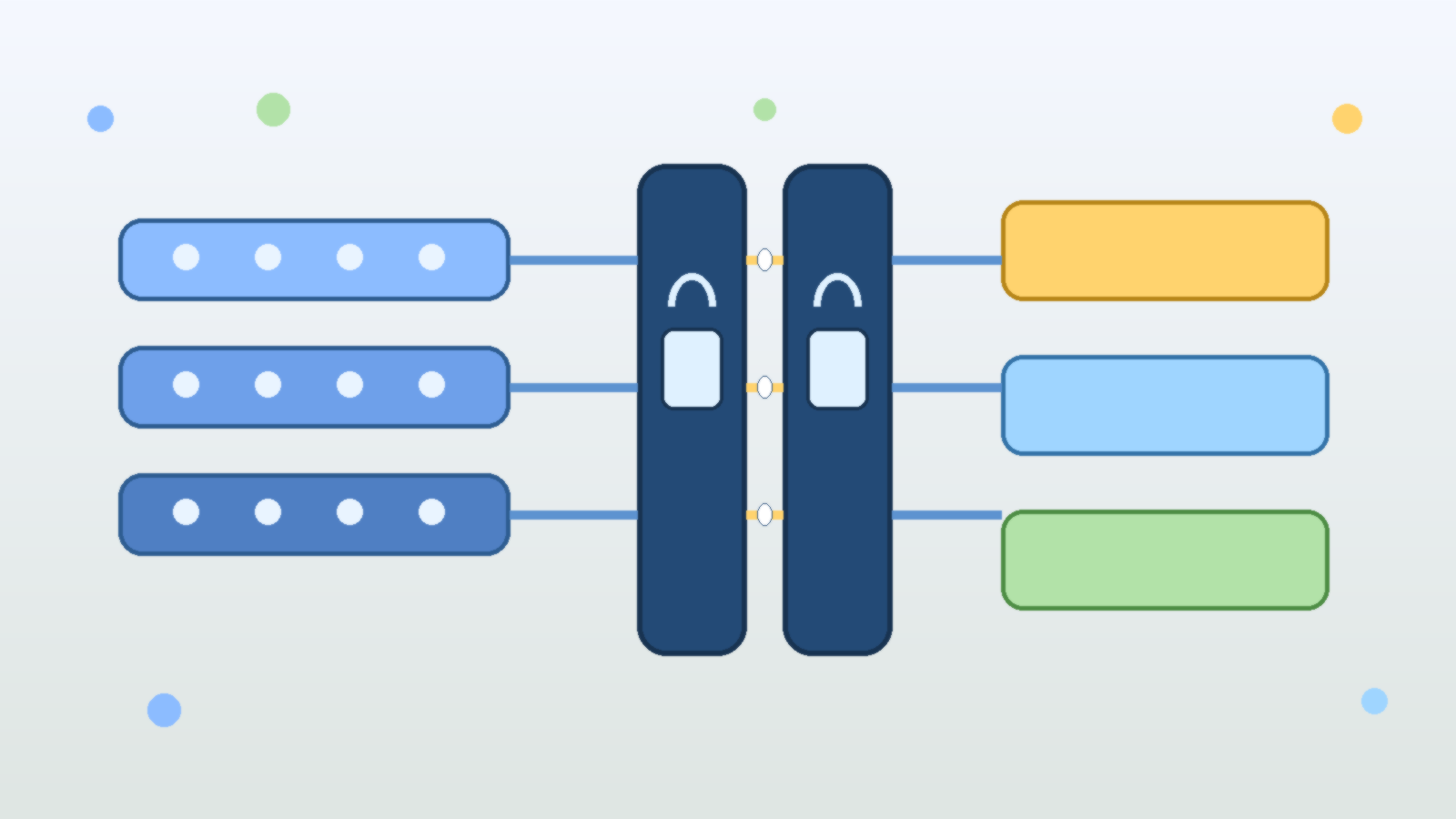
    Abstract illustration of automated AI pathways passing through guarded approval gates before reaching protected systems

    Security reviews matter, but they are not magic. An AI agent can pass an architecture review, satisfy a platform checklist, and still become risky a month later after someone adds a new tool, expands a permission scope, or quietly starts using it for higher-impact work than anyone originally intended.

    That is why approval boundaries still matter after launch. They are not a sign that the team lacks confidence in the system. They are a way to keep trust proportional to what the agent is actually doing right now, instead of what it was doing when the review document was signed.

    A Security Review Captures a Moment, Not a Permanent Truth

    Most reviews are based on a snapshot: current integrations, known data sources, expected actions, and intended business use. That is a reasonable place to start, but AI systems are unusually prone to drift. Prompts evolve, connectors expand, workflows get chained together, and operators begin relying on the agent in situations that were not part of the original design.

    If the control model assumes the review answered every future question, the organization ends up trusting an evolving system with a static approval posture. That is usually where trouble starts. The issue is not that the initial review was pointless. The issue is treating it like a lifetime warranty.

    Approval Gates Are About Action Risk, Not Developer Maturity

    Some teams resist human approval because they think it implies the platform is immature. In reality, approval boundaries are often the mark of a mature system. They acknowledge that some actions deserve more scrutiny than others, even when the software is well built and the operators are competent.

    An AI agent that summarizes incident notes does not need the same friction as one that can revoke access, change billing configuration, publish public content, or send commands into production systems. Approval is not an insult to automation. It is the mechanism that separates low-risk acceleration from high-risk delegation.

    Tool Expansion Is Where Safe Pilots Turn Into Risky Platforms

    Many agent rollouts start with a narrow use case. The first version may only read documents, draft suggestions, or assemble context for a human. Then the useful little assistant gains a ticketing connector, a cloud management API, a messaging integration, and eventually write access to something important. Each step feels incremental, so the risk increase is easy to underestimate.

    Approval boundaries help absorb that drift. If new tools are introduced behind action-based approval rules, the agent can become more capable without immediately becoming fully autonomous in every direction. That gives the team room to observe behavior, tune safeguards, and decide which actions have truly earned a lower-friction path.

    High-Confidence Suggestions Are Not the Same as High-Trust Actions

    One of the more dangerous habits in AI operations is confusing fluent output with trustworthy execution. An agent may explain a change clearly, cite the right system names, and appear fully aware of policy. None of that guarantees the next action is safe in the actual environment.

    That is especially true when the last mile involves destructive changes, external communications, or the use of elevated credentials. A recommendation can be accepted with light review. A production action often needs explicit confirmation because the blast radius is larger than the confidence score suggests.

    The Best Approval Models Are Narrow, Predictable, and Easy to Explain

    Approval flows fail when they are vague or inconsistent. If users cannot predict when the agent will pause, they either lose trust in the system or start looking for ways around the friction. A better model is to tie approvals to clear triggers: external sends, purchases, privileged changes, production writes, customer-visible edits, or access beyond a normal working scope.

    That kind of policy is easier to defend and easier to audit. It also keeps the user experience sane. Teams do not need a human click for every harmless lookup. They need human checkpoints where the downside of being wrong is meaningfully higher than the cost of a brief pause.

    Approvals Create Better Operational Feedback Loops

    There is another benefit that gets overlooked: approval boundaries generate useful feedback. When people repeatedly approve the same safe action, that is evidence the control may be ready for refinement or partial automation. When they frequently stop, correct, or redirect the agent, that is a sign the workflow still contains ambiguity that should not be hidden behind full autonomy.

    In other words, approval is not just a brake. It is a sensor. It shows where the design is mature, where the prompts are brittle, and where the system is reaching past what the organization actually trusts it to do.

    Production Trust Should Be Earned in Layers

    The strongest AI agent programs do not jump from pilot to unrestricted execution. They graduate in layers. First the agent observes, then it drafts, then it proposes changes, then it acts with approval, and only later does it earn carefully scoped autonomy in narrow domains that are well monitored and easy to reverse.

    That layered model reflects how responsible teams handle other forms of operational trust. Nobody should be embarrassed to apply the same standard here. If anything, AI agents deserve more deliberate trust calibration because they can combine speed, scale, and tool access in ways that make small mistakes spread faster.

    Final Takeaway

    Passing security review is an important milestone, but it is only the start of production trust. Approval boundaries are what keep an AI agent aligned with real-world risk as its tools, permissions, and business role change over time.

    If your review says an agent is safe but your operations model has no clear pause points for high-impact actions, you do not have durable governance. You have optimism with better documentation.