Tag: Production security

  • Why AI Agents Need Approval Boundaries Even After They Pass Security Review

    Why AI Agents Need Approval Boundaries Even After They Pass Security Review

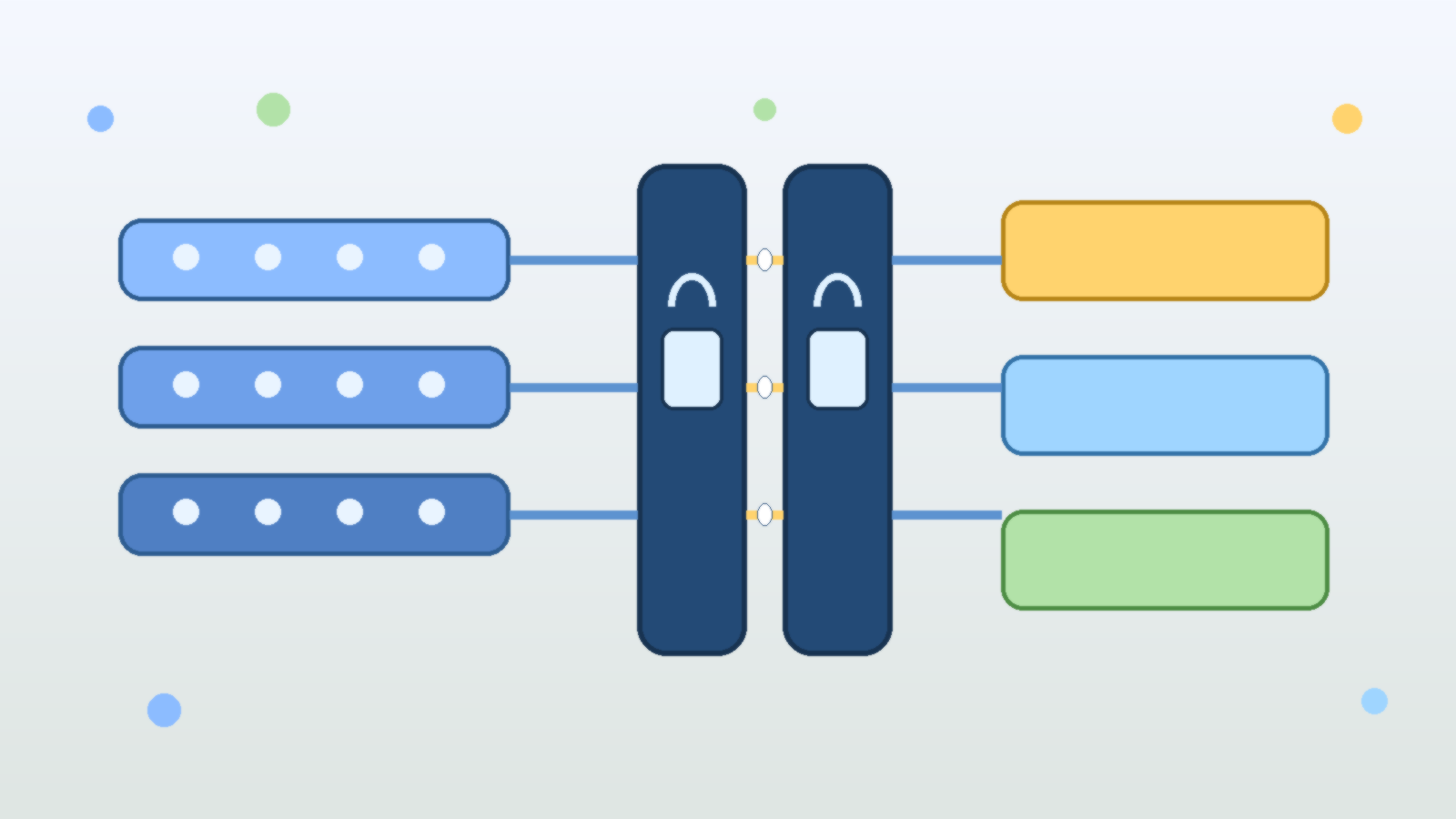
    Abstract illustration of automated AI pathways passing through guarded approval gates before reaching protected systems

    Security reviews matter, but they are not magic. An AI agent can pass an architecture review, satisfy a platform checklist, and still become risky a month later after someone adds a new tool, expands a permission scope, or quietly starts using it for higher-impact work than anyone originally intended.

    That is why approval boundaries still matter after launch. They are not a sign that the team lacks confidence in the system. They are a way to keep trust proportional to what the agent is actually doing right now, instead of what it was doing when the review document was signed.

    A Security Review Captures a Moment, Not a Permanent Truth

    Most reviews are based on a snapshot: current integrations, known data sources, expected actions, and intended business use. That is a reasonable place to start, but AI systems are unusually prone to drift. Prompts evolve, connectors expand, workflows get chained together, and operators begin relying on the agent in situations that were not part of the original design.

    If the control model assumes the review answered every future question, the organization ends up trusting an evolving system with a static approval posture. That is usually where trouble starts. The issue is not that the initial review was pointless. The issue is treating it like a lifetime warranty.

    Approval Gates Are About Action Risk, Not Developer Maturity

    Some teams resist human approval because they think it implies the platform is immature. In reality, approval boundaries are often the mark of a mature system. They acknowledge that some actions deserve more scrutiny than others, even when the software is well built and the operators are competent.

    An AI agent that summarizes incident notes does not need the same friction as one that can revoke access, change billing configuration, publish public content, or send commands into production systems. Approval is not an insult to automation. It is the mechanism that separates low-risk acceleration from high-risk delegation.

    Tool Expansion Is Where Safe Pilots Turn Into Risky Platforms

    Many agent rollouts start with a narrow use case. The first version may only read documents, draft suggestions, or assemble context for a human. Then the useful little assistant gains a ticketing connector, a cloud management API, a messaging integration, and eventually write access to something important. Each step feels incremental, so the risk increase is easy to underestimate.

    Approval boundaries help absorb that drift. If new tools are introduced behind action-based approval rules, the agent can become more capable without immediately becoming fully autonomous in every direction. That gives the team room to observe behavior, tune safeguards, and decide which actions have truly earned a lower-friction path.

    High-Confidence Suggestions Are Not the Same as High-Trust Actions

    One of the more dangerous habits in AI operations is confusing fluent output with trustworthy execution. An agent may explain a change clearly, cite the right system names, and appear fully aware of policy. None of that guarantees the next action is safe in the actual environment.

    That is especially true when the last mile involves destructive changes, external communications, or the use of elevated credentials. A recommendation can be accepted with light review. A production action often needs explicit confirmation because the blast radius is larger than the confidence score suggests.

    The Best Approval Models Are Narrow, Predictable, and Easy to Explain

    Approval flows fail when they are vague or inconsistent. If users cannot predict when the agent will pause, they either lose trust in the system or start looking for ways around the friction. A better model is to tie approvals to clear triggers: external sends, purchases, privileged changes, production writes, customer-visible edits, or access beyond a normal working scope.

    That kind of policy is easier to defend and easier to audit. It also keeps the user experience sane. Teams do not need a human click for every harmless lookup. They need human checkpoints where the downside of being wrong is meaningfully higher than the cost of a brief pause.

    Approvals Create Better Operational Feedback Loops

    There is another benefit that gets overlooked: approval boundaries generate useful feedback. When people repeatedly approve the same safe action, that is evidence the control may be ready for refinement or partial automation. When they frequently stop, correct, or redirect the agent, that is a sign the workflow still contains ambiguity that should not be hidden behind full autonomy.

    In other words, approval is not just a brake. It is a sensor. It shows where the design is mature, where the prompts are brittle, and where the system is reaching past what the organization actually trusts it to do.

    Production Trust Should Be Earned in Layers

    The strongest AI agent programs do not jump from pilot to unrestricted execution. They graduate in layers. First the agent observes, then it drafts, then it proposes changes, then it acts with approval, and only later does it earn carefully scoped autonomy in narrow domains that are well monitored and easy to reverse.

    That layered model reflects how responsible teams handle other forms of operational trust. Nobody should be embarrassed to apply the same standard here. If anything, AI agents deserve more deliberate trust calibration because they can combine speed, scale, and tool access in ways that make small mistakes spread faster.

    Final Takeaway

    Passing security review is an important milestone, but it is only the start of production trust. Approval boundaries are what keep an AI agent aligned with real-world risk as its tools, permissions, and business role change over time.

    If your review says an agent is safe but your operations model has no clear pause points for high-impact actions, you do not have durable governance. You have optimism with better documentation.

  • How to Govern AI Browser Agents Before They Touch Production

    How to Govern AI Browser Agents Before They Touch Production

    AI browser agents are moving from demos into real operational work. Teams are asking them to update records, click through portals, collect evidence, and even take action across SaaS tools that were built for humans. The upside is obvious: agents can remove repetitive work and connect systems that still do not have clean APIs. The downside is just as obvious once you think about it for more than five minutes. A browser agent with broad access can create the same kind of mess as an overprivileged intern, only much faster and at machine scale.

    If you want agents touching production systems, governance cannot be a slide deck or a policy PDF nobody reads. It has to show up in how you grant access, how tasks are approved, how actions are logged, and how failures are contained. The goal is not to make agents useless. The goal is to make them safe enough to trust with bounded work.

    Start With Task Boundaries, Not Model Hype

    The first control is deciding what the agent is actually allowed to do. Many teams start by asking whether the model is smart enough. That is the wrong first question. A smarter model does not solve weak guardrails. Start with a narrow task definition instead: which application, which workflow, which pages, which fields, which users, and which outputs are in scope. If you cannot describe the task clearly enough for a human reviewer to understand it, you are not ready to automate it with an agent.

    Good governance turns a vague instruction like “manage our customer portal” into a bounded instruction like “collect invoice status from these approved accounts and write the results into this staging table.” That kind of scoping reduces both accidental damage and the blast radius of a bad prompt, a hallucinated plan, or a compromised credential.

    Give Agents the Least Privilege They Can Actually Use

    Browser agents should not inherit a human administrator account just because it is convenient. Give them dedicated identities with only the permissions they need for the exact workflow they perform. If the task is read-only, keep it read-only. If the task needs writes, constrain those writes to a specific system, business unit, or record set whenever the application allows it.

    • Use separate service identities for different workflows rather than one all-purpose agent account.
    • Apply MFA-resistant session handling where possible, especially for privileged portals.
    • Restrict login locations, session duration, and accessible applications.
    • Rotate credentials on a schedule and immediately after suspicious behavior.

    This is not glamorous work, but it matters more than prompt tuning. Most real-world agent risk comes from access design, not from abstract model behavior.

    Build Human Approval Into High-Risk Actions

    There is a big difference between gathering information and making a production change. Governance should reflect that difference. Let the agent read broadly enough to prepare a recommendation, but require explicit approval before actions that create external impact: submitting orders, changing entitlements, editing finance records, sending messages to customers, or deleting data.

    A practical pattern is a staged workflow. In stage one, the agent navigates, validates inputs, and prepares a proposed action with screenshots or structured evidence. In stage two, a human approves or rejects the action. In stage three, the agent executes only the approved step and records what happened. That is slower than full autonomy, but it is usually the right tradeoff until you have enough evidence to trust the workflow more deeply.

    Make Observability a Product Requirement

    If an agent cannot explain what it touched, when it touched it, and why it made a decision, you do not have a production-ready system. You have a mystery box with credentials. Every meaningful run should leave behind an audit trail that maps prompt, plan, accessed applications, key page transitions, extracted data, approvals, and final actions. Screenshots, DOM snapshots, request logs, and structured event records all help here.

    The point of observability is not just post-incident forensics. It also improves operations. You can see where agents stall, where sites change, which controls generate false positives, and which tasks are too brittle to keep in production. That feedback loop is what separates a flashy proof of concept from a governable system.

    Design for Failure Before the First Incident

    Production agents will fail. Pages will change. Modals will appear unexpectedly. Sessions will expire. A model will occasionally misread context and aim at the wrong control. Governance needs failure handling that assumes these things will happen. Safe defaults matter: if confidence drops, if the page state is unexpected, or if validation does not match policy, the run should stop and escalate rather than improvise.

    Containment matters too. Use sandboxes, approval queues, reversible actions where possible, and strong alerting for abnormal behavior. Do not wait until the first bad run to decide who gets paged, what evidence is preserved, or how credentials are revoked.

    Treat Browser Agents Like a New Identity and Access Problem

    A lot of governance conversations around AI get stuck in abstract debates about model ethics. Those questions matter, but browser agents force a more immediate and practical conversation. They are acting inside real user interfaces with real business consequences. That makes them as much an identity, access, and operational control problem as an AI problem.

    The strongest teams are the ones that connect AI governance with existing security disciplines: least privilege, change control, environment separation, logging, approvals, and incident response. If your browser agent program is managed like an experimental side project instead of a production control surface, you are creating avoidable risk.

    The Bottom Line

    AI browser agents can be genuinely useful in production, especially where legacy systems and manual portals slow down teams. But the win does not come from turning them loose. It comes from deciding where they are useful, constraining what they can do, requiring approval when the stakes are high, and making every important action observable. That is what good governance looks like when agents stop being a lab experiment and start touching the real business.