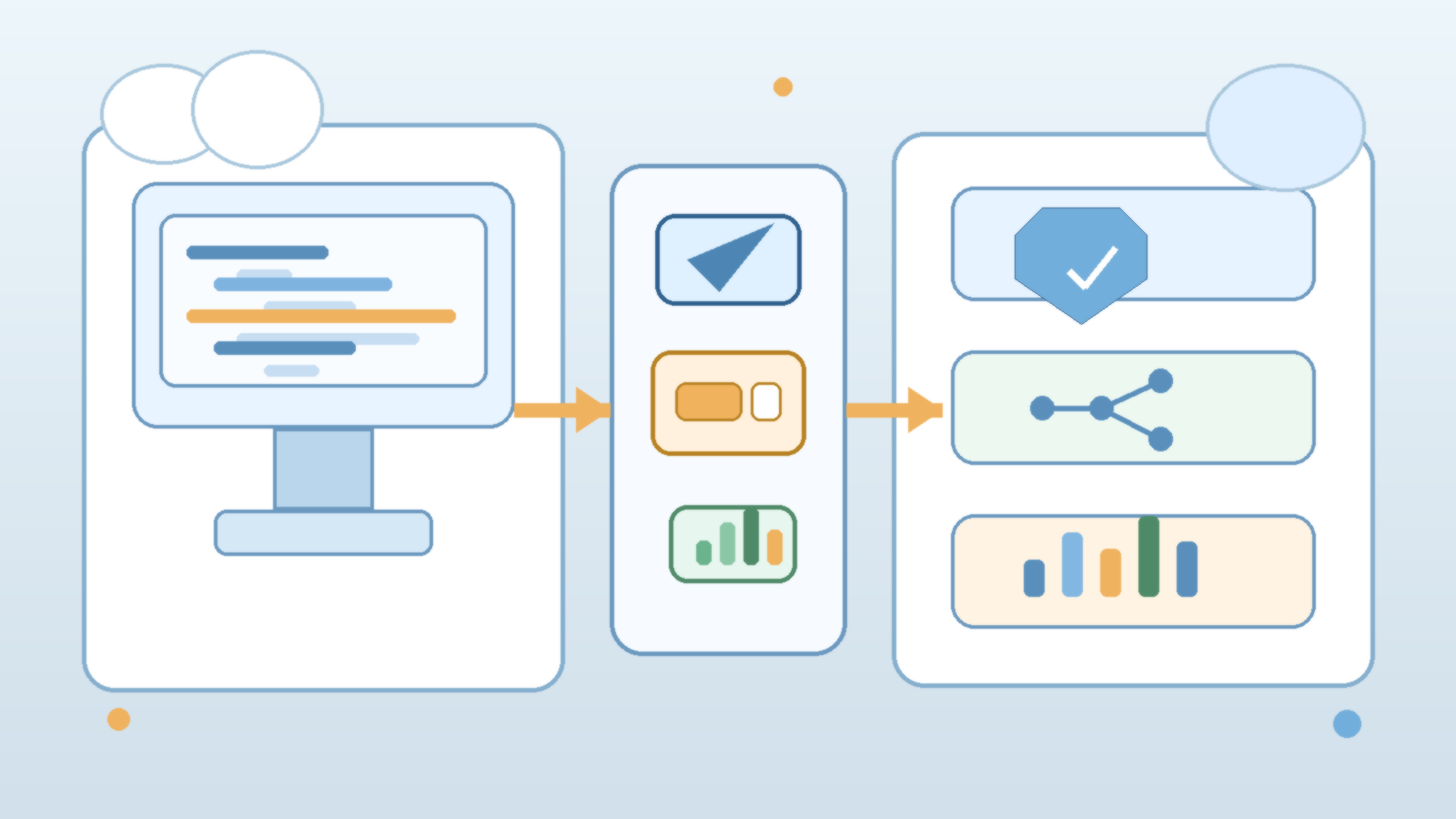
AI coding assistants have moved from novelty to normal workflow faster than most governance models expected. Teams that spent years tightening branch protection, code review, secret scanning, and dependency controls are now adding tools that can draft code, rewrite tests, explain architecture, and suggest automation in seconds. The productivity upside is real. So is the temptation to treat these tools like harmless autocomplete with a better marketing team.
That framing is too soft for GitHub Enterprise environments. Once AI coding assistants can influence production repositories, infrastructure code, and internal developer platforms, they stop being a personal preference and become part of the software delivery system. The practical question is not whether developers should use them. It is how to govern them without dragging every team into a slow approval ritual that kills the benefit.
Start With Repository Risk, Not One Global Policy
Organizations often begin with a blanket position. Either the assistant is allowed everywhere because the company wants speed, or it is blocked everywhere because security wants certainty. Both approaches create friction. A low-risk internal utility repository does not need the same controls as a billing service, a regulated workload, or an infrastructure repository that can change identity, networking, or production access paths.
A better operating model starts by grouping repositories by risk and business impact. That gives platform teams a way to set stronger defaults for sensitive codebases while still letting lower-risk teams adopt useful AI workflows quickly. Governance gets easier when it reflects how the repositories already differ in consequence.
Approval Boundaries Matter More Than Fancy Prompting
One of the easiest mistakes is focusing on prompt quality before approval design. Good prompts help, but they do not replace review boundaries. If an assistant can generate deployment logic, modify permissions, or change secrets handling, the key safeguard is not a more elegant instruction block. It is making sure risky changes still flow through the right review path before merge or execution.
That means branch protection, required reviewers, status checks, environment approvals, and workflow restrictions still carry most of the real safety load. AI suggestions should enter the same controlled path as human-written code, especially when repositories hold infrastructure definitions, policy logic, or production automation. Teams move faster when the boundaries are obvious and consistent.
Separate Code Generation From Credential Reach
Many GitHub discussions about AI focus on code quality and licensing. Those matter, but the more immediate enterprise risk is operational reach. A coding assistant that helps draft a workflow file is one thing. A generated workflow that can deploy to production, read broad secrets, or push changes across multiple repositories is another. The danger usually appears in the connection between suggestion and execution.
Platform teams should keep that boundary clean. Repository secrets, environment secrets, OpenID Connect trust, and deployment credentials should stay tightly scoped even if developers use AI tools every day. The point is to make sure a helpful suggestion does not automatically inherit the power to become a high-impact action without scrutiny.
Auditability Should Cover More Than the Final Commit
Enterprises do not need a perfect transcript of every developer conversation with an assistant, but they do need enough evidence to understand what happened when a risky change lands. That usually means correlating commits, pull requests, review events, workflow runs, and repository settings rather than pretending the final diff tells the whole story. If AI use is common, leaders should be able to ask which controls still stood between a suggestion and production.
Clear auditability also helps honest teams. When a generated change introduces a bug, a weak policy should not force everyone into finger-pointing about whether the problem was human review, missing tests, or overconfident automation. The better model is to make the delivery trail visible enough that the organization can improve the right control instead of arguing about the tool in general.
Protect the Shared Platform Repositories First
Not all repositories deserve equal attention, and that is fine. If an enterprise only has time to tighten a small slice of GitHub before enabling broader AI usage, the smartest targets are usually the shared platform repositories. Terraform modules, reusable GitHub Actions, deployment templates, organization-wide workflows, and internal libraries quietly shape dozens of downstream systems. Weak review on those assets spreads faster than a bug in one application repo.
That is why AI-assisted edits in shared platform code should usually trigger stricter review expectations, not looser ones. A convenient suggestion in the wrong reusable component can become a multiplier for bad assumptions. The scale of impact matters more than how small the change looked in one pull request.
Give Developers Safe Defaults Instead of Endless Warnings
Governance fails when it reads like a sermon and behaves like a scavenger hunt. Developers are more likely to follow a policy when the platform already nudges them toward the safe path. Strong templates, preconfigured branch rules, secret scanning, code owners, reusable approval workflows, and environment protections do more work than a wiki page full of vague reminders about using AI responsibly.
The same logic applies to training. Teams do not need a dramatic lecture every week about why generated code is imperfect. They need practical examples of what to review closely: authentication changes, permission scope, data handling, shell execution, destructive operations, and workflow automation. Useful guardrails beat theatrical fear.
Measure Outcomes, Not Just Adoption
Many AI rollout plans focus on activation metrics. How many users enabled the tool? How many suggestions were accepted? Those numbers may help with licensing decisions, but they do not say much about operational health. Enterprises should also care about outcomes such as review quality, change failure patterns, secret exposure incidents, workflow misconfigurations, and whether protected repositories are seeing better or worse engineering hygiene over time.
That measurement approach keeps the conversation grounded. If AI assistants are helping teams ship faster without raising incident noise, that is useful evidence. If adoption rises while review quality falls in high-impact repositories, the organization has a policy problem, not a dashboard victory.
Final Takeaway
AI coding assistants belong in modern GitHub workflows, but they should enter through the same disciplined door as every other change to the software delivery system. Repository risk tiers, approval boundaries, scoped credentials, and visible audit trails matter more than enthusiasm about the tool itself.
The teams that get this right usually do not ban AI or hand it unlimited freedom. They make the safe path easy, keep high-impact repositories under stronger control, and judge success by delivery outcomes instead of hype. That is a much better foundation than hoping autocomplete has become wise enough to govern itself.