Tag: finops

  • Why More Companies Need an Internal AI Gateway Before AI Spend Gets Out of Control

    Why More Companies Need an Internal AI Gateway Before AI Spend Gets Out of Control

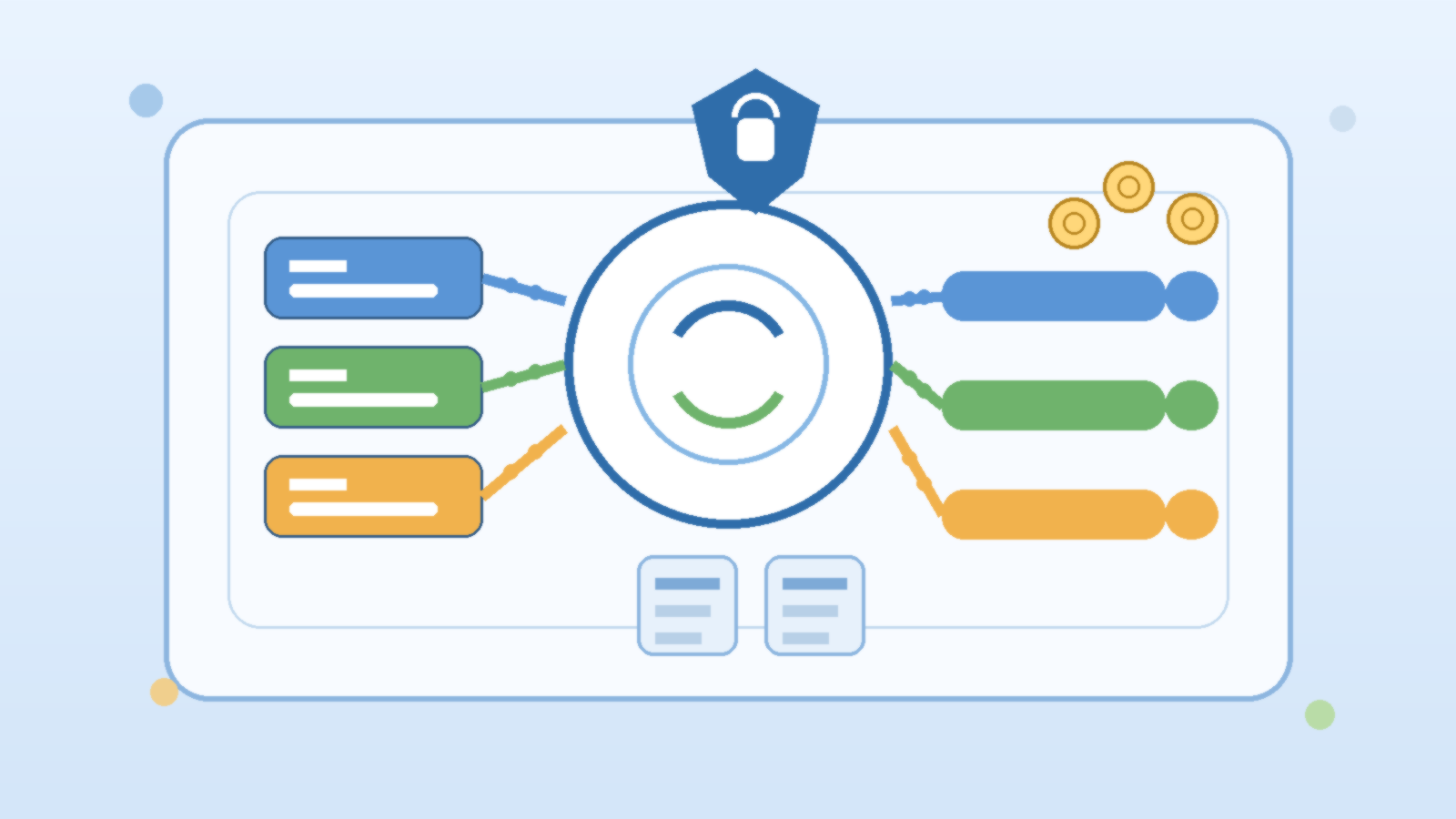
    Most companies do not have a model problem. They have a control problem. Teams adopt one model for chat, another for coding, a third for retrieval, and a fourth for document workflows, then discover that costs, logs, prompts, and policy enforcement are scattered everywhere. The result is avoidable sprawl. An internal AI gateway gives the business one place to route requests, apply policy, measure usage, and swap providers without forcing every product team to rebuild the same plumbing.

    The term sounds architectural, but the idea is practical. Instead of letting every application call every model provider directly, you place a controlled service in the middle. That service handles authentication, routing, logging, fallback logic, guardrails, and budget controls. Product teams still move quickly, but they do it through a path the platform, security, and finance teams can actually understand.

    Why direct-to-model integration breaks down at scale

    Direct integrations feel fast in the first sprint. A developer can wire up a provider SDK, add a secret, and ship a useful feature. The trouble appears later. Different teams choose different providers, naming conventions, retry patterns, and logging formats. One app stores prompts for debugging, another stores nothing, and a third accidentally logs sensitive inputs where it should not. Costs rise faster than expected because there is no shared view of which workflows deserve premium models and which ones could use smaller, cheaper options.

    That fragmentation also makes governance reactive. Security teams end up auditing a growing collection of one-off integrations. Platform teams struggle to add caching, rate limits, or fallback behavior consistently. Leadership hears about AI productivity gains, but cannot answer simple operating questions such as which providers are in use, what business units spend the most, or which prompts touch regulated data.

    What an internal AI gateway should actually do

    A useful gateway is more than a reverse proxy with an API key. It becomes the shared control plane for model access. At minimum, it should normalize authentication, capture structured request and response metadata, enforce policy, and expose routing decisions in a way operators can inspect later. If the gateway cannot explain why a request went to a specific model, it is not mature enough for serious production use.

    • Model routing: choose providers and model tiers based on task type, latency targets, geography, or budget policy.
    • Observability: log token usage, latency, failure rates, prompt classifications, and business attribution tags.
    • Guardrails: apply content filters, redaction, schema validation, and approval rules before high-risk actions proceed.
    • Resilience: provide retries, fallbacks, and graceful degradation when a provider slows down or fails.
    • Cost control: enforce quotas, budget thresholds, caching, and model downgrades where quality impact is acceptable.

    Those capabilities matter because AI traffic is rarely uniform. A customer-facing assistant, an internal coding helper, and a nightly document classifier do not need the same models or the same policies. The gateway gives you a single place to encode those differences instead of scattering them across application teams.

    Design routing around business intent, not model hype

    One of the biggest mistakes in enterprise AI programs is buying into a single-model strategy for every workload. The best model for complex reasoning may not be the right choice for summarization, extraction, classification, or high-volume support automation. An internal gateway lets you route based on intent. You can send low-risk, repetitive work to efficient models while reserving premium reasoning models for tasks where the extra cost clearly changes the outcome.

    That routing layer also protects you from provider churn. Model quality changes, pricing changes, API limits change, and new options appear constantly. If every application is tightly coupled to one vendor, changing course becomes a portfolio-wide migration. If applications talk to your gateway instead, the platform team can adjust routing centrally and keep the product surface stable.

    Make observability useful to engineers and leadership

    Observability is often framed as an operations feature, but it is really the bridge between technical execution and business accountability. Engineers need traces, error classes, latency distributions, and prompt version histories. Leaders need to know which products generate value, which workflows burn budget, and where quality problems originate. A good gateway serves both audiences from the same telemetry foundation.

    That means adding context, not just raw token counts. Every request should carry metadata such as application name, feature name, environment, owner, and sensitivity tier. With that data, cost spikes stop being mysterious. You can identify whether a sudden increase came from a product launch, a retry storm, a prompt regression, or a misuse case that should have been throttled earlier.

    Treat policy enforcement as product design

    Policy controls fail when they arrive as a late compliance add-on. The best AI gateways build governance into the request lifecycle. Sensitive inputs can be redacted before they leave the company boundary. High-risk actions can require a human approval step. Certain workloads can be pinned to approved regions or approved model families. Output schemas can be validated before downstream systems act on them.

    This is where platform teams can reduce friction instead of adding it. If safe defaults, standard audit logs, and approval hooks are already built into the gateway, product teams do not have to reinvent them. Governance becomes the paved road, not the emergency brake.

    Control cost before finance asks hard questions

    AI costs usually become visible after adoption succeeds, which is exactly the wrong time to discover that no one can manage them. A gateway helps because it can enforce quotas by team, shift routine workloads to cheaper models, cache repeated requests, and alert owners when usage patterns drift. It also creates the data needed for showback or chargeback, which matters once multiple departments rely on shared AI infrastructure.

    Cost control should not mean blindly downgrading model quality. The better approach is to map workloads to value. If a premium model reduces human review time in a revenue-generating workflow, that may be a good trade. If the same model is summarizing internal status notes that no one reads, it probably is not. The gateway gives you the levers to make those tradeoffs deliberately.

    Start small, but build the control plane on purpose

    You do not need a massive platform program to get started. Many teams begin with a small internal service that standardizes model credentials, request metadata, and logging for one or two important workloads. From there, they add policy checks, routing logic, and dashboards as adoption grows. The key is to design for central control early, even if the first version is intentionally lightweight.

    AI adoption is speeding up, and model ecosystems will keep shifting underneath it. Companies that rely on direct, unmanaged integrations will spend more time untangling operational messes than delivering value. Companies that build an internal AI gateway create leverage. They gain model flexibility, clearer governance, better resilience, and a saner cost story, all without forcing every team to solve the same infrastructure problem alone.

  • FinOps for AI: How to Control LLM Inference Costs at Scale

    FinOps for AI: How to Control LLM Inference Costs at Scale

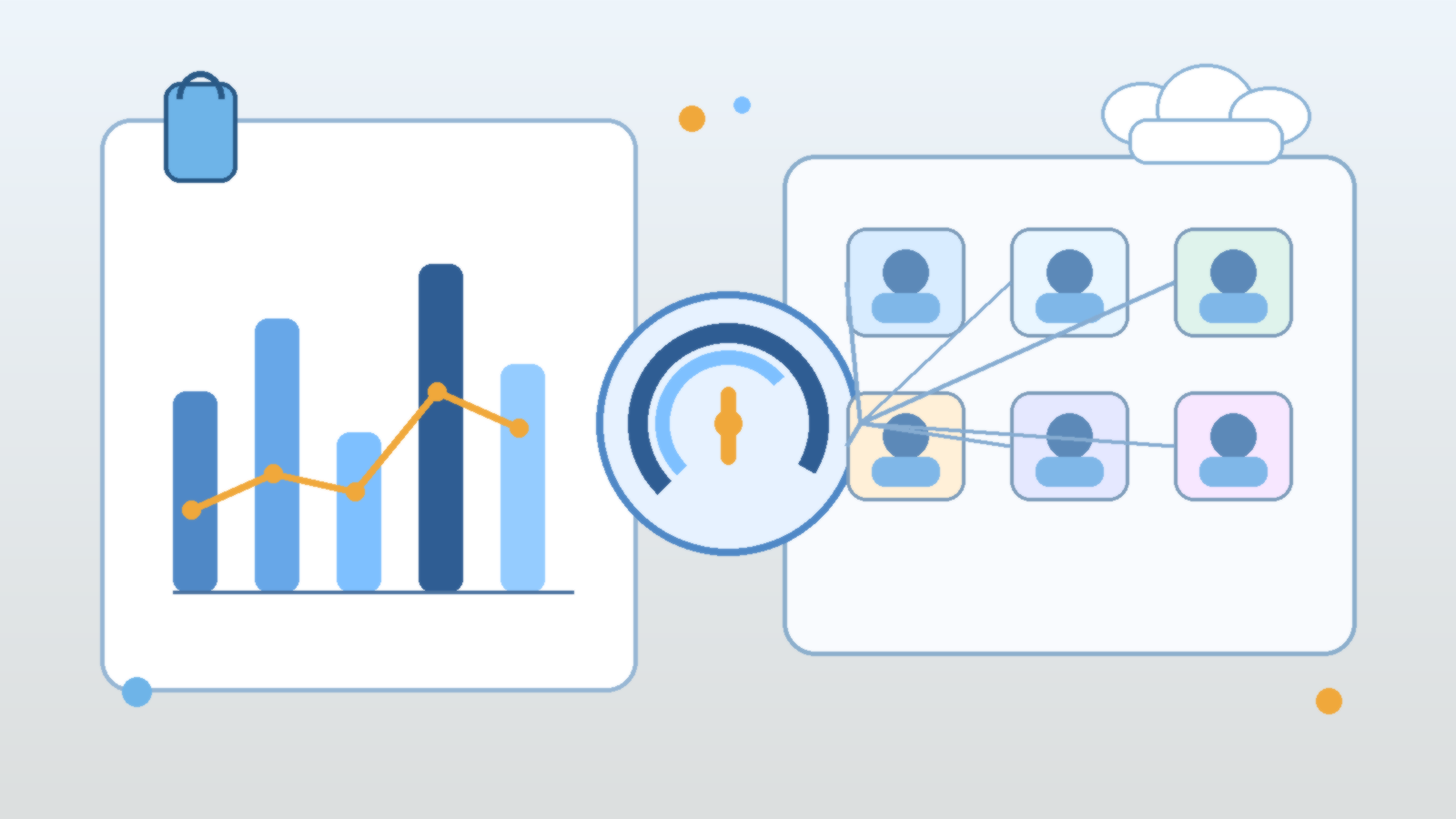
    As AI adoption accelerates across enterprise teams, so does one uncomfortable reality: running large language models at scale is expensive. Token costs add up quickly, inference latency affects user experience, and cloud bills for AI workloads can balloon without warning. FinOps — the practice of applying financial accountability to cloud operations — is now just as important for AI workloads as it is for virtual machines and object storage.

    This post breaks down the key cost drivers in LLM inference, the optimization strategies that actually work, and how to build measurement and governance practices that keep AI costs predictable as your usage grows.

    Understanding What Drives LLM Inference Costs

    Before you can control costs, you need to understand where they come from. LLM inference billing typically has a few major components, and knowing which levers to pull makes all the difference.

    Token Consumption

    Most hosted LLM providers — OpenAI, Anthropic, Azure OpenAI, Google Vertex AI — charge per token, typically split between input tokens (your prompt plus context) and output tokens (the model’s response). Output tokens are generally more expensive than input tokens because generating them requires more compute. A 4,000-token input with a 500-token output costs very differently than a 500-token input with a 4,000-token output, even though the total token count is the same.

    Prompt engineering discipline matters here. Verbose system prompts, large context windows, and repeated retrieval of the same documents all inflate input token counts silently over time. Every token sent to the API costs money.

    Model Selection

    The gap in cost between frontier models and smaller models can be an order of magnitude or more. GPT-4-class models may cost 20 to 50 times more per token than smaller, faster models in the same provider’s lineup. Many production workloads don’t need the strongest model available — they need a model that’s good enough for a defined task at a price that scales.

    A classification task, a summarization pipeline, or a customer-facing FAQ bot rarely needs a frontier model. Reserving expensive models for tasks that genuinely require them — complex reasoning, nuanced generation, multi-step agent workflows — is one of the highest-leverage cost decisions you can make.

    Request Volume and Provisioned Capacity

    Some providers and deployment models charge based on provisioned throughput or reserved capacity rather than pure per-token consumption. Azure OpenAI’s Provisioned Throughput Units (PTUs), for example, charge for reserved model capacity regardless of whether you use it. This can be significantly cheaper at high, steady traffic loads, but expensive if utilization is uneven or unpredictable. Understanding your traffic patterns before committing to reserved capacity is essential.

    Optimization Strategies That Move the Needle

    Cost optimization for AI workloads is not a one-time audit — it is an ongoing engineering discipline. Here are the strategies with the most practical impact.

    Prompt Compression and Optimization

    Systematically auditing and trimming your prompts is one of the fastest wins. Remove redundant instructions, consolidate examples, and replace verbose explanations with tighter phrasing. Tools like LLMLingua and similar prompt compression libraries can reduce token counts by three to five times on complex prompts with minimal quality loss. If your system prompt is 2,000 tokens, shaving it to 600 tokens across thousands of daily requests adds up to significant monthly savings.

    Context window management is equally important. Retrieval-augmented generation (RAG) architectures that naively inject large document chunks into every request waste tokens on irrelevant context. Tuning chunk size, relevance thresholds, and the number of retrieved documents to the minimum needed for quality results keeps context lean.

    Response Caching

    Many LLM requests are repeated or nearly identical. Customer support workflows, knowledge base lookups, and template-based generation pipelines often ask similar questions with similar prompts. Semantic caching — storing the embeddings and responses for previous requests, then returning cached results when a new request is semantically close enough — can cut inference costs by 30 to 60 percent in the right workloads.

    Several inference gateway platforms including LiteLLM, Portkey, and Azure API Management with caching policies support semantic caching out of the box. Even a simple exact-match cache for identical prompts can eliminate a surprising amount of redundant API calls in high-volume workflows.

    Model Routing and Tiering

    Intelligent request routing sends easy requests to cheaper, faster models and reserves expensive models for requests that genuinely need them. This is sometimes called a cascade or routing pattern: a lightweight classifier evaluates each incoming request and decides which model tier to use based on complexity signals like query length, task type, or confidence threshold.

    In practice, you might route 70 percent of requests to a small, fast model that handles them adequately, and escalate the remaining 30 percent to a larger model only when needed. If your cheaper model costs a tenth of your premium model, this pattern could reduce inference costs by 60 to 70 percent with acceptable quality tradeoffs.

    Batching and Async Processing

    Not every LLM request needs a real-time response. For workflows like document processing, content generation pipelines, or nightly summarization jobs, batching requests allows you to use asynchronous batch inference APIs that many providers offer at significant discounts. OpenAI’s Batch API processes requests at 50 percent of the standard per-token price in exchange for up to 24-hour turnaround. For high-volume, non-interactive workloads, this represents a straightforward cost reduction that goes unused at many organizations.

    Fine-Tuning and Smaller Specialized Models

    When a workload is well-defined and high-volume — product description generation, structured data extraction, sentiment classification — fine-tuning a smaller model on domain-specific examples can produce better results than a general-purpose frontier model at a fraction of the inference cost. The upfront fine-tuning expense amortizes quickly when it enables you to run a smaller model instead of a much larger one.

    Self-hosted or private cloud deployment adds another lever: for sufficiently high request volumes, running open-weight models on dedicated GPU infrastructure can be cheaper than per-token API pricing. This requires more operational maturity, but the economics become compelling above certain request thresholds.

    Measuring and Governing AI Spend

    Optimization strategies only work if you have visibility. Without measurement, you are guessing. Good FinOps for AI requires the same instrumentation discipline you would apply to any cloud service.

    Token-Level Telemetry

    Log token counts — input, output, and total — for every inference request alongside your application telemetry. Tag logs with the relevant feature, team, or product area so you can attribute costs to the right owners. Most provider SDKs return token usage in every API response; capturing this and writing it to your observability platform costs almost nothing and gives you the data you need for both alerting and chargeback.

    Set per-feature and per-team cost budgets with alerts. If your document summarization pipeline suddenly starts consuming five times more tokens per request, you want an alert before the monthly bill arrives rather than after.

    Chargeback and Cost Attribution

    In multi-team organizations, centralizing AI spend under a single cost center without attribution creates bad incentives. Teams that do not see the cost of their AI usage have no reason to optimize it. Implementing a chargeback or showback model — even an informal one that shows each team their monthly AI spend in a dashboard — shifts the incentive structure and drives organic optimization.

    Azure Cost Management, AWS Cost Explorer, and third-party FinOps platforms like Apptio or Vantage can help aggregate cloud AI spend. Pairing cloud-level billing data with your own token-level telemetry gives you both macro visibility and the granular detail to diagnose spikes.

    Guardrails and Spend Limits

    Do not rely solely on after-the-fact alerting. Enforce hard spending limits and rate limits at the API level. Most providers support per-key spending caps, quota limits, and rate limiting. An AI inference gateway can add a policy layer in front of your model calls that enforces per-user, per-feature, or per-team quotas before they reach the provider.

    Input validation and output length constraints are another form of guardrail. If your application does not need responses longer than 500 tokens, setting a max_tokens limit prevents runaway generation costs from prompts that elicit unexpectedly long outputs.

    Building a FinOps Culture for AI

    Technical optimizations alone are not enough. Sustainable cost management for AI requires organizational practices: regular cost reviews, clear ownership of AI spend, and cross-functional collaboration between the teams building AI features and the teams managing infrastructure budgets.

    A few practices that work well in practice:

    • Weekly or bi-weekly AI spend reviews as part of engineering standups or ops reviews, especially during rapid feature development.
    • Cost-per-output tracking for each AI-powered feature — not just raw token counts, but cost per summarization, cost per generated document, cost per resolved support ticket. This connects spend to business value and makes tradeoffs visible.
    • Model evaluation pipelines that include cost as a first-class metric alongside quality. When comparing two models for a task, the evaluation should include projected cost at production volume, not just benchmark accuracy.
    • Runbook documentation for cost spike response: who gets alerted, what the first diagnostic steps are, and what levers are available to reduce spend quickly if needed.

    The Bottom Line

    LLM inference costs are not fixed. They are a function of how thoughtfully you design your prompts, choose your models, cache your results, and measure your usage. Teams that treat AI infrastructure like any other cloud spend — with accountability, measurement, and continuous optimization — will get far more value from their AI investments than teams that treat model API bills as an unavoidable tax on innovation.

    The good news is that most of the highest-impact optimizations are not exotic. Trimming prompts, routing requests to appropriately-sized models, and caching repeated results are engineering basics. Apply them to your AI workloads the same way you would apply them anywhere else, and you will find more cost headroom than you expected.

  • How to Set Azure OpenAI Quotas for Internal Teams Without Turning Every Launch Into a Budget Fight

    How to Set Azure OpenAI Quotas for Internal Teams Without Turning Every Launch Into a Budget Fight

    Illustration of Azure AI quota planning with dashboards, shared capacity, and team workload tiles

    Azure OpenAI projects usually do not fail because the model is unavailable. They fail because the organization never decided how shared capacity should be allocated once multiple teams want the same thing at the same time. One pilot gets plenty of headroom, a second team arrives with a deadline, a third team suddenly wants higher throughput for a demo, and finance starts asking why the new AI platform already feels unpredictable.

    The technical conversation often gets reduced to tokens per minute, requests per minute, or whether provisioned capacity is justified yet. Those details matter, but they are not the whole problem. The real issue is operational ownership. If nobody defines who gets quota, how it is reviewed, and what happens when demand spikes, every model launch turns into a rushed negotiation between engineering, platform, and budget owners.

    Quota Problems Usually Start as Ownership Problems

    Many internal teams begin with one shared Azure OpenAI resource and one optimistic assumption: there will be time to organize quotas later. That works while usage is light. Once multiple workloads compete for throughput, the shared pool becomes political. The loudest team asks for more. The most visible launch gets protected first. Smaller internal apps absorb throttling even if they serve important employees.

    That is why quota planning should be treated like service design instead of a one-time technical setting. Someone needs to own the allocation model, the exceptions process, and the review cadence. Without that, quota decisions drift into ad hoc favors, and every surprise 429 becomes an argument about whose workload matters more.

    Separate Baseline Capacity From Burst Requests

    A practical pattern is to define a baseline allocation for each internal team or application, then handle temporary spikes as explicit burst requests instead of pretending every workload deserves permanent peak capacity. Baseline quota should reflect normal operating demand, not launch-day nerves. Burst handling should cover events like executive demos, migration waves, training sessions, or a newly onboarded business unit.

    This matters because permanent over-allocation hides waste. Teams rarely give capacity back voluntarily once they have it. If the platform group allocates quota based on hypothetical worst-case usage for everyone, the result is a bloated plan that still does not feel fair. A baseline-plus-burst model is more honest. It admits that some demand is real and recurring, while some demand is temporary and should be treated that way.

    Tie Quota to a Named Service Owner and a Business Use Case

    Do not assign significant Azure OpenAI quota to anonymous experimentation. If a workload needs meaningful capacity, it should have a named owner, a clear user population, and a documented business purpose. That does not need to become a heavy governance board, but it should be enough to answer a few basic questions: who runs this service, who uses it, what happens if it is throttled, and what metric proves the allocation is still justified.

    This simple discipline improves both cost control and incident response. When quotas are tied to identifiable services, platform teams can see which internal products deserve priority, which are dormant, and which are still living on last quarter’s assumptions.

    Use Showback Before You Need Full Chargeback

    Organizations often avoid quota governance because they think the only serious option is full financial chargeback. That is overkill for many internal AI programs, especially early on. Showback is usually enough to improve behavior. If each team can see its approximate usage, reserved capacity, and the cost consequence of keeping extra headroom, conversations get much more grounded.

    Showback changes the tone from “the platform is blocking us” to “we are asking the platform to reserve capacity for this workload, and here is why.” That is a healthier discussion. It also gives finance and engineering a shared language without forcing every prototype into a billing maze too early.

    Design for Throttling Instead of Acting Shocked by It

    Even with good allocation, some workloads will still hit limits. That should not be treated as a scandal. It should be expected behavior that applications are designed to handle gracefully. Queueing, retries with backoff, workload prioritization, caching, and fallback models all belong in the engineering plan long before production traffic arrives.

    The important governance point is that application teams should not assume the platform will always solve a usage spike by handing out more quota. Sometimes the right answer is better request shaping, tighter prompt design, or a service-level decision about which users and actions deserve priority when demand exceeds the happy path.

    Review Quotas on a Calendar, Not Only During Complaints

    If quota reviews only happen during incidents, the review process will always feel punitive. A better pattern is a simple recurring check, often monthly or quarterly depending on scale, where platform and service owners look at utilization, recent throttling, upcoming launches, and idle allocations. That makes redistribution normal instead of dramatic.

    These reviews should be short and practical. The goal is not to produce another governance document nobody reads. The goal is to keep the capacity model aligned with reality before the next internal launch or leadership demo creates avoidable pressure.

    Provisioned Capacity Should Follow Predictability, Not Prestige

    Some teams push for provisioned capacity because it sounds more mature or more strategic. That is not a good reason. Provisioned throughput makes the most sense when a workload is steady enough, important enough, and predictable enough to justify that commitment. It is a capacity planning tool, not a trophy for the most influential internal sponsor.

    If your traffic pattern is still exploratory, standard shared capacity with stronger governance may be the better fit. If a workload has a stable usage floor and meaningful business dependency, moving part of its demand to provisioned capacity can reduce drama for everyone else. The point is to decide based on workload shape and operational confidence, not on who escalates hardest.

    Final Takeaway

    Azure OpenAI quota governance works best when it is boring. Define baseline allocations, make burst requests explicit, tie capacity to named owners, show teams what their reservations cost, and review the model before contention becomes a firefight. That turns quota from a budget argument into a service management practice.

    When internal AI platforms skip that discipline, every new launch feels urgent and every limit feels unfair. When they adopt it, teams still have hard conversations, but at least those conversations happen inside a system that makes sense.

  • How to Keep AI Sandbox Subscriptions From Becoming Permanent Azure Debt

    How to Keep AI Sandbox Subscriptions From Becoming Permanent Azure Debt

    AI teams often need a place to experiment quickly. A temporary Azure subscription, a fresh resource group, and a few model-connected services can feel like the fastest route from idea to proof of concept. The trouble is that many sandboxes are only temporary in theory. Once they start producing something useful, they quietly stick around, accumulate access, and keep spending money long after the original test should have been reviewed.

    That is how small experiments turn into permanent Azure debt. The problem is not that sandboxes exist. The problem is that they are created faster than they are governed, and nobody defines the point where a trial environment must either graduate into a managed platform or be shut down cleanly.

    Why AI Sandboxes Age Badly

    Traditional development sandboxes already have a tendency to linger, but AI sandboxes age even worse because they combine infrastructure, data access, identity permissions, and variable consumption costs. A team may start with a harmless prototype, then add Azure OpenAI access, a search index, storage accounts, test connectors, and a couple of service principals. Within weeks, the environment stops being a scratchpad and starts looking like a shadow platform.

    That drift matters because the risk compounds quietly. Costs continue in the background, model deployments remain available, access assignments go stale, and test data starts blending with more sensitive workflows. By the time someone notices, the sandbox is no longer simple enough to delete casually and no longer clean enough to trust as production.

    Set an Expiration Rule Before the First Resource Is Created

    The best time to govern a sandbox is before it exists. Every experimental Azure subscription or resource group should have an expected lifetime, an owner, and a review date tied to the original request. If there is no predefined checkpoint, people will naturally treat the environment as semi-permanent because nobody enjoys interrupting a working prototype to do cleanup paperwork.

    A lightweight expiration rule works better than a vague policy memo. Teams should know that an environment will be reviewed after a defined period, such as 30 or 45 days, and that the review must end in one of three outcomes: extend it with justification, promote it into a managed landing zone, or retire it. That one decision point prevents a lot of passive sprawl.

    Use Azure Policy and Tags to Make Temporary Really Mean Temporary

    Manual tracking breaks down quickly once several teams are running parallel experiments. Azure Policy and tagging give you a more durable way to spot sandboxes before they become invisible. Required tags for owner, cost center, expiration date, and environment purpose make it much easier to query what exists and why it still exists.

    Policy can reinforce those expectations by denying obviously noncompliant deployments or flagging resources that do not meet the minimum metadata standard. The goal is not to punish experimentation. It is to make experimental environments legible enough that platform teams can review them without playing detective across subscriptions and portals.

    Separate Prototype Freedom From Production Access

    A common mistake is letting a sandbox keep reaching further into real enterprise systems because the prototype is showing promise. That is usually the moment when a temporary environment becomes dangerous. Experimental work often needs flexibility, but that is not the same thing as open-ended access to production data, broad service principal rights, or unrestricted network paths.

    A better model is to keep the sandbox useful while limiting what it can touch. Sample datasets, constrained identities, narrow scopes, and approved integration paths let teams test ideas without normalizing risky shortcuts. If a proof of concept truly needs deeper access, that should be the signal to move it into a managed environment instead of stretching the sandbox beyond its original purpose.

    Watch for Cost Drift Before Finance Has To

    AI costs are especially easy to underestimate in a sandbox because usage looks small until several experiments overlap. Model calls, vector indexing, storage growth, and attached services can create a monthly bill that feels out of proportion to the casual way the environment was approved. Once that happens, teams either panic and overcorrect or quietly avoid talking about the spend at all.

    Azure budgets, alerts, and resource-level visibility should be part of the sandbox pattern from the start. A sandbox does not need enterprise-grade finance ceremony, but it does need an early warning system. If an experiment is valuable enough to keep growing, that is good news. It just means the environment should move into a more deliberate operating model before the bill becomes its defining feature.

    Make Promotion a Real Path, Not a Bureaucratic Wall

    Teams keep half-governed sandboxes alive for one simple reason: promotion into a proper platform often feels slower than leaving the prototype alone. If the managed path is painful, people will rationalize the shortcut. That is not a moral failure. It is a design failure in the platform process.

    The healthiest Azure environments give teams a clear migration path from experiment to supported service. That might mean a standard landing zone, reusable infrastructure templates, approved identity patterns, and a documented handoff into operational ownership. When promotion is easier than improvisation, sandboxes stop turning into accidental long-term architecture.

    Final Takeaway

    AI sandboxes are not the problem. Unbounded sandboxes are. If temporary subscriptions have no owner, no expiration rule, no policy shape, and no promotion path, they will eventually become a messy blend of prototype logic, real spend, and unclear accountability.

    The practical fix is to define the sandbox lifecycle up front, tag it clearly, limit what it can reach, and make graduation into a managed Azure pattern easier than neglect. That keeps experimentation fast without letting yesterday’s pilot become tomorrow’s permanent debt.

  • Why Every Azure AI Pilot Needs a Cost Cap Before It Needs a Bigger Model

    Why Every Azure AI Pilot Needs a Cost Cap Before It Needs a Bigger Model

    Teams often start an Azure AI pilot with a simple goal: prove that a chatbot, summarizer, document assistant, or internal copilot can save time. That part is reasonable. The trouble starts when the pilot shows just enough promise to attract more users, more prompts, more integrations, and more expectations before anyone sets a financial boundary.

    That is why every serious Azure AI pilot needs a cost cap before it needs a bigger model. A cost cap is not just a budget number buried in a spreadsheet. It is an operating guardrail that forces the team to define how much experimentation, latency, accuracy, and convenience they are actually willing to buy during the pilot stage.

    Why AI Pilots Become Expensive Faster Than They Look

    Most pilots do not fail because the first demo is too costly. They become expensive because success increases demand. A tool that starts with a small internal audience can quickly expand from a few users to an entire department. Prompt lengths grow, file uploads increase, and teams begin asking for premium models for tasks that were originally scoped as lightweight assistance.

    Azure makes this easy to miss because the growth is often distributed across several services. Model inference, storage, search indexes, document processing, observability, networking, and integration layers can all rise together. No single line item looks catastrophic at first, but the total spend can drift far away from what leadership thought the pilot would cost.

    A Cost Cap Changes the Design Conversation

    Without a cap, discussions about features tend to sound harmless. Can we keep more chat history for better answers? Can we run retrieval on every request? Can we send larger documents? Can we upgrade the default model for everyone? Each change may improve user experience, but each one also increases spend or creates unpredictable usage patterns.

    A cost cap changes the conversation from “what else can we add” to “what is the most valuable capability we can deliver inside a fixed operating boundary.” That is a healthier question. It pushes teams to choose the right model tier, trim waste, and separate must-have experiences from nice-to-have upgrades.

    The Right Cap Is Tied to the Pilot Stage

    A pilot should not be budgeted like a production platform. Its purpose is to test usefulness, operational fit, and governance maturity. That means the cap should reflect the stage of learning. Early pilots should prioritize bounded experimentation, not maximum reach.

    A practical approach is to define a monthly ceiling and then translate it into technical controls. If the pilot cannot exceed a known monthly number, the team needs daily or weekly signals that show whether usage is trending in the wrong direction. It also needs clear rules for what happens when the pilot approaches the limit. In many environments, slowing expansion for a week is far better than discovering a surprise bill after the month closes.

    Four Controls That Actually Keep Azure AI Spend in Check

    1. Put a model policy in writing

    Many pilots quietly become expensive because people keep choosing larger models by default. Write down which model is approved for which task. For example, a smaller model may be good enough for classification, metadata extraction, or simple drafting, while a stronger model is reserved for complex reasoning or executive-facing outputs.

    That written policy matters because it prevents the team from treating model upgrades as casual defaults. If someone wants a more expensive model path, they should be able to explain what measurable value the upgrade creates.

    2. Cap high-cost features at the workflow level

    Token usage is only part of the picture. Retrieval-augmented generation, document parsing, and multi-step orchestration can turn a cheap interaction into an expensive one. Instead of trying to control cost only after usage lands, put limits into the workflow itself.

    For example, limit the number of uploaded files per session, cap how much source content is retrieved into a single answer, and avoid chaining multiple tools when a simpler path would solve the problem. Workflow caps are easier to enforce than good intentions.

    3. Monitor cost by scenario, not only by service

    Azure billing data is useful, but it does not automatically explain which product behavior is driving spend. A better view groups cost by user scenario. Separate the daily question-answer flow from document summarization, batch processing, and experimentation environments.

    That separation helps the team see which use cases are sustainable and which ones need redesign. If one scenario consumes a disproportionate share of the pilot budget, leadership can decide whether it deserves more investment or tighter limits.

    4. Create a slowdown plan before the cap is hit

    A cap without a response plan is just a warning light. Teams should decide in advance what changes when usage approaches the threshold. That may include disabling premium models for noncritical users, shortening retained context, delaying batch jobs, or restricting large uploads until the next reporting window.

    This is not about making the pilot worse for its own sake. It is about preserving control. A planned slowdown is much less disruptive than emergency cost cutting after the fact.

    Cost Discipline Also Improves Governance

    There is a governance benefit here that technical teams sometimes overlook. If a pilot can only stay within budget by constantly adding exceptions, hidden services, or untracked experiments, that is a sign the operating model is not ready for wider rollout.

    A disciplined cap exposes those issues early. It reveals whether teams have clear ownership, meaningful telemetry, and a real approval process for expanding capability. In that sense, cost control is not separate from governance. It is one of the clearest tests of whether governance is real.

    Bigger Models Are Not the First Answer

    When a pilot struggles, the instinct is often to reach for a more capable model. Sometimes that is justified. Often it is lazy architecture. Weak prompt design, poor retrieval hygiene, oversized context windows, and vague user journeys can all create poor results that a larger model only partially hides.

    Before paying more, teams should ask whether the system is sending the model cleaner inputs, constraining the task well, and using the right model for the job. A sharper design usually delivers better economics than a reflexive upgrade.

    The Best Pilots Earn the Right to Expand

    A healthy Azure AI pilot should prove more than model quality. It should show that the team can manage demand, understand cost drivers, and grow on purpose instead of by accident. That is what earns trust from finance, security, and leadership.

    If the pilot cannot operate comfortably inside a defined cost cap, it is not ready for bigger adoption yet. The goal is not to starve experimentation. The goal is to build enough discipline that when the pilot succeeds, the organization can scale it without losing control.

    A bigger model might improve an answer. A cost cap improves the entire operating model. In the long run, that matters more.

  • Why Azure Landing Zones Break When Naming and Tagging Are Optional

    Why Azure Landing Zones Break When Naming and Tagging Are Optional

    Azure landing zones are supposed to make cloud growth more orderly. They give teams a place to standardize subscriptions, networking, policy, identity, and operational guardrails before entropy gets a head start. On paper, that sounds mature. In practice, plenty of landing zone efforts still stumble because two basics stay optional for too long: naming and tagging.

    That sounds almost too simple to be the real problem, which is probably why teams keep underestimating it. But once naming and tagging turn into suggestions instead of standards, everything built on top of them starts getting noisier, slower, and more expensive. Cost reviews get fuzzy. Automation needs custom exceptions. Ownership questions become detective work. Governance looks present but behaves inconsistently.

    Naming Standards Are Really About Operational Clarity

    A naming convention is not there to make architects feel organized. It is there so humans and systems can identify resources quickly without opening six different blades in the portal. When a resource group, key vault, virtual network, or storage account tells you nothing about environment, workload, region, or purpose, the team loses time every time it touches that asset.

    That friction compounds fast. Incident response gets slower because responders need extra lookup steps. Access reviews take longer because reviewers cannot tell whether a resource is still aligned to a real workload. Migration and cleanup work become riskier because teams hesitate to remove anything they do not understand. A weak naming model quietly taxes every future operation.

    Tagging Is What Turns Governance Into Something Queryable

    Tags are not just decorative metadata. They are one of the simplest ways to make a cloud estate searchable, classifiable, and automatable across subscriptions. If a team wants to know which resources belong to a business service, which owner is accountable, which environment is production, or which workloads are in scope for a control, tags are often the easiest path to a reliable answer.

    Once tagging becomes optional, teams stop trusting the data. Some resources have an owner tag, some do not. Some use prod, some use production, and some use nothing at all. Finance cannot line costs up cleanly. Security cannot target review campaigns precisely. Platform engineers start writing workaround logic because the metadata layer cannot be trusted to tell the truth consistently.

    Cost Management Suffers First, Even When Nobody Notices Right Away

    One of the earliest failures shows up in cloud cost reporting. Leaders want to know which product, department, environment, or initiative is driving spend. If resources were deployed without consistent tags, those questions become partial guesses instead of clear reports. The organization still gets a bill, but the explanation behind the bill becomes less credible.

    That uncertainty changes behavior. Teams argue over chargeback numbers. Waste reviews turn into debates about attribution instead of action. FinOps work gets stuck in data cleanup mode because the estate was never disciplined enough to support clean slices in the first place. Optional tagging looks harmless at deployment time, but it becomes expensive during every monthly review afterward.

    Automation Gets Fragile When Metadata Cannot Be Trusted

    Cloud automation usually assumes some level of consistency. Scripts, policies, lifecycle jobs, and dashboards need stable ways to identify what they are acting on. If naming patterns drift and tags are missing, engineers either broaden automation until it becomes risky or narrow it with manual exception lists until it becomes annoying to maintain.

    Neither outcome is good. Broad automation can hit the wrong resources. Narrow automation turns every new workload into a special case. This is one reason strong landing zones bake in naming and tagging requirements as early controls. Those standards are not bureaucracy for its own sake. They are the foundation that lets automation stay predictable as the estate grows.

    Policy Without Enforced Basics Becomes Mostly Symbolic

    Many Azure teams proudly point to policy initiatives, blueprint replacements, and control frameworks that look solid in governance meetings. But if the environment still allows unmanaged names and inconsistent tags into production, the governance model is weaker than it appears. The organization has controls on paper, but not enough discipline at creation time.

    The better approach is straightforward: define required naming components, define a small set of mandatory tags that actually matter, and enforce them where teams create resources. That usually means combining clear standards with Azure Policy, templates, and review expectations. The goal is not to turn every deployment into a paperwork exercise. The goal is to stop avoidable ambiguity before it becomes operational debt.

    What Strong Teams Usually Standardize

    The most effective standards are short enough to follow and strict enough to be useful. Most teams do well when they standardize a naming pattern that signals workload, environment, region, and resource purpose, then require a focused tag set that covers owner, cost center, application or service name, environment, and data sensitivity or criticality where appropriate.

    That is usually enough to improve operations without drowning people in metadata chores. The mistake is trying to make every tag optional except during audits. If the tag is important for cost, support, or governance, it should exist at deployment time, not after a spreadsheet-driven cleanup sprint.

    Final Takeaway

    Azure landing zones do not break only because of major architecture mistakes. They also break because teams leave basic operational structure to individual preference. Optional naming and tagging create confusion that spreads into cost management, automation, access reviews, and governance reporting.

    If a team wants its landing zone to stay useful beyond the first wave of deployments, naming and tagging cannot live in the nice-to-have category. They are not the whole governance story, but they are the part that makes the rest of the story easier to run.

  • Why AI Cost Controls Break Without Usage-Level Visibility

    Why AI Cost Controls Break Without Usage-Level Visibility

    Enterprise leaders love the idea of AI productivity, but finance teams usually meet the bill before they see the value. That is why so many “AI cost optimization” efforts stall out. They focus on list prices, model swaps, or a single monthly invoice, while the real problem lives one level deeper: nobody can clearly see which prompts, teams, tools, and workflows are creating cost and whether that cost is justified.

    If your organization only knows that “AI spend went up,” you do not have cost governance. You have an expensive mystery. The fix is not just cheaper models. It is usage-level visibility that links technical activity to business intent.

    Why top-line AI spend reports are not enough

    Most teams start with the easiest number to find: total spend by vendor or subscription. That is a useful starting point, but it does not help operators make better decisions. A monthly platform total cannot tell you whether cost growth came from a successful customer support assistant, a badly designed internal chatbot, or developers accidentally sending huge contexts to a premium model.

    Good governance needs a much tighter loop. You should be able to answer practical questions such as which application generated the call, which user or team triggered it, which model handled it, how many tokens or inference units were consumed, whether retrieval or tool calls were involved, how long it took, and what business workflow the request supported. Without that level of detail, every cost conversation turns into guesswork.

    The unit economics every AI team should track

    The most useful AI cost metric is not cost per month. It is cost per useful outcome. That outcome will vary by workload. For a support assistant, it may be cost per resolved conversation. For document processing, it may be cost per completed file. For a coding assistant, it may be cost per accepted suggestion or cost per completed task.

    • Cost per request: the baseline price of serving a single interaction.
    • Cost per session or workflow: the full spend for a multi-step task, including retries and tool calls.
    • Cost per successful outcome: the amount spent to produce something that actually met the business goal.
    • Cost by team, feature, and environment: the split that shows whether spend is concentrated in production value or experimental churn.
    • Latency and quality alongside cost: because a cheaper answer is not better if it is too slow or too poor to use.

    Those metrics let you compare architectures in a way that matters. A larger model can be the cheaper option if it reduces retries, escalations, or human cleanup. A smaller model can be the costly option if it creates low-quality output that downstream teams must fix manually.

    Where AI cost visibility usually breaks down

    The breakdown usually happens at the application layer. Finance may see vendor charges. Platform teams may see API traffic. Product teams may see user engagement. But those views are often disconnected. The result is a familiar pattern: everyone has data, but nobody has an explanation.

    There are a few common causes. Prompt versions are not tracked. Retrieval calls are billed separately from model inference. Caching savings are invisible. Development and production traffic are mixed together. Shared service accounts hide ownership. Tool-using agents create multi-step costs that never get tied back to a single workflow. By the time someone asks why a budget doubled, the evidence is scattered across logs, dashboards, and invoices.

    What a usable AI cost telemetry model looks like

    The cleanest approach is to treat AI activity like any other production workload: instrument it, label it, and make it queryable. Every request should carry metadata that survives all the way from the user action to the billing record. That usually means attaching identifiers for the application, feature, environment, tenant, user role, experiment flag, prompt template, model, and workflow instance.

    From there, you can build dashboards that answer the questions leadership actually asks. Which features have the best cost-to-value ratio? Which teams are burning budget in testing? Which prompt releases increased average token usage? Which workflows should move to a cheaper model? Which ones deserve a premium model because the business value is strong?

    If you are running AI on Azure, this usually means combining application telemetry, Azure Monitor or Log Analytics data, model usage metrics, and chargeback labels in a consistent schema. The exact tooling matters less than the discipline. If your labels are sloppy, your analysis will be sloppy too.

    Governance should shape behavior, not just reporting

    Visibility only matters if it changes decisions. Once you can see cost at the workflow level, you can start enforcing sensible controls. You can set routing rules that reserve premium models for high-value scenarios. You can cap context sizes. You can detect runaway agent loops. You can require prompt reviews for changes that increase average token consumption. You can separate experimentation budgets from production budgets so innovation does not quietly eat operational margin.

    That is where AI governance becomes practical instead of performative. Instead of generic warnings about responsible use, you get concrete operating rules tied to measurable behavior. Teams stop arguing in the abstract and start improving what they can actually see.

    A better question for leadership to ask

    Many executives ask, “How do we lower AI spend?” That is understandable, but it is usually the wrong first question. The better question is, “Which AI workloads have healthy unit economics, and which ones are still opaque?” Once you know that, cost reduction becomes a targeted exercise instead of a blanket reaction.

    AI programs do not fail because the invoices exist. They fail because leaders cannot distinguish productive spend from noisy spend. Usage-level visibility is what turns AI from a budget risk into an operating discipline. Until you have it, cost control will always feel one step behind reality.

  • How to Stop Azure Test Projects From Turning Into Permanent Cost Problems

    How to Stop Azure Test Projects From Turning Into Permanent Cost Problems

    Azure makes it easy to get a promising idea off the ground. That speed is useful, but it also creates a familiar problem: a short-lived test environment quietly survives long enough to become part of the monthly bill. What started as a harmless proof of concept turns into a permanent cost line with no real owner.

    This is not usually a finance problem first. It is an operating discipline problem. When teams can create resources faster than they can label, review, and retire them, cloud spend drifts away from intentional decisions and toward quiet default behavior.

    Fast Provisioning Needs an Expiration Mindset

    Most Azure waste does not come from a dramatic mistake. It comes from things that nobody bothers to shut down: development databases that never sleep, public IPs attached to old test workloads, oversized virtual machines left running after a demo, and storage accounts holding data that no longer matters.

    The fix starts with mindset. If a resource is created for a test, it should be treated like something temporary from the first minute. Teams that assume every experiment needs a review date are much less likely to inherit a pile of stale infrastructure three months later.

    Tagging Only Works When It Drives Decisions

    Many organizations talk about tagging standards, but tags are useless if nobody acts on them. A tag like environment=test or owner=team-alpha becomes valuable only when budgets, dashboards, and cleanup workflows actually use it.

    That is why the best Azure tagging schemes stay practical. Teams need a short set of required tags that answer operational questions: who owns this, what is it for, what environment is it in, and when should it be reviewed. Anything longer than that often collapses under its own ambition.

    Budgets and Alerts Should Reach a Human Who Can Act

    Azure budgets are helpful, but they are not magical. A budget alert sent to a forgotten mailbox or a broad operations list will not change behavior. The alert needs to reach a person or team that can decide whether the spend is justified, temporary, or a sign that something should be turned off.

    That means alerts should map to ownership boundaries, not just subscriptions. If a team can create and run a workload, that same team should see cost signals early enough to respond before an experiment becomes an assumed production dependency.

    Make Cleanup a Normal Part of the Build Pattern

    Cleanup should not be a heroic end-of-quarter exercise. It should be a routine design decision. Infrastructure as code helps here because teams can define not only how resources appear, but also how they get paused, scaled down, or removed when the work is over.

    Even a simple checklist improves outcomes. Before a test project is approved, someone should already know how the environment will be reviewed, what data must be preserved, and which parts can be deleted without debate. That removes friction when it is time to shut things down.

    • Set a review date when the environment is created.
    • Require a real owner tag tied to a team that can take action.
    • Use budgets and alerts at the resource group or workload level when possible.
    • Automate shutdown schedules for non-production compute.
    • Review old storage, networking, and snapshot resources during cleanup, not just virtual machines.

    Governance Should Reduce Drift, Not Slow Useful Work

    Good Azure governance is not about making every experiment painful. It is about making the cheap, responsible path easier than the sloppy one. When teams have standard tags, sensible quotas, cleanup expectations, and clear escalation points, they can still move quickly without leaving financial debris behind them.

    That balance matters because cloud platforms reward speed. If governance only says no, people route around it. If governance creates simple guardrails that fit how engineers actually work, the organization gets both experimentation and cost control.

    Final Takeaway

    Azure test projects become permanent cost problems when nobody defines ownership, review dates, and cleanup expectations at the start. A little structure goes a long way. Temporary workloads stay temporary when tags mean something, alerts reach the right people, and retirement is part of the plan instead of an afterthought.

  • Azure Cost Reviews That Actually Work: A Weekly Checklist for Real Teams

    Azure Cost Reviews That Actually Work: A Weekly Checklist for Real Teams

    Most cost reviews fail because they happen too late and ask the wrong questions. A useful Azure cost review should be short, repeatable, and tied to actions the team can actually take that week.

    Start with the Biggest Movers

    The first step is not reviewing every single line item. Start by identifying the services, subscriptions, or resource groups that changed the most since the last review. Large movement usually tells a more useful story than absolute totals alone.

    This keeps the meeting focused. It is easier to explain a spike or drop when the change is recent and visible.

    Check for Idle or Mis-Sized Compute

    Compute is still one of the easiest places to waste money. Review virtual machines, node pools, and app services that are oversized or left running around the clock without a business reason.

    Even small rightsizing actions compound over time, especially across multiple environments.

    Review Storage Growth Before It Becomes Normal

    Storage growth often slips through because it feels harmless in the beginning. But backup copies, snapshots, logs, and old artifacts accumulate quietly until they become a meaningful part of the bill.

    A weekly check keeps this from turning into a quarterly surprise.

    Ask Which Spend Was Intentional

    Not every cost increase is bad. Some increases are the result of successful launches or higher demand. The real goal is separating intentional spend from accidental spend.

    That framing keeps the conversation practical and avoids treating every increase like a mistake.

    End Every Review with Assignments

    A cost review without owners is just reporting. Every flagged item should leave the meeting with a named person, an expected action, and a deadline for follow-up.

    This is what turns FinOps from a slide deck activity into an operational habit.

    Final Takeaway

    The best Azure cost review is not long or dramatic. It is a weekly routine that catches waste early, separates signal from noise, and leads to specific decisions.

  • Cloud Governance That Scales: 7 Rules Practical Teams Follow

    Cloud Governance That Scales: 7 Rules Practical Teams Follow

    Cloud governance works best when it is boring, consistent, and hard to bypass. The strongest teams focus on repeatable rules instead of heroic cleanup efforts.

    Seven Practical Rules

    • Every resource needs an owner
    • Tagging is enforced, not suggested
    • Budgets are visible by team
    • Identity is reviewed regularly
    • Logging has named responders
    • Policies are versioned
    • Exceptions expire automatically

    Why This Matters

    Governance is what turns a growing cloud estate into an operating system instead of a pile of subscriptions and surprises.