Tag: cloud-operations

  • Kubernetes vs. Azure Container Apps: How to Choose the Right Container Platform for Your Team

    Kubernetes vs. Azure Container Apps: How to Choose the Right Container Platform for Your Team

    Containerization changed how teams build and ship software. But choosing how to run those containers is a decision that has major downstream effects on your team's operational overhead, cost structure, and architectural flexibility. Two options that come up most often in Azure environments are Azure Kubernetes Service (AKS) and Azure Container Apps (ACA). They both run containers. They both scale. And they both sit in Azure. So what actually separates them — and when does each one win?

    This post breaks down the key differences so you can make a clear, informed choice rather than defaulting to “just use Kubernetes” because it's familiar.

    What Each Platform Actually Is

    Azure Kubernetes Service (AKS) is Microsoft's managed Kubernetes offering. You still manage node pools, configure networking, handle storage classes, set up ingress controllers, and reason about cluster capacity. Azure handles the Kubernetes control plane, but everything from the node level down is on you. AKS gives you the full Kubernetes API — every knob, every operator, every custom resource definition.

    Azure Container Apps (ACA) is a fully managed, serverless container platform. Under the hood it runs on Kubernetes and KEDA (the Kubernetes-based event-driven autoscaler), but that entire layer is completely hidden from you. You deploy containers. You define scale rules. Azure takes care of everything else, including zero-scale when traffic drops to nothing.

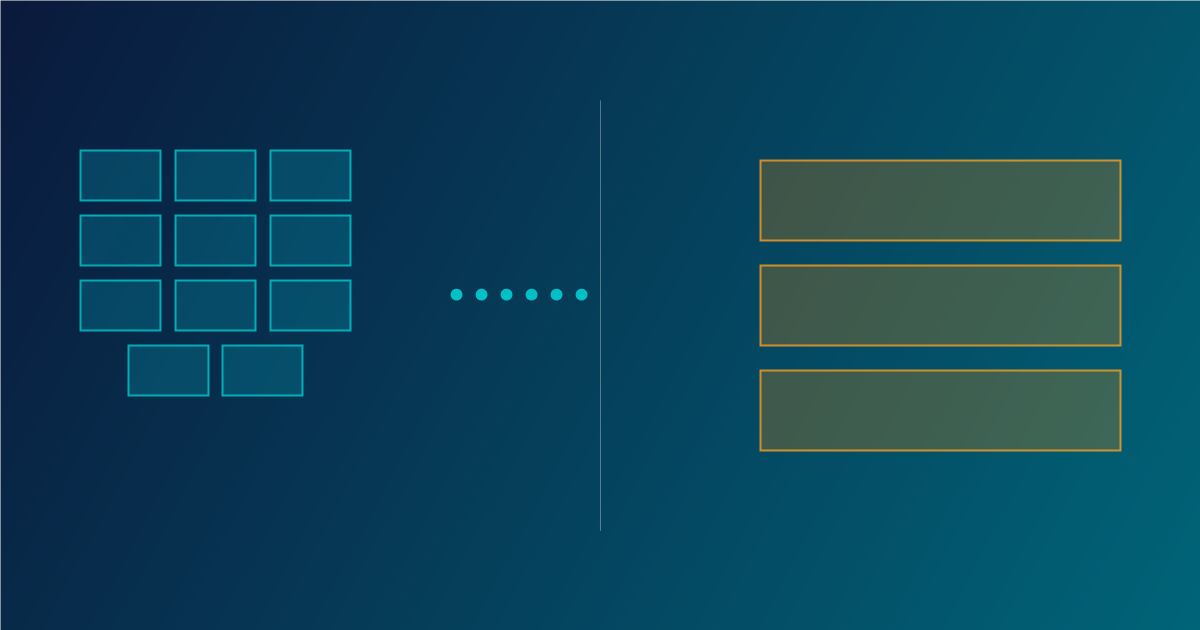
    The simplest mental model: AKS is infrastructure you control; ACA is a platform that controls itself.

    Operational Complexity: The Real Cost of Kubernetes

    Kubernetes is powerful, but it does not manage itself. On AKS, someone on your team needs to own the cluster. That means patching node pools when new Kubernetes versions drop, right-sizing VM SKUs, configuring cluster autoscaler settings, setting up an ingress controller (NGINX, Application Gateway Ingress Controller, or another option), managing Persistent Volume Claims for stateful workloads, and wiring up monitoring with Azure Monitor or Prometheus.

    None of this is particularly hard if you have a dedicated platform or DevOps team. But for a team of five developers shipping a SaaS product, this is real overhead that competes with feature work. A misconfigured cluster autoscaler during a traffic spike does not just cause degraded performance — it can cascade into an outage.

    Azure Container Apps removes this entire layer. There are no nodes to patch, no ingress controllers to configure, no cluster autoscaler to tune. You push a container image, configure environment variables and scale rules, and the platform handles the rest. For teams without dedicated infrastructure engineers, this is a significant productivity multiplier.

    Scaling Behavior: When ACA's Serverless Model Shines

    Azure Container Apps was built from the ground up around event-driven autoscaling via KEDA. Out of the box, ACA can scale your containers based on HTTP traffic, CPU, memory, Azure Service Bus queue depth, Azure Event Hub consumer lag, or any custom metric KEDA supports. More importantly, it can scale all the way to zero replicas when there is nothing to process — and you pay nothing while scaled to zero.

    This makes ACA an excellent fit for workloads with bursty or unpredictable traffic patterns: background job processors, webhook handlers, batch pipelines, internal APIs that see low-to-moderate traffic. If your workload sits idle for hours at a time, the cost savings from zero-scale can be substantial.

    AKS supports horizontal pod autoscaling and KEDA as an add-on, but scaling to zero requires additional configuration, and you still pay for the underlying nodes even if no pods are scheduled on them (unless you are also using Virtual Nodes or node pool autoscaling all the way down to zero, which adds more complexity). For baseline-heavy workloads that always run, AKS's fixed node cost is predictable and can be cheaper than per-request ACA billing at high sustained loads.

    Networking and Ingress: AKS Wins on Flexibility

    If your architecture involves complex networking requirements — internal load balancers, custom ingress routing rules, mutual TLS between services, integration with existing Azure Application Gateway or Azure Front Door configurations, or network policies enforced at the pod level — AKS gives you the surface area to configure all of it precisely.

    Azure Container Apps provides built-in ingress with HTTPS termination, traffic splitting for blue/green and canary deployments, and Dapr integration for service-to-service communication. For many teams, that is more than enough. But if you need to bolt Container Apps into an existing hub-and-spoke network topology with specific NSG rules and UDRs, you will find the abstraction starts to fight you. ACA supports VNet integration, but the configuration surface is much smaller than what AKS exposes.

    Multi-Container Architectures and Microservices

    Both platforms support multi-container deployments, but they model them differently. AKS uses Kubernetes Pods, which can contain multiple containers sharing a network namespace and storage volumes. This is the standard pattern for sidecar containers — log shippers, service mesh proxies, init containers for secret injection.

    Azure Container Apps supports multi-container configurations within an environment, and it has first-class support for Dapr as a sidecar abstraction. If you are building microservices that need service discovery, distributed tracing, and pub/sub messaging without wiring it all up manually, Dapr on ACA is genuinely elegant. The trade-off is that you are adopting Dapr's abstraction model, which may or may not align with how your team already thinks about inter-service communication.

    For teams building a large microservices estate with diverse inter-service communication requirements, AKS with a service mesh like Istio or Linkerd still offers the most control. For teams building five to fifteen services that need to talk to each other, ACA with Dapr is often simpler to operate at any given point in the lifecycle.

    Cost Considerations

    Cost is one of the most common decision drivers, and neither platform is universally cheaper. The comparison depends heavily on your workload profile:

    • Low or bursty traffic: ACA's scale-to-zero capability means you pay only for active compute. An API that handles 50 requests per hour costs nearly nothing on ACA. The same workload on AKS requires at least one running node regardless of traffic.
    • High, sustained throughput: AKS with right-sized reserved instances or spot node pools can be significantly cheaper than ACA per-vCPU-hour at high sustained load. ACA's consumption pricing adds up when you are running hundreds of thousands of requests continuously.
    • Operational cost: Do not forget the engineering time needed to manage AKS. Even at a conservative estimate of a few hours per week per cluster, that is a real cost that does not show up in the Azure bill.

    When to Choose AKS

    AKS is the right choice when your requirements push beyond what a managed platform can abstract cleanly. Choose AKS when you have a dedicated platform or DevOps team that can own the cluster, when you need custom Kubernetes operators or CRDs that do not exist as managed services, when your workload has complex stateful requirements with specific storage class needs, when you need precise control over networking at the pod and node level, or when you are running multiple teams with very different workloads that benefit from a shared cluster with namespace isolation and RBAC at scale.

    AKS is also the better choice if your organization has existing Kubernetes expertise and well-established GitOps workflows using tools like Flux or ArgoCD. The investment in that expertise has a higher return on a full Kubernetes environment than on a platform that abstracts it away.

    When to Choose Azure Container Apps

    Azure Container Apps wins when developer productivity and operational simplicity are the primary constraints. Choose ACA when your team does not have or does not want to staff dedicated Kubernetes expertise, when your workloads are event-driven or have variable traffic patterns that benefit from scale-to-zero, when you want built-in Dapr support for microservice communication without managing a service mesh, when you need fast time-to-production without cluster provisioning and configuration overhead, or when you are running internal tooling, staging environments, or background processors where operational complexity would be disproportionate to the workload value.

    ACA has also matured significantly since its initial release. Dedicated plan pricing, GPU support, and improved VNet integration have addressed many of the early limitations that pushed teams toward AKS by default. It is worth re-evaluating ACA even if you dismissed it a year or two ago.

    The Decision in One Question

    If you could only ask one question to guide this decision, ask this: Does your team want to operate a container platform, or use one?

    AKS is for teams that want — or need — to operate a platform. ACA is for teams that want to use one. Both are excellent tools. Neither is the wrong answer in the right context. The mistake is defaulting to one without honestly evaluating what your specific team, workload, and organizational constraints actually need.
  • How to Build a Lightweight AI API Cost Monitor Before Your Monthly Bill Becomes a Fire Drill

    How to Build a Lightweight AI API Cost Monitor Before Your Monthly Bill Becomes a Fire Drill

    Every team that integrates with OpenAI, Anthropic, Google, or any other inference API hits the same surprise: the bill at the end of the month is three times what anyone expected. Token-based pricing is straightforward in theory, but in practice nobody tracks spend until something hurts. A lightweight monitoring layer, built before costs spiral, saves both budget and credibility.

    Why Standard Cloud Cost Tools Miss AI API Spend

    Cloud cost management platforms like AWS Cost Explorer or Azure Cost Management are built around resource-based billing: compute hours, storage gigabytes, network egress. AI API calls work differently. You pay per token, per image, or per minute of audio processed. Those charges show up as a single line item on your cloud bill or as a separate invoice from the API provider, with no breakdown by feature, team, or environment.

    This means the standard cloud dashboard tells you how much you spent on AI inference in total, but not which endpoint, prompt pattern, or user cohort drove the cost. Without that granularity, you cannot make informed decisions about where to optimize. You just know the number went up.

    The Minimum Viable Cost Monitor

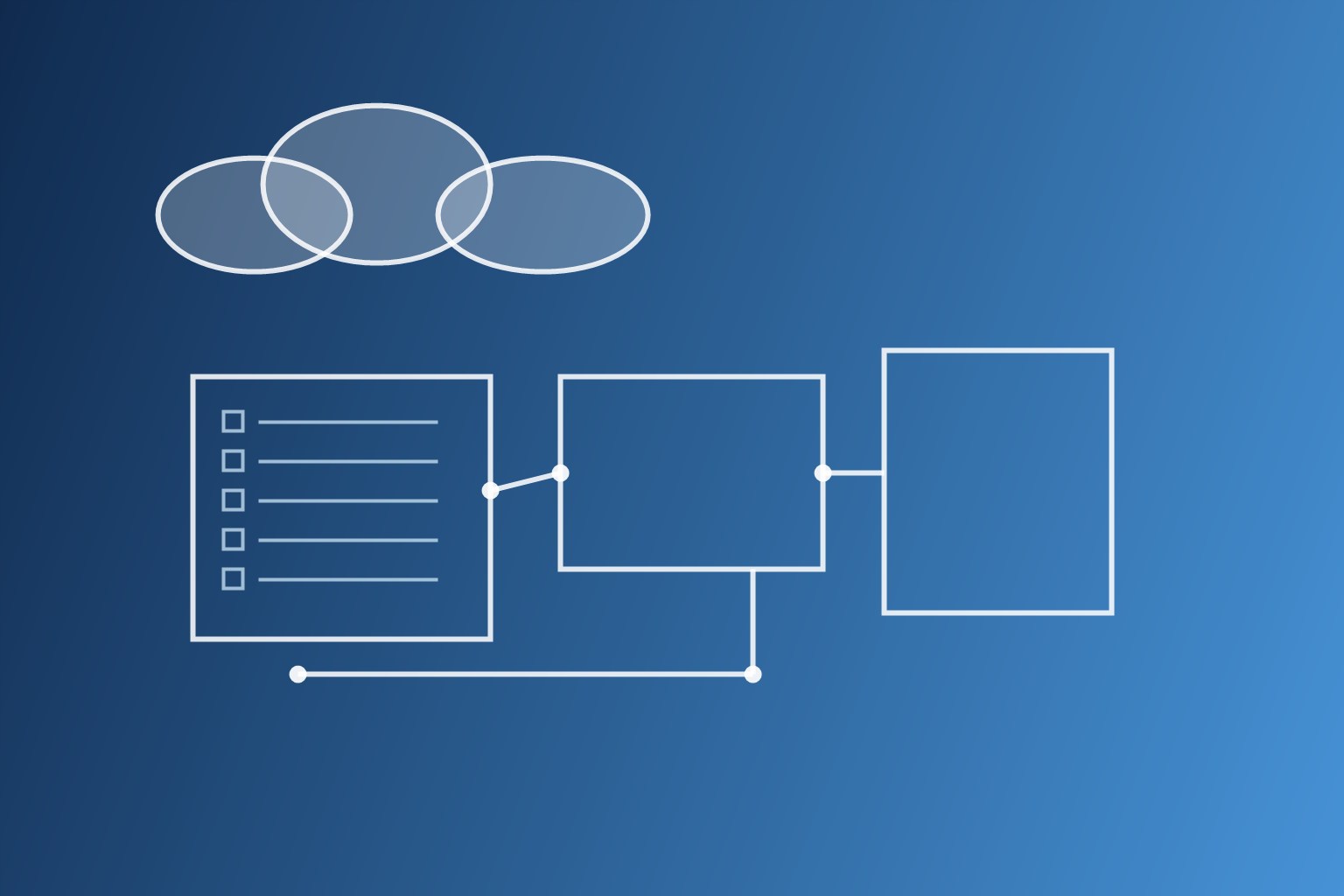
    You do not need a commercial observability platform to get started. A useful cost monitor can be built with three components that most teams already have access to: a proxy or middleware layer, a time-series store, and a simple dashboard.

    Step 1: Intercept and Tag Every Request

    The foundation is a thin proxy that sits between your application code and the AI provider. This can be a reverse proxy like NGINX, a sidecar container, or even a wrapper function in your application code. The proxy does two things: it logs the token count from each response, and it attaches metadata tags (team, feature, environment, model name) to the log entry.

    Most AI providers return token usage in the response body. OpenAI includes a usage object with prompt_tokens and completion_tokens. Anthropic returns similar fields. Your proxy reads these values after each call and writes a structured log line. If you are using a library like LiteLLM or Helicone, this interception layer is already built in. The key is to make sure every request flows through it, with no exceptions for quick scripts or test environments.

    Step 2: Store Usage in a Time-Series Format

    Raw log lines are useful for debugging but terrible for cost analysis. Push the tagged usage data into a time-series store. InfluxDB, Prometheus, or even a simple SQLite database with timestamp-indexed rows will work. The schema should include at minimum: timestamp, model name, token count (prompt and completion separately), estimated cost, and your metadata tags.

    Estimated cost is calculated by multiplying token counts by the per-token rate for the model used. Keep a configuration table that maps model names to their current pricing. AI providers change pricing regularly, so this table should be easy to update without redeploying anything.

    Step 3: Visualize and Alert

    Connect your time-series store to a dashboard. Grafana is the obvious choice if you are already running Prometheus or InfluxDB, but a simple web page that queries your database and renders charts works fine for smaller teams. The dashboard should show daily spend by model, spend by tag (team or feature), and a trailing seven-day trend line.

    More importantly, set up alerts. A threshold alert that fires when daily spend exceeds a configurable limit catches runaway scripts and unexpected traffic spikes. A rate-of-change alert catches gradual cost creep, such as when a new feature quietly doubles your token consumption over a week. Both types should notify a channel that someone actually reads, not a mailbox that gets ignored.

    Tag Discipline Makes or Breaks the Whole System

    The monitor is only as useful as its tags. If every request goes through with a generic tag like “production,” you have a slightly fancier version of the total spend number you already had. Enforce tagging at the proxy layer: if a request arrives without the required metadata, reject it or tag it as “untagged” and alert on that category separately.

    Good tagging dimensions include the calling service or feature name, the environment (dev, staging, production), the team or cost center responsible, and whether the request is user-facing or background processing. With those four dimensions, you can answer questions like “How much does the summarization feature cost per day in production?” or “Which team’s dev environment is burning tokens on experiments?”

    Handling Multiple Providers and Models

    Most teams use more than one model, and some use multiple providers. Your cost monitor needs to normalize across all of them. A request to GPT-4o and a request to Claude Sonnet have different per-token costs, different token counting methods, and different response formats. The proxy layer should handle these differences so the data store sees a consistent schema regardless of provider.

    This also means your pricing configuration table must cover every model you use. When someone experiments with a new model in a development environment, the cost monitor should still capture and price those requests correctly. A missing pricing entry should trigger a warning, not a silent zero-cost row that hides real spend.

    What to Do When the Dashboard Shows a Problem

    Visibility without action is just expensive awareness. Once your monitor surfaces a cost spike, you need a playbook. Common fixes include switching to a smaller or cheaper model for non-critical tasks, caching repeated prompts so identical questions do not hit the API every time, batching requests where the API supports it, and trimming prompt length by removing unnecessary context or system instructions.

    Each of these optimizations has trade-offs. A smaller model may produce lower-quality output. Caching adds complexity and can serve stale results. Batching requires code changes. Prompt trimming risks losing important context. The cost monitor gives you the data to evaluate these trade-offs quantitatively instead of guessing.

    Start Before You Need It

    The best time to build a cost monitor is before your AI spend is large enough to worry about. When usage is low, the monitor is cheap to run and easy to validate. When usage grows, you already have the tooling in place to understand where the money goes. Teams that wait until the bill is painful are stuck building monitoring infrastructure under pressure, with no historical baseline to compare against.

    A lightweight proxy, a time-series store, a simple dashboard, and a few alerts. That is all it takes to avoid the monthly surprise. The hard part is not the technology. It is the discipline to tag every request and keep the pricing table current. Get those two habits right and the rest follows.

  • Why Cloud Teams Need Simpler Runbooks, Not More Documentation

    Why Cloud Teams Need Simpler Runbooks, Not More Documentation

    When systems get more complex, teams often respond by writing more documentation. That sounds sensible, but in practice it often creates a different problem: nobody can find the one page they actually need when something is on fire. Strong cloud teams usually need simpler runbooks, not larger piles of documentation.

    Runbooks Should Be Actionable Under Pressure

    A runbook is not the same thing as a knowledge base article. During an incident, people need short, clear steps with the right links, commands, and escalation paths. Long explanations might be useful for training, but they slow people down when response time matters.

    The best runbooks assume the reader is under pressure and has no patience for extra scrolling.

    Too Much Documentation Creates Decision Friction

    If a team has six different pages for the same service, no one knows which one is current. That uncertainty creates hesitation, and hesitation is expensive during outages and risky changes. Simpler runbooks reduce the time spent deciding which document to trust.

    Documentation volume is not the same as operational clarity.

    Separate Explanation from Execution

    Teams often mix background explanation and emergency procedure into the same page. That makes both weaker. A cleaner pattern is to keep a short execution runbook for urgent work and a separate reference doc for deeper context.

    This gives responders speed while still preserving the why behind the process.

    Review Runbooks After Real Incidents

    The best time to improve a runbook is right after it fails to help enough. If responders had to improvise steps, chase outdated links, or ignore the document entirely, that is a sign the runbook needs revision. Real incidents reveal the difference between documentation that exists and documentation that works.

    Teams should treat runbooks like operational tools, not static paperwork.

    Final Takeaway

    Cloud teams do not need endless pages to feel prepared. They need a smaller set of clear, current runbooks that are easy to use when decisions need to happen fast.