Tag: AI Security

  • How to Keep Enterprise AI Memory From Becoming a Quiet Data Leak

    How to Keep Enterprise AI Memory From Becoming a Quiet Data Leak

    Enterprise AI systems are getting better at remembering. They can retain instructions across sessions, pull prior answers into new prompts, and ground outputs in internal documents that feel close enough to memory for most users. That convenience is powerful, but it also creates a security problem that many teams underestimate. If an AI system can remember more than it should, or remember the wrong things for too long, it can quietly become a data leak with a helpful tone.

    The issue is not only whether an AI model was trained on sensitive data. In most production environments, the bigger day-to-day risk sits in the memory layer around the model. That includes conversation history, retrieval caches, user profiles, connector outputs, summaries, embeddings, and application-side stores that help the system feel consistent over time. If those layers are poorly scoped, one user can inherit another user’s context, stale secrets can resurface after they should be gone, and internal records can drift into places they were never meant to appear.

    AI memory is broader than chat history

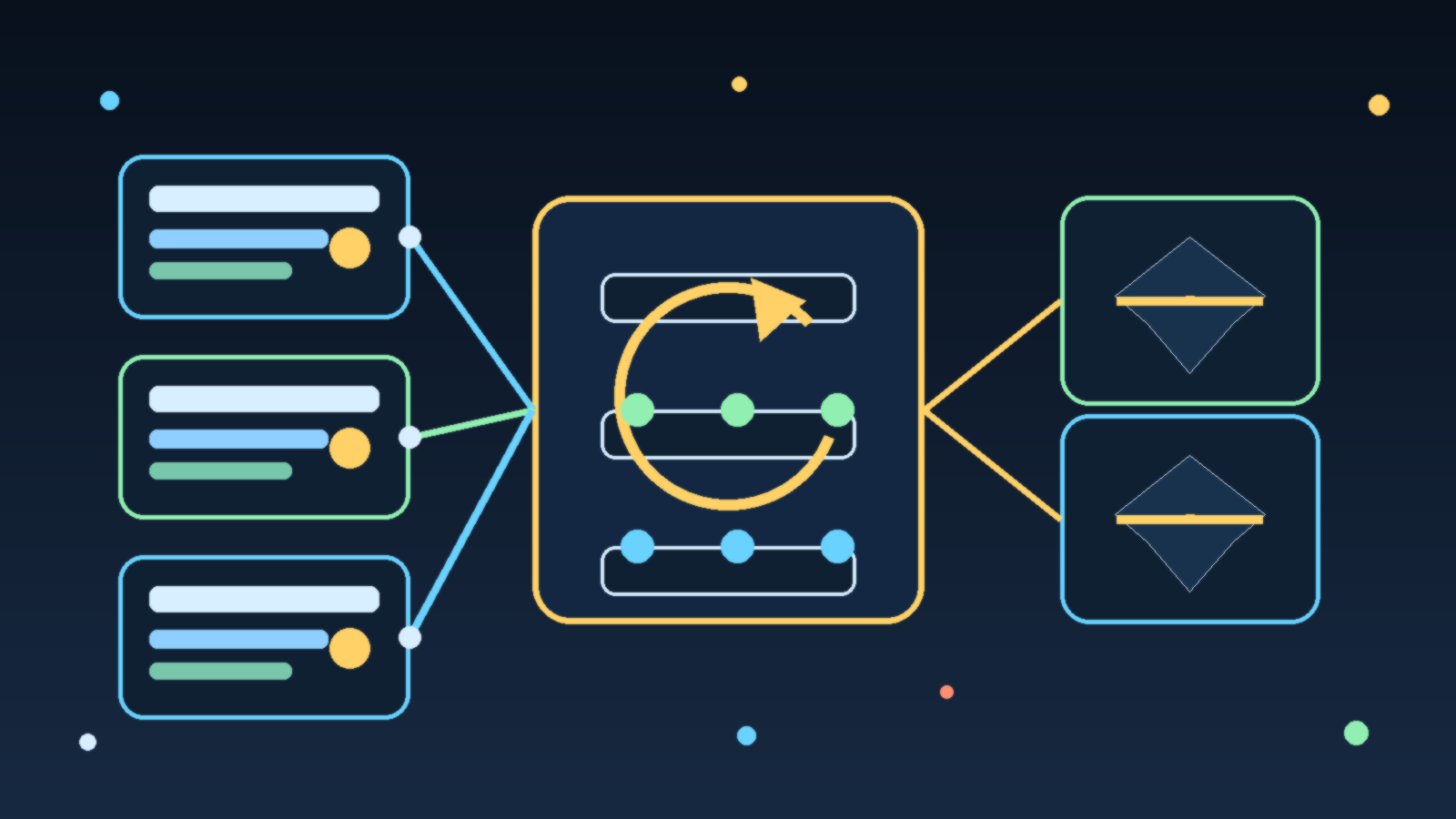
    A lot of teams still talk about AI memory as if it were just a transcript database. In practice, memory is a stack of mechanisms. A chatbot may store recent exchanges for continuity, generate compact summaries for longer sessions, push selected facts into a profile store, and rely on retrieval pipelines that bring relevant documents back into the prompt at answer time. Each one of those layers can preserve sensitive information in a slightly different form.

    That matters because controls that work for one layer may fail for another. Deleting a visible chat thread does not always remove a derived summary. Revoking a connector does not necessarily clear cached retrieval results. Redacting a source document does not instantly invalidate the embedding or index built from it. If security reviews only look at the user-facing transcript, they miss the places where durable exposure is more likely to hide.

    Scope memory by identity, purpose, and time

    The strongest control is not a clever filter. It is narrow scope. Memory should be partitioned by who the user is, what workflow they are performing, and how long the data is actually useful. If a support agent, a finance analyst, and a developer all use the same internal AI platform, they should not be drawing from one vague pool of retained context simply because the platform makes that technically convenient.

    Purpose matters as much as identity. A user working on contract review should not automatically carry that memory into a sales forecasting workflow, even if the same human triggered both sessions. Time matters too. Some context is helpful for minutes, some for days, and some should not survive a single answer. The default should be expiration, not indefinite retention disguised as personalization.

    • Separate memory stores by user, workspace, or tenant boundary.
    • Use task-level isolation so one workflow does not quietly bleed into another.
    • Set retention windows that match business need instead of leaving durable storage turned on by default.

    Treat retrieval indexes like data stores, not helper features

    Retrieval is often sold as a safer pattern than training because teams can update documents without retraining the model. That is true, but it can also create a false sense of simplicity. Retrieval indexes still represent structured access to internal knowledge, and they deserve the same governance mindset as any other data system. If the wrong data enters the index, the AI can expose it with remarkable confidence.

    Strong teams control what gets indexed, who can query it, and how freshness is enforced after source changes. They also decide whether certain classes of content should be summarized rather than retrieved verbatim. For highly sensitive repositories, the answer may be that the system can answer metadata questions about document existence or policy ownership without ever returning the raw content itself.

    That design choice is less flashy than a giant all-knowing enterprise search layer, but it is usually the more defensible one. A retrieval pipeline should be precise enough to help users work, not broad enough to feel magical at the expense of control.

    Redaction and deletion have to reach derived memory too

    One of the easiest mistakes to make is assuming that deleting the original source solves the whole problem. In AI systems, derived artifacts often outlive the thing they came from. A secret copied into a chat can show up later in a summary. A sensitive document can leave traces in chunk caches, embeddings, vector indexes, or evaluation datasets. A user profile can preserve a fact that was only meant to be temporary.

    That is why deletion workflows need a map of downstream memory, not just upstream storage. If the legal, security, or governance team asks for removal, the platform should be able to trace where the data may persist and clear or rebuild those derived layers in a deliberate way. Without that discipline, teams create the appearance of deletion while the AI keeps enough residue to surface the same information later.

    Logging should explain why the AI knew something

    When an AI answer exposes something surprising, the first question is usually simple: how did it know that? A mature platform should be able to answer with more than a shrug. Good observability ties outputs back to the memory and retrieval path that influenced them. That means recording which document set was queried, which profile or summary store was used, what policy filters were applied, and whether any redaction or ranking step changed the result.

    Those logs are not just for post-incident review. They are also what help teams tune the system before an incident happens. If a supposedly narrow assistant routinely reaches into broad knowledge collections, or if short-term memory is being retained far longer than intended, the logs should make that drift visible before users discover it the hard way.

    Make product decisions that reduce memory pressure

    Not every problem needs a longer memory window. Sometimes the safer design is to ask the user to confirm context again, re-select a workspace, or explicitly pin the document set for a task. Product teams often view those moments as friction. In reality, they can be healthy boundaries that prevent the assistant from acting like it has broader standing knowledge than it really should.

    The best enterprise AI products are not the ones that remember everything. They are the ones that remember the right things, for the right amount of time, in the right place. That balance feels less magical than unrestricted persistence, but it is far more trustworthy.

    Trustworthy AI memory is intentionally forgetful

    Memory makes AI systems more useful, but it also widens the surface where governance can fail quietly. Teams that treat memory as a first-class security concern are more likely to avoid that trap. They scope it tightly, expire it aggressively, govern retrieval like a real data system, and make deletion reach every derived layer that matters.

    If an enterprise AI assistant feels impressive because it never seems to forget, that may be a warning sign rather than a product win. In most organizations, the better design is an assistant that remembers enough to help, forgets enough to protect people, and can always explain where its context came from.
  • How to Use Private Endpoints for Azure OpenAI Without Breaking Every Developer Workflow

    How to Use Private Endpoints for Azure OpenAI Without Breaking Every Developer Workflow

    Abstract cloud and network illustration with layered blue shapes, glowing pathways, and isolated connection points

    Most teams understand the security pitch for private endpoints. Keep AI traffic off the public internet, restrict access to approved networks, and reduce the chance that a rushed proof of concept becomes a broadly reachable production dependency. The problem is that many rollouts stop at the network diagram. The private endpoint gets turned on, developers lose access, automation breaks, and the platform team ends up making informal exceptions that quietly weaken the original control.

    A better approach is to treat private connectivity as a platform design problem, not just a checkbox. Azure OpenAI can absolutely live behind private endpoints, but the deployment has to account for development paths, CI/CD flows, identity boundaries, DNS resolution, and the difference between experimentation and production. If those pieces are ignored, private networking becomes the kind of security control people work around instead of trust.

    Start by separating who needs access from where access should originate

    The first mistake is thinking about private endpoints only in terms of users. In practice, the more important question is where requests should come from. An interactive developer using a corporate laptop is one access pattern. A GitHub Actions runner, Azure DevOps agent, internal application, or managed service calling Azure OpenAI is a different one. If you treat them all the same, you either create unnecessary friction or open wider network paths than you intended.

    Start by defining the approved sources of traffic. Production applications should come from tightly controlled subnets or managed hosting environments. Build agents should come from known runner locations or self-hosted infrastructure that can resolve the private endpoint correctly. Human testing should use a separate path, such as a virtual desktop, jump host, or developer sandbox network, instead of pushing every laptop onto the same production-style route.

    That source-based view helps keep the architecture honest. It also makes later reviews easier because you can explain why a specific network path exists instead of relying on vague statements about team convenience.

    Private DNS is usually where the rollout succeeds or fails

    The private endpoint itself is often the easy part. DNS is where real outages begin. Once Azure OpenAI is tied to a private endpoint, the service name needs to resolve to the private IP from approved networks. If your private DNS zone links are incomplete, if conditional forwarders are missing, or if hybrid name resolution is inconsistent, one team can reach the service while another gets confusing connection failures.

    That is why platform teams should test name resolution before they announce the control as finished. Validate the lookup path from production subnets, from developer environments that are supposed to work, and from networks that are intentionally blocked. The goal is not merely to confirm that the good path works. The goal is to confirm that the wrong path fails in a predictable way.

    A clean DNS design also prevents a common policy mistake: leaving the public endpoint reachable because the private route was never fully reliable. Once teams start using that fallback, the security boundary becomes optional in practice.

    Build a developer access path on purpose

    Developers still need to test prompts, evaluate model behavior, and troubleshoot application calls. If the only answer is "use production networking," you end up normalizing too much access. If the answer is "file a ticket every time," people will search for alternate tools or use public AI services outside governance.

    A better pattern is to create a deliberate developer path with narrower permissions and better observability. That may be a sandbox virtual network with access to nonproduction Azure OpenAI resources, a bastion-style remote workstation, or an internal portal that proxies requests to the service on behalf of authenticated users. The exact design can vary, but the principle is the same: developers need a path that is supported, documented, and easier than bypassing the control.

    This is also where environment separation matters. Production private endpoints should not become the default testing target for every proof of concept. Give teams a safe place to experiment, then require stronger change control when something is promoted into a production network boundary.

    Use identity and network controls together, not as substitutes

    Private endpoints reduce exposure, but they do not replace identity. If a workload can reach the private IP and still uses overbroad credentials, you have only narrowed the route, not the authority. Azure OpenAI deployments should still be tied to managed identities, scoped secrets, or other clearly bounded authentication patterns depending on the application design.

    The same logic applies to human access. If a small number of engineers need diagnostic access, that should be role-based, time-bounded where possible, and easy to review later. Security teams sometimes overestimate what network isolation can solve by itself. In reality, the strongest design is a layered one where identity decides who may call the service and private networking decides from where that call may originate.

    That layered model is especially important for AI workloads because the data being sent to the model often matters as much as the model resource itself. A private endpoint does not automatically prevent sensitive prompts from being mishandled elsewhere in the workflow.

    Plan for CI/CD and automation before the first outage

    A surprising number of private endpoint rollouts fail because deployment automation was treated as an afterthought. Template validation jobs, smoke tests, prompt evaluation pipelines, and application release checks often need to reach the service. If those jobs run from hosted agents on the public internet, they will fail the moment private access is enforced.

    There are workable answers, but they need to be chosen explicitly. You can run self-hosted agents inside approved networks, move test execution into Azure-hosted environments with private connectivity, or redesign the pipeline so only selected stages need live model access. What does not work well is pretending that deployment tooling will somehow adapt on its own.

    This is also a governance issue. If the only way to keep releases moving is to temporarily reopen public access during deployment windows, the control is not mature yet. Stable security controls should fit into the delivery process instead of forcing repeated exceptions.

    Make exception handling visible and temporary

    Even well-designed environments need exceptions sometimes. A migration may need short-term dual access. A vendor-operated tool may need a controlled validation window. A developer may need break-glass troubleshooting during an incident. The mistake is allowing those exceptions to become permanent because nobody owns their cleanup.

    Treat private endpoint exceptions like privileged access. Give them an owner, a reason, an approval path, and an expiration point. Log which systems were opened, for whom, and for how long. If an exception survives multiple review cycles, that usually means the baseline architecture still has a gap that needs to be fixed properly.

    Visible exceptions are healthier than invisible workarounds. They show where the platform still creates friction, and they give the team a chance to improve the standard path instead of arguing about policy in the abstract.

    Measure whether the design is reducing risk or just relocating pain

    The real test of a private endpoint strategy is not whether a diagram looks secure. It is whether the platform reduces unnecessary exposure without teaching teams bad habits. Watch for signals such as repeated requests to re-enable public access, DNS troubleshooting spikes, shadow use of unmanaged AI tools, or pipelines that keep failing after network changes.

    Good platform security should make the right path sustainable. If developers have a documented test route, automation has an approved execution path, DNS works consistently, and exceptions are rare and temporary, then private endpoints are doing their job. If not, the environment may be secure on paper but fragile in daily use.

    Private endpoints for Azure OpenAI are worth using, especially for sensitive workloads. Just do not mistake private connectivity for a complete operating model. The teams that succeed are the ones that pair network isolation with identity discipline, reliable DNS, workable developer access, and automation that was designed for the boundary from day one.

  • How to Use Azure Policy to Keep AI Sandbox Subscriptions From Becoming Production Backdoors

    How to Use Azure Policy to Keep AI Sandbox Subscriptions From Becoming Production Backdoors

    Abstract blue and violet cloud security illustration with layered shapes and glowing network paths

    AI teams often start in a sandbox subscription for the right reasons. They want to experiment quickly, compare models, test retrieval flows, and try new automation patterns without waiting for every enterprise control to be polished. The problem is that many sandboxes quietly accumulate permanent exceptions. A temporary test environment gets a broad managed identity, a permissive network path, a storage account full of copied data, and a deployment template that nobody ever revisits. A few months later, the sandbox is still labeled non-production, but it has become one of the easiest ways to reach production-adjacent systems.

    Azure Policy is one of the best tools for stopping that drift before it becomes normal. Used well, it gives platform teams a way to define what is allowed in AI sandbox subscriptions, what must be tagged and documented, and what should be blocked outright. It does not replace identity design, network controls, or human approval. What it does provide is a practical way to enforce the baseline rules that keep an experimental environment from turning into a permanent loophole.

    Why AI Sandboxes Drift Faster Than Other Cloud Environments

    Most sandbox subscriptions are created to remove friction. That is exactly why they become risky. Teams add resources quickly, often with broad permissions and short-term workarounds, because speed is the point. In AI projects, this problem gets worse because experimentation often crosses several control domains at once. A single proof of concept may involve model endpoints, storage, search indexes, document ingestion, secret retrieval, notebooks, automation accounts, and outbound integrations.

    If there is no policy guardrail, each convenience decision feels harmless on its own. Over time, though, the subscription starts to behave like a shadow platform. It may contain production-like data, long-lived service principals, public endpoints, or copy-pasted network rules that were never meant to survive the pilot stage. At that point, calling it a sandbox is mostly a naming exercise.

    Start by Defining What a Sandbox Is Allowed to Be

    Before writing policy assignments, define the operating intent of the subscription. A sandbox is not simply a smaller production environment. It is a place for bounded experimentation. That means its controls should be designed around expiration, isolation, and reduced blast radius.

    For example, you might decide that an AI sandbox subscription may host temporary model experiments, retrieval prototypes, and internal test applications, but it may not store regulated data, create public IP addresses without exception review, peer directly into production virtual networks, or run identities with tenant-wide privileges. Azure Policy works best after those boundaries are explicit. Without that clarity, teams usually end up writing rules that are either too weak to matter or so broad that engineers immediately look for ways around them.

    Use Deny Policies for the Few Things That Should Never Be Normal

    The strongest Azure Policy effect is `deny`, and it should be used carefully. If you try to deny everything interesting, developers will hate the environment and the policy set will collapse under exception pressure. The better approach is to reserve deny policies for the patterns that should never become routine in an AI sandbox.

    A good example is preventing unsupported regions, blocking unrestricted public IP deployment, or disallowing resource types that create uncontrolled paths to sensitive systems. You can also deny deployments that are missing required tags such as data classification, owner, expiration date, and business purpose. These controls are useful because they stop the easiest forms of drift at creation time instead of relying on cleanup later.

    Use Audit and Modify to Improve Behavior Without Freezing Experimentation

    Not every control belongs in a hard block. Some are better handled with `audit`, `auditIfNotExists`, or `modify`. Those effects help teams see drift and correct it while still leaving room for legitimate testing. In AI sandbox subscriptions, this is especially helpful for operational hygiene.

    For instance, you can audit whether diagnostic settings are enabled, whether Key Vault soft delete is configured, whether storage accounts restrict public access, or whether approved tags are present on inherited resources. The `modify` effect can automatically add or normalize tags when the fix is straightforward. That gives engineers useful feedback without turning every experiment into a support ticket.

    Treat Network Exposure as a Policy Question, Not Just a Security Review Question

    AI teams often focus on model quality first and treat network design as something to revisit later. That is how sandbox environments end up with public endpoints, broad firewall exceptions, and test services that are reachable from places they should never be reachable from.

    Azure Policy can help force the right conversation earlier. You can use it to restrict which SKUs, networking modes, or public access settings are allowed for storage, databases, and other supporting services. You can also audit or deny resources that are created outside approved network patterns. This matters because many AI risks do not come from the model itself. They come from the surrounding infrastructure that moves prompts, files, embeddings, and results across environments with too little friction.

    Require Expiration Signals So Temporary Environments Actually Expire

    One of the most practical sandbox controls is also one of the least glamorous: require an expiration tag and enforce follow-up around it. Temporary environments rarely disappear on their own. They survive because nobody is clearly accountable for cleaning them up, and because the original test work slowly becomes an unofficial dependency.

    A policy initiative can require tags such as `ExpiresOn`, `Owner`, and `WorkloadStage`, then pair those tags with reporting or automation outside Azure Policy. The value here is not the tag itself. The value is that a sandbox subscription becomes legible. Reviewers can quickly see whether a deployment still has a business reason to exist, and platform teams can spot old experiments before they turn into permanent access paths.

    Keep Exceptions Visible and Time Bound

    Every policy program eventually needs exceptions. The mistake is treating exceptions as invisible administrative work instead of as security-relevant decisions. In AI environments, exceptions often involve high-impact shortcuts such as broader outbound access, looser identity permissions, or temporary access to sensitive datasets.

    If you grant an exception, record why it exists, who approved it, what resources it covers, and when it should end. Even if Azure Policy itself is not the system of record for exception governance, your policy model should assume that exceptions are time-bound and reviewable. Otherwise the exception process becomes a slow-motion replacement for the standard.

    Build Policy Sets Around Real AI Platform Patterns

    The cleanest policy design usually comes from grouping controls into a small number of understandable initiatives instead of dumping dozens of unrelated rules into one assignment. For AI sandbox subscriptions, that often means separating controls into themes such as data handling, network exposure, identity hygiene, and lifecycle governance.

    That structure helps in two ways. First, engineers can understand what a failed deployment is actually violating. Second, platform teams can tune controls over time without turning every policy update into a mystery. Good governance is easier to maintain when teams can say, with a straight face, which initiative exists to control which class of risk.

    Final Takeaway

    Azure Policy will not make an AI sandbox safe by itself. It will not fix bad role design, weak approval paths, or careless data handling. What it can do is stop the most common forms of cloud drift from becoming normal operating practice. That is a big deal, because most AI security problems in the cloud do not begin with a dramatic breach. They begin with a temporary shortcut that nobody removed.

    If you want sandbox subscriptions to stay useful without becoming production backdoors, define the sandbox operating model first, deny only the patterns that should never be acceptable, audit the rest with intent, and make expiration and exceptions visible. That is how experimentation stays fast without quietly rewriting your control boundary.

  • How to Rotate Secrets for AI Connectors Without Breaking Production Workflows

    How to Rotate Secrets for AI Connectors Without Breaking Production Workflows

    Abstract illustration of rotating credentials across connected AI services and protected systems

    AI teams love connecting models to storage accounts, vector databases, ticketing systems, cloud services, and internal tools. Then the uncomfortable part arrives: those connections depend on credentials that eventually need to change. Secret rotation sounds like a security housekeeping task until a production workflow breaks at 2 AM because one forgotten connector is still using the old value.

    The fix is not to rotate less often. The fix is to treat secret rotation as an operational design problem instead of a once-a-quarter scramble. If your AI workflows depend on API keys, service principals, app passwords, webhooks, or database credentials, you need a rotation plan that assumes connectors will be missed, caches will linger, and rollback may be necessary. The teams that handle rotation cleanly are not luckier. They are just more deliberate.

    Start by Mapping Every Dependency the Secret Actually Touches

    A single credential often reaches more places than people remember. The obvious path might be an application setting or secret vault reference, but the real blast radius can include scheduled jobs, CI pipelines, local environment files, monitoring webhooks, serverless functions, backup scripts, and internal admin tools. AI platforms make this worse because teams often wire up extra connectors during experimentation and forget to document them once the prototype becomes real.

    Before rotating anything, build a dependency map. Identify where the credential is stored, which services consume it, who owns each consumer, and how each component reloads configuration. A connector that only reads its secret on startup behaves very differently from one that pulls fresh values on every request. That distinction matters because it tells you whether rotation is a config update, a restart event, or a staged cutover.

    Prefer Dual-Key or Overlap Windows Whenever the Platform Allows It

    The cleanest secret rotations avoid hard cutovers. If a platform supports two active keys, overlapping certificates, or parallel client secrets, use that feature. Create the new credential, distribute it everywhere, validate that traffic works, and only then retire the old one. This reduces the rotation from a cliff-edge event to a controlled migration.

    That overlap window is especially helpful for AI connectors because some jobs run on schedules, some hold long-lived workers in memory, and some retry aggressively after failures. A dual-key period gives those systems time to converge. Without it, you are counting on every service to update at exactly the right moment, which is a fantasy most production environments do not deserve.

    Separate Rotation Readiness From Rotation Day

    One reason secret updates go badly is that teams combine discovery, implementation, validation, and the actual cutover into the same maintenance window. That is backwards. Readiness work should happen before the rotation date. Config paths should already be known. Restart requirements should already be documented. Owners should already know what success looks like and what rollback steps exist.

    On rotation day, the goal should be boring execution, not detective work. If engineers are still trying to remember where an old key might live, the process is already fragile. A good runbook breaks the event into phases: prepare the new credential, distribute it safely, validate connectivity in low-risk paths, switch production traffic, monitor for failures, and then revoke the retired secret only after you have enough confidence that nothing critical is still leaning on it.

    Design AI Integrations to Fail Loudly and Usefully

    Many secret rotation incidents become painful because connectors fail in vague ways. The model call times out. A background job retries forever. An ingestion pipeline quietly stops syncing. None of those symptoms immediately tells an operator that a credential expired or that a downstream service is rejecting the new authentication path.

    Your AI connectors should emit failures that make the problem legible. Authentication errors should be distinguishable from rate limits and payload issues. Health checks should exercise the real dependency path, not just confirm that the process is still running. Dashboards should show which connector failed, which environment is affected, and whether the issue began at the same time as a rotation event. If the system cannot explain its own failure, rotation will feel much riskier than it needs to be.

    Use Staged Validation Instead of Blind Trust

    After distributing a new secret, prove that each important path still works. That does not mean only testing one happy-path API call. It means validating the real workflows that matter: model inference, document ingestion, retrieval, outbound notifications, scheduled maintenance jobs, and any approval or handoff processes tied to those connectors.

    Staged validation helps because it catches environment-specific drift. Maybe development was updated but production still references an older variable group. Maybe the background worker uses a separate secret store from the web app. Maybe one serverless function still has an inline credential from six months ago. These are ordinary problems, not rare disasters, and they are exactly why a rotation checklist should test each lane explicitly instead of assuming consistency because the architecture diagram looked tidy.

    Rollback Must Be Planned Before Revocation

    Teams sometimes think rollback is impossible for secret rotation because the point is to retire an old credential. That is only partly true. If you use overlap windows, rollback can mean temporarily restoring the prior active key while you fix the consumers that missed the change. If you do not have that option, then rollback needs to mean a fast path to issue and distribute another replacement credential with known ownership and clear communication.

    The important thing is not pretending that revocation is the final step in the story. Revocation should happen after validation and after a short observation period, not as a dramatic act of confidence the moment the new secret is generated. Security is stronger when rotation is reliable. Breaking production just to prove you take credential hygiene seriously is not maturity. It is theater.

    Final Takeaway

    Secret rotation for AI connectors works best when it is treated like controlled change management: map dependencies, use overlap where possible, separate readiness from execution, validate real workflows, and delay revocation until you have evidence that the new path is stable.

    That approach is not glamorous, but it is the difference between a responsible security practice and a self-inflicted outage. In production AI systems, the goal is not just to rotate secrets. It is to rotate them without teaching the business that every security improvement comes with avoidable chaos.

  • How to Secure a RAG Pipeline Before It Leaks the Wrong Data

    How to Secure a RAG Pipeline Before It Leaks the Wrong Data

    Retrieval-augmented generation looks harmless in diagrams. A chatbot asks a question, a vector store returns a few useful chunks, and the model answers with fresh context. In production, though, that neat picture turns into a security problem surprisingly fast. The retrieval layer can expose sensitive data, amplify weak permissions, and make it difficult to explain why a model produced a specific answer.

    That does not mean teams should avoid RAG. It means they should treat it like any other data access system. If your application can search internal documents, rank them, and hand them to a model automatically, then you need security controls that are as deliberate as the rest of your platform. Here is a practical way to harden a RAG stack before it becomes a quiet source of data leakage.

    Start by modeling retrieval as data access, not AI magic

    The first mistake many teams make is treating retrieval as a helper feature instead of a privileged data path. A user asks a question, the system searches indexed content, and the model gets direct access to whatever ranked highly enough. That is functionally similar to an application performing a database query on the user’s behalf. The difference is that retrieval systems often hide the access path behind embeddings, chunking, and ranking logic, which can make security gaps less obvious.

    A better mental model is simple: every retrieved chunk is a read operation. Once you see it that way, the right questions become clearer. Which identities are allowed to retrieve which documents? Which labels or repositories should never be searchable together? Which content sources are trusted enough to influence answers? If those questions are unresolved, the RAG system is not ready for broad rollout.

    Apply authorization before ranking, not after generation

    Many security problems appear when teams let the retrieval system search everything first and then try to clean up the answer later. That is backwards. If a document chunk should not be visible to the requesting user, it should not enter the candidate set in the first place. Post-processing after generation is too late, because the model has already seen the information and may blend it into the response in ways that filters do not reliably catch.

    In practice, this means access control has to sit next to indexing and retrieval. Index documents with clear ownership, sensitivity labels, and source metadata. At query time, resolve the caller’s identity and permitted scopes first, then search only within that allowed slice. Relevance ranking should help choose the best authorized content, not decide whether authorization matters.

    • Attach document-level and chunk-level source metadata during indexing.
    • Filter by tenant, team, repository, or classification before semantic search runs.
    • Log the final retrieved chunk IDs so later reviews can explain what the model actually saw.

    Keep your chunking strategy from becoming a leakage strategy

    Chunking is often discussed as a quality optimization, but it is also a security decision. Large chunks may drag unrelated confidential details into the prompt. Tiny chunks can strip away context and cause the model to make confident but misleading claims. Overlapping chunks can duplicate sensitive material across multiple retrieval results and widen the blast radius of a single mistake.

    Good chunking balances answer quality with exposure control. Teams should split content along meaningful boundaries such as headings, procedures, sections, and access labels rather than arbitrary token counts alone. If a document contains both public guidance and restricted operational details, those sections should not be indexed as if they belong to the same trust zone. The cleanest answer quality gains often come from cleaner document structure, not just more aggressive embedding tricks.

    Treat source trust as a first-class ranking signal

    RAG systems can be manipulated by poor source hygiene just as easily as they can be damaged by weak permissions. Old runbooks, duplicate wiki pages, copied snippets, and user-generated notes can all compete with well-maintained reference documents. If the ranking layer does not account for trust, the model may answer from the loudest source rather than the most reliable one.

    That is why retrieval pipelines should score more than semantic similarity. Recency, ownership, approval status, and system-of-record status all matter. An approved knowledge-base article should outrank a stale chat export, even if both mention the same keywords. Without those controls, a RAG assistant can become a polished way to operationalize bad documentation.

    Build an audit trail that humans can actually use

    When a security review or incident happens, teams need to answer basic questions quickly: who asked, what was retrieved, what context reached the model, and what answer was returned. Too many RAG implementations keep partial logs that are useful for debugging relevance scores but weak for security investigations. That creates a familiar problem: the system feels advanced until someone asks for evidence.

    A useful audit trail should capture the request identity, the retrieval filters applied, the top candidate chunks, the final chunks sent to the model, and the generated response. It should also preserve document versions or content hashes when possible, because the source material may change later. That level of logging helps teams investigate leakage concerns, tune permissions, and explain model behavior without relying on guesswork.

    Use staged rollout and adversarial testing before broad access

    RAG security should be validated the same way other risky features are validated: gradually and with skepticism. Start with low-risk content, a small user group, and sharply defined access scopes. Then test the system with prompts designed to cross boundaries, such as requests for secrets, policy exceptions, hidden instructions, or blended summaries across restricted sources. If the system fails gracefully in those cases, you can widen access with more confidence.

    Adversarial testing is especially important because many failure modes do not look like classic security bugs. The model might not quote a secret directly, yet still reveal enough context to expose internal projects or operational weaknesses. It might cite an allowed source while quietly relying on an unauthorized chunk earlier in the ranking path. These are exactly the sorts of issues that only show up when teams test like defenders instead of demo builders.

    The best RAG security plans are boring on purpose

    The strongest RAG systems do not depend on a single clever filter or a dramatic model instruction. They rely on ordinary engineering discipline: strong identity handling, scoped retrieval, clear content ownership, auditability, and steady source maintenance. That may sound less exciting than the latest orchestration pattern, but it is what keeps useful AI systems from becoming avoidable governance problems.

    If your team is building retrieval into a product, internal assistant, or knowledge workflow, the goal is not perfect theoretical safety. The goal is to make sure the system only sees what it should see, ranks what it can trust, and leaves enough evidence behind for humans to review. That is how you make RAG practical without making it reckless.