Tag: AI Governance

  • Why AI Gateway Failover Needs Policy Equivalence Before It Needs a Traffic Switch

    Why AI Gateway Failover Needs Policy Equivalence Before It Needs a Traffic Switch

    Teams love the idea of AI provider portability. It sounds prudent to say a gateway can route between multiple model vendors, fail over during an outage, and keep applications running without a major rewrite. That flexibility is useful, but too many programs stop at the routing story. They wire up model endpoints, prove that prompts can move from one provider to another, and declare the architecture resilient.

    The problem is that a traffic switch is not the same thing as a control plane. If one provider path has prompt logging disabled, another path stores request history longer, and a third path allows broader plugin or tool access, then failover can quietly change the security and compliance posture of the application. The business thinks it bought resilience. In practice, it may have bought inconsistent policy enforcement that only shows up when something goes wrong.

    Routing continuity is only one part of operational continuity

    Engineering teams often design AI failover around availability. If provider A slows down or returns errors, route requests to provider B. That is a reasonable starting point, but it is incomplete. An AI platform also has to preserve the controls around those requests, not just the success rate of the API call.

    That means asking harder questions before the failover demo looks impressive. Will the alternate provider keep data in the same region? Are the same retention settings available? Does the backup path expose the same model family to the same users, or will it suddenly allow features that the primary route blocks? If the answer is different across providers, then the organization is not really failing over one governed service. It is switching between services with different rules.

    A resilience story that ignores policy equivalence is the kind of architecture that looks mature in a slide deck and fragile during an audit.

    Define the nonnegotiable controls before you define the fallback order

    The cleanest way to avoid drift is to decide what must stay true no matter where the request goes. Those controls should be documented before anyone configures weighted routing or health-based failover.

    For many organizations, the nonnegotiables include data residency, retention limits, request and response logging behavior, customer-managed access patterns, content filtering expectations, and whether tool or retrieval access is allowed. Some teams also need prompt redaction, approval gates for sensitive workloads, or separate policies for internal versus customer-facing use cases.

    Once those controls are defined, each provider route can be evaluated against the same checklist. A provider that fails an important requirement may still be useful for isolated experiments, but it should not sit in the automatic production failover chain. That line matters. Not every technically reachable model endpoint deserves equal operational trust.

    The hidden problem is often metadata, not just model output

    When teams compare providers, they usually focus on model quality, token pricing, and latency. Those matter, but governance problems often appear in the surrounding metadata. One provider may log prompts for debugging. Another may keep richer request traces. A third may attach different identifiers to sessions, users, or tool calls.

    That difference can create a mess for retention and incident response. Imagine a regulated workflow where the primary path keeps minimal logs for a short period, but the failover path stores additional request context for longer because that is how the vendor debugging feature works. The application may continue serving users correctly while silently creating a broader data footprint than the risk team approved.

    That is why provider reviews should include the entire data path: prompts, completions, cached content, system instructions, tool outputs, moderation events, and operational logs. The model response is only one part of the record.

    Treat failover eligibility like a policy certification

    A strong pattern is to certify each provider route before it becomes eligible for automatic failover. Certification should be more than a connectivity test. It should prove that the route meets the minimum control standard for the workload it may serve.

    For example, a low-risk internal drafting assistant may allow multiple providers with roughly similar settings. A customer support assistant handling sensitive account context may have a narrower list because residency, retention, and review requirements are stricter. The point is not to force every workload into the same vendor strategy. The point is to prevent the gateway from making governance decisions implicitly during an outage.

    A practical certification review should cover:

    • allowed data types for the route
    • approved regions and hosting boundaries
    • retention and logging behavior
    • moderation and safety control parity
    • tool, plugin, or retrieval permission differences
    • incident-response visibility and auditability
    • owner accountability for exceptions and renewals

    That list is not glamorous, but it is far more useful than claiming portability without defining what portable means.

    Separate failover for availability from failover for policy exceptions

    Another common mistake is bundling every exception into the same routing mechanism. A team may say, "If the primary path fails, use the backup provider," while also using that same backup path for experiments that need broader features. That sounds efficient, but it creates confusion because the exact same route serves two different governance purposes.

    A better design separates emergency continuity from deliberate exceptions. The continuity route should be boring and predictable. It exists to preserve service under stress while staying within the approved policy envelope. Exception routes should be explicit, approved, and usually manual or narrowly scoped.

    This separation makes reviews much easier. Auditors and security teams can understand which paths are part of the standard operating model and which ones exist for temporary or special-case use. It also reduces the temptation to leave a broad backup path permanently enabled just because it helped once during a migration.

    Test the policy outcome, not just the failover event

    Most failover exercises are too shallow. Teams simulate a provider outage, verify that traffic moves, and stop there. That test proves only that routing works. It does not prove that the routed traffic still behaves within policy.

    A better exercise inspects what changed after failover. Did the logs land in the expected place? Did the same content controls trigger? Did the same headers, identities, and approval gates apply? Did the same alerts fire? Could the security team still reconstruct the transaction path afterward?

    Those are the details that separate operational resilience from operational surprise. If nobody checks them during testing, the organization learns about control drift during a real incident, which is exactly when people are least equipped to reason carefully.

    Build provider portability as a governance feature, not just an engineering feature

    Provider portability is worth having. No serious platform team wants a brittle single-vendor dependency for critical AI workflows. But portability should be treated as a governance feature as much as an engineering one.

    That means the gateway should carry policy with the request instead of assuming every endpoint is interchangeable. Route selection should consider workload classification, approved regions, tool access limits, logging rules, and exception status. If the platform cannot preserve those conditions automatically, then failover should narrow to the routes that can.

    In other words, the best AI gateway is not the one with the most model connectors. It is the one that can switch paths without changing the organization’s risk posture by accident.

    Start with one workload and prove policy equivalence end to end

    Teams do not need to solve this across every application at once. Start with one workload that matters, map the control requirements, and compare the primary and backup provider paths in a disciplined way. Document what is truly equivalent, what is merely similar, and what requires an exception.

    That exercise usually reveals the real maturity of the platform. Sometimes the backup path is not ready for automatic failover yet. Sometimes the organization needs better logging normalization or tighter route-level policy tags. Sometimes the architecture is already in decent shape and simply needs clearer documentation.

    Either way, the result is useful. AI gateway failover becomes a conscious operating model instead of a comforting but vague promise. That is the difference between resilience you can defend and resilience you only hope will hold up when the primary provider goes dark.

  • Why Every Azure AI Pilot Needs a Cost Cap Before It Needs a Bigger Model

    Why Every Azure AI Pilot Needs a Cost Cap Before It Needs a Bigger Model

    Teams often start an Azure AI pilot with a simple goal: prove that a chatbot, summarizer, document assistant, or internal copilot can save time. That part is reasonable. The trouble starts when the pilot shows just enough promise to attract more users, more prompts, more integrations, and more expectations before anyone sets a financial boundary.

    That is why every serious Azure AI pilot needs a cost cap before it needs a bigger model. A cost cap is not just a budget number buried in a spreadsheet. It is an operating guardrail that forces the team to define how much experimentation, latency, accuracy, and convenience they are actually willing to buy during the pilot stage.

    Why AI Pilots Become Expensive Faster Than They Look

    Most pilots do not fail because the first demo is too costly. They become expensive because success increases demand. A tool that starts with a small internal audience can quickly expand from a few users to an entire department. Prompt lengths grow, file uploads increase, and teams begin asking for premium models for tasks that were originally scoped as lightweight assistance.

    Azure makes this easy to miss because the growth is often distributed across several services. Model inference, storage, search indexes, document processing, observability, networking, and integration layers can all rise together. No single line item looks catastrophic at first, but the total spend can drift far away from what leadership thought the pilot would cost.

    A Cost Cap Changes the Design Conversation

    Without a cap, discussions about features tend to sound harmless. Can we keep more chat history for better answers? Can we run retrieval on every request? Can we send larger documents? Can we upgrade the default model for everyone? Each change may improve user experience, but each one also increases spend or creates unpredictable usage patterns.

    A cost cap changes the conversation from “what else can we add” to “what is the most valuable capability we can deliver inside a fixed operating boundary.” That is a healthier question. It pushes teams to choose the right model tier, trim waste, and separate must-have experiences from nice-to-have upgrades.

    The Right Cap Is Tied to the Pilot Stage

    A pilot should not be budgeted like a production platform. Its purpose is to test usefulness, operational fit, and governance maturity. That means the cap should reflect the stage of learning. Early pilots should prioritize bounded experimentation, not maximum reach.

    A practical approach is to define a monthly ceiling and then translate it into technical controls. If the pilot cannot exceed a known monthly number, the team needs daily or weekly signals that show whether usage is trending in the wrong direction. It also needs clear rules for what happens when the pilot approaches the limit. In many environments, slowing expansion for a week is far better than discovering a surprise bill after the month closes.

    Four Controls That Actually Keep Azure AI Spend in Check

    1. Put a model policy in writing

    Many pilots quietly become expensive because people keep choosing larger models by default. Write down which model is approved for which task. For example, a smaller model may be good enough for classification, metadata extraction, or simple drafting, while a stronger model is reserved for complex reasoning or executive-facing outputs.

    That written policy matters because it prevents the team from treating model upgrades as casual defaults. If someone wants a more expensive model path, they should be able to explain what measurable value the upgrade creates.

    2. Cap high-cost features at the workflow level

    Token usage is only part of the picture. Retrieval-augmented generation, document parsing, and multi-step orchestration can turn a cheap interaction into an expensive one. Instead of trying to control cost only after usage lands, put limits into the workflow itself.

    For example, limit the number of uploaded files per session, cap how much source content is retrieved into a single answer, and avoid chaining multiple tools when a simpler path would solve the problem. Workflow caps are easier to enforce than good intentions.

    3. Monitor cost by scenario, not only by service

    Azure billing data is useful, but it does not automatically explain which product behavior is driving spend. A better view groups cost by user scenario. Separate the daily question-answer flow from document summarization, batch processing, and experimentation environments.

    That separation helps the team see which use cases are sustainable and which ones need redesign. If one scenario consumes a disproportionate share of the pilot budget, leadership can decide whether it deserves more investment or tighter limits.

    4. Create a slowdown plan before the cap is hit

    A cap without a response plan is just a warning light. Teams should decide in advance what changes when usage approaches the threshold. That may include disabling premium models for noncritical users, shortening retained context, delaying batch jobs, or restricting large uploads until the next reporting window.

    This is not about making the pilot worse for its own sake. It is about preserving control. A planned slowdown is much less disruptive than emergency cost cutting after the fact.

    Cost Discipline Also Improves Governance

    There is a governance benefit here that technical teams sometimes overlook. If a pilot can only stay within budget by constantly adding exceptions, hidden services, or untracked experiments, that is a sign the operating model is not ready for wider rollout.

    A disciplined cap exposes those issues early. It reveals whether teams have clear ownership, meaningful telemetry, and a real approval process for expanding capability. In that sense, cost control is not separate from governance. It is one of the clearest tests of whether governance is real.

    Bigger Models Are Not the First Answer

    When a pilot struggles, the instinct is often to reach for a more capable model. Sometimes that is justified. Often it is lazy architecture. Weak prompt design, poor retrieval hygiene, oversized context windows, and vague user journeys can all create poor results that a larger model only partially hides.

    Before paying more, teams should ask whether the system is sending the model cleaner inputs, constraining the task well, and using the right model for the job. A sharper design usually delivers better economics than a reflexive upgrade.

    The Best Pilots Earn the Right to Expand

    A healthy Azure AI pilot should prove more than model quality. It should show that the team can manage demand, understand cost drivers, and grow on purpose instead of by accident. That is what earns trust from finance, security, and leadership.

    If the pilot cannot operate comfortably inside a defined cost cap, it is not ready for bigger adoption yet. The goal is not to starve experimentation. The goal is to build enough discipline that when the pilot succeeds, the organization can scale it without losing control.

    A bigger model might improve an answer. A cost cap improves the entire operating model. In the long run, that matters more.

  • Why Browser Extension Approval Belongs in Your Identity Governance Program

    Why Browser Extension Approval Belongs in Your Identity Governance Program

    Most teams still treat browser extensions like a local user preference. If someone wants a PDF helper, a meeting note tool, or an AI sidebar, they install it and move on. That mindset made some sense when extensions were mostly harmless productivity add-ons. It breaks down quickly once modern extensions can read page content, inject scripts, capture prompts, call third-party APIs, and piggyback on single sign-on sessions.

    That is why browser extension approval belongs inside identity governance, not just endpoint management. The real risk is not only that an extension exists. The risk is that it inherits the exact permissions, browser sessions, and business context already tied to a user identity. If you manage application access carefully but ignore extension sprawl, you leave a blind spot right next to your strongest controls.

    Extensions act like lightweight enterprise integrations

    An approved SaaS integration usually goes through a review process. Security teams want to know what data it can access, where that data goes, whether the vendor stores content, and how administrators can revoke access later. Browser extensions deserve the same scrutiny because they often behave like lightweight integrations with direct access to business workflows.

    An extension can read text from cloud consoles, internal dashboards, support tools, HR systems, and collaboration apps. It can also interact with pages after the user signs in. In practice, that means an extension may gain far more useful access than its small installation screen suggests. If the extension includes AI features, the data path may become even harder to reason about because prompts, snippets, and page content can be sent to external services in near real time.

    Identity controls are already the natural decision point

    Identity governance programs already answer the right questions. Who should get access? Under what conditions? Who approves that access? How often is it reviewed? What happens when a user changes roles or leaves? Those same questions apply to high-risk browser extensions.

    Moving extension approval into identity governance does not mean every extension needs a committee meeting. It means risky extensions should be treated like access to a connected application or privileged workflow. For example, an extension that only changes page colors is different from one that can read every page you visit, access copied text, and connect to an external AI service.

    This framing also helps organizations apply existing controls instead of building a brand-new process from scratch. Managers, application owners, and security reviewers already understand access requests and attestations. Extension approval becomes more consistent when it follows the same patterns.

    The biggest gap is lifecycle management

    The most common failure is not initial approval. It is what happens afterward. Teams approve something once and never revisit it. Vendors change owners. Privacy policies drift. New features appear. A note-taking extension turns into an AI assistant with cloud sync. A harmless helper asks for broader permissions after an update.

    Identity governance is useful here because it is built around lifecycle events. Periodic access reviews can include high-risk extensions. Offboarding can trigger extension removal or session revocation. Role changes can prompt revalidation when users no longer need a tool that reads sensitive systems. Without that lifecycle view, extension risk quietly expands while the original approval grows stale.

    Build a simple tiering model instead of a blanket ban

    Organizations usually fail in one of two ways. They either allow everything and hope for the best, or they block everything and create a shadow IT problem. A simple tiering model is a better path.

    Tier 1: Low-risk utility extensions

    These are tools with narrow functionality and no meaningful data access, such as visual tweaks or simple tab organizers. They can usually follow lightweight approval or pre-approved catalog rules.

    Tier 2: Workflow extensions with business context

    These tools interact with business systems, cloud apps, or customer data but do not obviously operate across every site. They should require owner review, a basic data-handling check, and a documented business justification.

    Tier 3: High-risk AI and data-access extensions

    These are the extensions that can read broad page content, capture prompts, inspect clipboard data, inject scripts, or transmit information to external processing services. They should be governed like connected applications with explicit approval, named owner accountability, periodic review, and clear removal criteria.

    A tiered approach keeps the process practical. It focuses friction where the exposure is real instead of slowing down every harmless customization.

    Pair browser controls with identity evidence

    Technical enforcement still matters. Enterprise browser settings, extension allowlists, signed-in browser management, and endpoint policies reduce the chance of unmanaged installs. But enforcement alone does not answer whether access is appropriate. That is where identity evidence matters.

    Before approving a high-risk extension, ask for a few specific facts:

    • what business problem it solves
    • what sites or data the extension can access
    • whether it sends content to vendor-hosted services
    • who owns the decision if the vendor changes behavior later
    • how the extension will be reviewed or removed in the future

    Those are identity governance questions because they connect a person, a purpose, a scope, and an accountability path. If nobody can answer them clearly, the request is probably not mature enough for approval.

    Start with your AI extension queue

    If you need a place to begin, start with AI browser extensions. They are currently the fastest-growing category and the easiest place for quiet data leakage to hide. Many promise summarization, drafting, research, or sales assistance, but the real control question is what they can see while doing that work.

    Treat AI extension approval as an access governance issue, not a convenience download. Review the permissions, map the data path, assign an owner, and put the extension on a revalidation schedule. That approach is not dramatic, but it is effective.

    Browser extensions are no longer just tiny productivity tweaks. In many environments, they are identity-adjacent integrations sitting inside the most trusted part of the user experience. If your governance program already protects app access, privileged roles, and external connectors, browser extensions belong on that list too.

  • How to Approve MCP Servers Without Creating a Quiet Data Exfiltration Problem

    How to Approve MCP Servers Without Creating a Quiet Data Exfiltration Problem

    Abstract dark blue and teal illustration of connected gateways, data paths, and guarded access points

    Model Context Protocol servers are quickly becoming one of the most interesting ways to extend AI tools. They let a model reach beyond the chat box and interact with files, databases, ticket systems, cloud resources, and internal apps through a standardized interface. That convenience is exactly why teams like them. It is also why security and governance teams should review them carefully before broad approval.

    The mistake is to treat an MCP server like a harmless feature add-on. In practice, it is closer to a new trust bridge. It can expose sensitive context to prompts, let the model retrieve data from systems it did not previously touch, and sometimes trigger actions in external platforms. If approval happens too casually, an organization can end up with AI tooling that looks modern on the surface but quietly creates new pathways for data leakage and uncontrolled automation.

    Start by Reviewing the Data Boundary, Not the Demo

    MCP server reviews often go wrong because the first conversation is about what the integration can do instead of what data boundary it crosses. A polished demo makes almost any server look useful. It can summarize tickets, search a knowledge base, or draft updates from project data in a few seconds. That is the easy part.

    The harder question is what new information becomes available once the server is connected. A server that can read internal documentation may sound low risk until reviewers realize those documents include customer escalation notes, incident timelines, or architecture diagrams. A server that queries a project board may appear safe until someone notices it also exposes HR-related work items or private executive planning. Approval should begin with the reachable data set, not the marketing pitch.

    Separate Read Access From Action Access

    One of the cleanest ways to reduce risk is to refuse the idea that every useful integration needs write capability. Many teams only need a model to read and summarize information, yet the requested server is configured to create tickets, update records, send messages, or trigger workflows as well. That is unnecessary blast radius.

    A stronger review pattern is to split the request into distinct capability layers. Read-only retrieval, draft generation, and action execution should not be bundled into one broad approval. If a team wants the model to prepare a change request, that does not automatically justify allowing the same server to submit the change. Keeping action scopes separate preserves human review points and makes incident investigation much simpler later.

    Require a Named Owner for Every Server Connection

    Shadow AI infrastructure often starts with an integration that technically works but socially belongs to no one. A developer sets it up, a pilot team starts using it, and after a few weeks everyone assumes someone else is watching it. That is how stale credentials, overly broad scopes, and orphaned endpoints stick around in production.

    Every approved MCP server should have a clearly named service owner. That owner should be responsible for scope reviews, credential rotation, change approval, incident response coordination, and retirement decisions. Ownership matters because an integration is not finished when it connects successfully. It needs maintenance, and systems without owners tend to drift until they become invisible risk.

    Review Tool Outputs as an Exfiltration Channel

    Teams naturally focus on what an MCP server can read, but they should spend equal time on what it can return to the model. Output is not neutral. If a server can package large result sets, hidden metadata, internal URLs, or raw file contents into a response, that output may be copied into chats, logs, summaries, or downstream prompts. A leak does not require malicious intent if the workflow itself moves too much information.

    This is why output shaping matters. Good MCP governance asks whether the server can minimize fields, redact sensitive attributes, enforce row limits, and deny broad wildcard queries. It also asks whether the client or gateway logs tool responses by default. A server that retrieves the right system but returns too much detail can still create a quiet exfiltration path.

    Treat Environment Scope as a First-Class Approval Question

    A common failure mode is approving an MCP server for a useful development workflow and then quietly allowing the same pattern in production. That shortcut feels efficient, but it erases the distinction between experimentation and operational trust. The fact that a server is safe enough for a sandbox does not mean it is safe enough for regulated data or live customer systems.

    Reviewers should ask which environments the server may touch and keep those approvals explicit. Development, test, and production access should be separate decisions with separate credentials and separate logging expectations. If a team cannot explain why a production connection is necessary, the safest answer is to keep the server out of production until the case is real and bounded.

    Add Monitoring That Matches the Way the Server Will Actually Be Used

    Too many AI integration reviews stop after initial approval. That is backwards. The real risk emerges once users start improvising with a tool in everyday work. A server that looks safe in a controlled demo may behave very differently when dozens of prompts hit it with inconsistent wording, unusual edge cases, and deadline-driven shortcuts.

    Monitoring should reflect that reality. Reviewers should ensure there is enough telemetry to answer practical questions later: who used the server, which systems were queried, what kinds of operations were attempted, how often results were truncated, and whether denied actions are increasing. Good monitoring is not just about catching abuse. It also reveals when a supposedly narrow integration is slowly becoming a broad operational dependency.

    Build an Approval Path That Encourages Better Requests

    If the approval process is vague, request quality stays vague too. Teams submit one-line justifications, reviewers guess at the real need, and decisions become inconsistent. A better pattern is to make requesters describe the business task, reachable data, required operations, expected users, environment scope, and fallback plan if the server is unavailable.

    That kind of structure improves both speed and quality. Reviewers can see what is actually being requested, and teams learn to think in terms of trust boundaries instead of feature checklists. Over time, the process becomes less about blocking innovation and more about helping useful integrations arrive with cleaner assumptions from the start.

    Approval Should Create a Controlled Path, Not a Permanent Exception

    The goal of MCP server governance is not to prevent teams from extending AI tools. The goal is to make sure each extension is intentional, limited, and observable. When an MCP server is reviewed as a trust bridge instead of a convenient plugin, organizations make better choices about scope, ownership, and operational controls.

    That is the difference between enabling AI safely and accumulating integration debt. Approving the right server with the right boundaries can make an AI platform more useful. Approving it casually can create a data exfiltration problem that no one notices until the wrong prompt pulls the wrong answer from the wrong system.

  • How to Review AI Connector Requests Before They Become Shadow Integrations

    How to Review AI Connector Requests Before They Become Shadow Integrations

    Abstract teal and blue illustration of connected systems with gated pathways and glowing nodes

    AI platforms become much harder to govern once every team starts asking for a new connector, plugin, webhook, or data source. On paper, each request sounds reasonable. A sales team wants the assistant to read CRM notes. A support team wants ticket summaries pushed into chat. A finance team wants a workflow that can pull reports from a shared drive and send alerts when numbers move. None of that sounds dramatic in isolation, but connector sprawl is how many internal AI programs drift from controlled enablement into shadow integration territory.

    The problem is not that connectors are bad. The problem is that every connector quietly expands trust. It creates a new path for prompts, context, files, tokens, and automated actions to cross system boundaries. If that path is approved casually, the organization ends up with an AI estate that is technically useful but operationally messy. Reviewing connector requests well is less about saying no and more about making sure each new integration is justified, bounded, and observable before it becomes normal.

    Start With the Business Action, Not the Connector Name

    Many review processes begin too late in the stack. Teams ask whether a SharePoint connector, Slack app, GitHub integration, or custom webhook should be allowed, but they skip the more important question: what business action is the connector actually supposed to support? That distinction matters because the same connector can represent very different levels of risk depending on what the AI system will do with it.

    Reading a controlled subset of documents for retrieval is one thing. Writing comments, updating records, triggering deployments, or sending data into another system is another. A solid review starts by defining whether the request is for read access, write access, administrative actions, scheduled automation, or some mix of those capabilities. Once that is clear, the rest of the control design gets easier because the conversation is grounded in operational intent instead of vendor branding.

    Map the Data Flow Before You Debate the Tooling

    Connector reviews often get derailed into product debates. People compare features, ease of setup, and licensing before anyone has clearly mapped where the data will move. That is backwards. Before approving an integration, document what enters the AI system, what leaves it, where it is stored, what logs are created, and which human or service identity is responsible for each step.

    This data-flow view usually reveals the hidden risk. A connector that looks harmless may expose internal documents to a model context window, write generated summaries into a downstream system, or keep tokens alive longer than the requesting team expects. Even when the final answer is yes, the organization is better off because the integration boundary is visible instead of implied.

    Separate Retrieval Access From Action Permissions

    One of the most common connector mistakes is bundling retrieval and action privileges together. Teams want an assistant that can read system state and also take the next step, so they grant a single integration broad permissions for convenience. That makes troubleshooting harder and raises the blast radius when the workflow misfires.

    A better design separates passive context gathering from active change execution. If the assistant needs to read documentation, tickets, or dashboards, give it a read-scoped path that is isolated from write-capable automations. If a later step truly needs to update data or trigger a workflow, treat that as a separate approval and identity decision. This split does not eliminate risk, but it makes the control boundary much easier to reason about and much easier to audit.

    Review Whether the Connector Creates a New Trust Shortcut

    A connector request should trigger one simple but useful question: does this create a shortcut around an existing control? If the answer is yes, the request deserves more scrutiny. Many shadow integrations do not look like security exceptions at first. They look like productivity improvements that happen to bypass queueing, peer review, role approval, or human sign-off.

    For example, a connector might let an AI workflow pull documents from a repository that humans can access only through a governed interface. Another might let generated content land in a production system without the normal validation step. A third might quietly centralize access through a service account that sees more than any individual requester should. These patterns are dangerous because the integration becomes the easiest path through the environment, and the easiest path tends to become the default path.

    Make Owners Accountable for Lifecycle, Not Just Setup

    Connector approvals often focus on initial setup and ignore the long tail. That is how stale integrations stay alive long after the original pilot ends. Every approved connector should have a clearly named owner, a business purpose, and a review point that forces the team to justify why the integration still exists.

    This is especially important for AI programs because experimentation moves quickly. A connector that made sense during a proof of concept may no longer fit the architecture six weeks later, but it remains in place because nobody wants to untangle it. Requiring an owner and a review date changes that habit. It turns connector approval from a one-time permission event into a maintained responsibility.

    Require Logging That Explains the Integration, Not Just That It Ran

    Basic activity logs are not enough for connector governance. Knowing that an API call happened is useful, but it does not tell reviewers why the integration exists, what scope it was supposed to have, or whether the current behavior still matches the original approval. Good connector governance needs enough logging and metadata to explain intent as well as execution.

    That usually means preserving the requesting team, approved use case, identity scope, target systems, and review history alongside the technical logs. Without that context, investigators end up reconstructing decisions after an incident from scattered tickets and half-remembered assumptions. With that context, unusual activity stands out faster because reviewers can compare the current behavior to a defined operating boundary.

    Standardize a Small Review Checklist So Speed Does Not Depend on Memory

    The healthiest connector programs do not rely on one security person or one platform architect remembering every question to ask. They use a small repeatable checklist. The checklist does not need to be bureaucratic to be effective. It just needs to force the team to answer the same core questions every time.

    A practical checklist usually covers the business purpose, read versus write scope, data sensitivity, token storage method, logging expectations, expiration or review date, owner, fallback behavior, and whether the connector bypasses an existing control path. That is enough structure to catch bad assumptions without slowing every request to a halt. If the integration is genuinely low risk, the checklist makes approval easier. If the integration is not low risk, the gaps show up early.

    Final Takeaway

    AI connector sprawl is rarely caused by one reckless decision. It usually grows through a long series of reasonable-sounding approvals that nobody revisits. That is why connector governance should focus on trust boundaries, data flow, action scope, and lifecycle ownership instead of treating each request as a simple tooling choice.

    If you review connector requests by business action, separate retrieval from execution, watch for new trust shortcuts, and require visible ownership over time, you can keep AI integrations useful without letting them become a shadow architecture. The goal is not to block every connector. The goal is to make sure every approved connector still makes sense when someone looks at it six months later.

  • Why AI Agent Sandboxing Belongs in Your Cloud Governance Model

    Why AI Agent Sandboxing Belongs in Your Cloud Governance Model

    Enterprise teams are moving from simple chat assistants to AI agents that can call tools, read internal data, open tickets, generate code, and trigger workflows. That shift is useful, but it changes the risk profile. An assistant that only answers questions is one thing. An agent that can act inside your environment is closer to a junior operator with a very large blast radius.

    That is why sandboxing should sit inside your cloud governance model instead of living as an afterthought in an AI pilot. If an agent can reach production systems, sensitive documents, or shared credentials without strong boundaries, then your cloud controls are already being tested by automation whether your governance process acknowledges it or not.

    Sandboxing Changes the Conversation From Trust to Containment

    Many AI governance discussions still revolve around model safety, prompt filtering, and human review. Those controls matter, but they do not replace execution boundaries. Sandboxing matters because it assumes agents will eventually make a bad call, encounter malicious input, or receive access they should not keep forever.

    A good sandbox does not pretend the model is flawless. It limits what the agent can touch, how long it can keep access, what network paths are available, and what happens when something unusual is requested. That design turns inevitable mistakes into containable incidents instead of cross-system failures.

    Identity Scope Is the First Boundary, Not the Last

    Too many deployments start with broad service credentials because they are fast to wire up. The result is an AI agent that inherits more privilege than any human operator would receive for the same task. In cloud environments, that is a governance smell. Agents should get narrow identities, purpose-built roles, and explicit separation between read, write, and approval paths.

    When teams treat identity as the first sandbox layer, they gain several advantages at once. Access reviews become clearer, audit logs become easier to interpret, and rollback decisions become less chaotic because the agent never had universal reach in the first place.

    Network and Runtime Isolation Matter More Once Tools Enter the Picture

    As soon as an agent can browse, run code, connect to APIs, or pull files from storage, runtime isolation becomes a practical control instead of a theoretical one. Separate execution environments help prevent one compromised task from becoming a pivot point into broader infrastructure. They also let teams apply environment-specific egress rules, storage limits, and expiration windows.

    This is especially important in cloud estates where AI features are layered on top of existing automation. If the same runtime can touch internal documentation, deployment systems, and customer data sources, your governance model is relying on luck. Segmented runtimes give you a cleaner answer when someone asks which agent could access what, under which conditions, and for how long.

    Approval Gates Should Match Business Impact

    Not every agent action deserves the same friction. Reading internal knowledge articles is not the same as rotating secrets, approving invoices, or changing production policy. Sandboxing works best when it is paired with action tiers. Low-risk actions can run automatically inside a narrow lane. Medium-risk actions may require confirmation. High-risk actions should cross a human approval boundary before the agent can continue.

    That structure makes governance feel operational instead of bureaucratic. Teams can move quickly where the risk is low while still preserving deliberate oversight where a mistake would be expensive, public, or hard to reverse.

    Logging Needs Context, Not Just Volume

    AI agent logging often becomes noisy fast. A flood of tool calls is not the same as meaningful auditability. Governance teams need to know which identity was used, which data source was accessed, which policy allowed the action, whether a human approved anything, and what outputs left the sandbox boundary.

    Context-rich logs make incident response far more realistic. They also support healthier reviews with security, compliance, and platform teams because discussions can focus on concrete behavior rather than vague assurances that the agent is “mostly restricted.”

    Start With a Small Operating Model, Then Expand Carefully

    The strongest first move is not a massive autonomous platform. It is a narrow operating model that defines which agent classes exist, which tasks they may perform, which environments they may run in, and which data classes they are allowed to touch. From there, teams can add more capability without losing track of the original safety assumptions.

    That approach is more sustainable than retrofitting controls after several enthusiastic teams have already connected agents to everything. Governance rarely fails because nobody cared. It usually fails because convenience expanded faster than the control model that was supposed to shape it.

    Final Takeaway

    AI agent sandboxing is not just a security feature. It is a governance decision about scope, accountability, and failure containment. In cloud environments, those questions already exist for workloads, service principals, automation accounts, and data platforms. Agents should not get a special exemption just because the interface feels conversational.

    If your organization wants agentic AI without creating invisible operational risk, put sandboxing in the model early. Define identities narrowly, isolate runtimes, tier approvals, and log behavior with enough context to defend your decisions later. That is what responsible scale actually looks like.

  • How to Use Microsoft Entra Access Packages to Control Internal AI Tool Access

    How to Use Microsoft Entra Access Packages to Control Internal AI Tool Access

    Abstract layered illustration of secure access pathways and approval nodes in blue, teal, and gold.

    Internal AI tools often start with a small pilot group and then spread faster than the access model around them. Once several departments want the same chatbot, summarization assistant, or document analysis workflow, ad hoc approvals become messy. Teams lose track of who still needs access, who approved it, and whether the original business reason is still valid.

    Microsoft Entra access packages are a practical answer to that problem. They let you bundle group memberships, app assignments, and approval rules into a repeatable access path. For internal AI tools, that means you can grant access with less manual overhead while still enforcing expiration, reviews, and basic governance.

    Why Internal AI Access Gets Sloppy So Fast

    Most internal AI tools touch valuable data even when they look harmless. A meeting summarizer may connect to recordings and calendars. A knowledge assistant may expose internal documents. A coding helper may reach repositories, logs, or deployment notes. If access is granted through one-off requests in chat or email, the organization quickly ends up with broad standing access and weak evidence for why each person has it.

    The risk is not only unauthorized access. The bigger operational problem is drift. Contractors stay in groups longer than expected, employees keep access after role changes, and reviewers have no easy way to tell which assignments were temporary and which were intentionally long term. That is exactly the kind of slow governance failure that turns into a security issue later.

    What Access Packages Actually Improve

    An access package gives people a defined way to request the access they need instead of asking an administrator to piece it together manually. You can bundle the right Entra group, connected app assignment, and approval chain into one requestable unit. That removes inconsistency and makes the path easier to audit.

    For AI use cases, the real value is that access packages also support expiration and access reviews. Those two controls matter because AI programs change quickly. A pilot that needed twenty users last month may need five hundred this quarter, while another assistant may be retired before its original access assumptions were ever cleaned up. Access packages help the identity process keep up with that pace.

    Start With a Role-Based Access Design

    Before building anything in Entra, define who should actually get the tool. Do not start with the broad statement that everyone in the company may eventually need it. Start with the smallest realistic set of roles that have a clear business reason to use the tool today.

    For example, an internal AI research assistant might have separate paths for platform engineers, legal reviewers, and a small pilot group of business users. Those audiences may all use the same service, but they often need different approval routes and review cadences. Treating them as one giant access bucket makes governance weaker and troubleshooting harder.

    Build Approval Rules That Match Real Risk

    Not every AI tool needs the same approval path. A low-risk assistant that only works with public or lightly sensitive content may only need manager approval and a short expiration period. A tool that can reach customer records, source code, or regulated documents may need both a manager and an application owner in the loop.

    The mistake to avoid is making every request equally painful. If the approval process is too heavy for low-risk tools, teams will pressure administrators to create exceptions outside the workflow. It is better to align the access package rules with the data sensitivity and capabilities of the AI system so the control feels proportionate.

    • Use short expirations for pilot programs and early rollouts.
    • Require stronger approval for tools that can retrieve sensitive internal content.
    • Separate broad read access from higher-risk administrative capabilities.

    Use Expiration and Reviews as Normal Operations

    Expiration should be the default, not the exception. Internal AI tools evolve quickly, and the cleanest way to prevent stale access is to force a periodic decision about whether each assignment still makes sense. Access packages make that easier because the expiration date is built into the request path rather than added later through manual cleanup.

    Access reviews are just as important. They give managers or owners a chance to confirm that a person still uses the tool for a real business need. For AI services, this is especially useful after reorganizations, project changes, or security reviews. The review cycle turns identity governance into a repeated habit instead of a one-time setup task.

    Keep the Package Scope Tight

    It is tempting to put every related permission into one access package so users only submit a single request. That convenience can backfire if the package quietly grants more than the tool actually needs. For example, access to an AI portal does not always require access to training data locations, admin consoles, or debugging workspaces.

    A better pattern is to create a standard user package for normal use and separate packages for elevated capabilities. That structure supports least privilege without forcing administrators to design a unique workflow for every individual. It also makes access reviews clearer because reviewers can see the difference between basic use and privileged access.

    Final Takeaway

    Microsoft Entra access packages are not flashy, but they solve a very real problem for internal AI rollouts. They replace improvised access decisions with a repeatable model that supports approvals, expiration, and review. That is exactly what growing AI programs need once interest spreads beyond the original pilot team.

    If you want internal AI access to stay manageable, treat identity governance as part of the product rollout instead of a cleanup project for later. Access packages make that discipline much easier to maintain.

  • Why AI Logging Needs a Data Retention Policy Before Your Copilot Becomes a Liability

    Why AI Logging Needs a Data Retention Policy Before Your Copilot Becomes a Liability

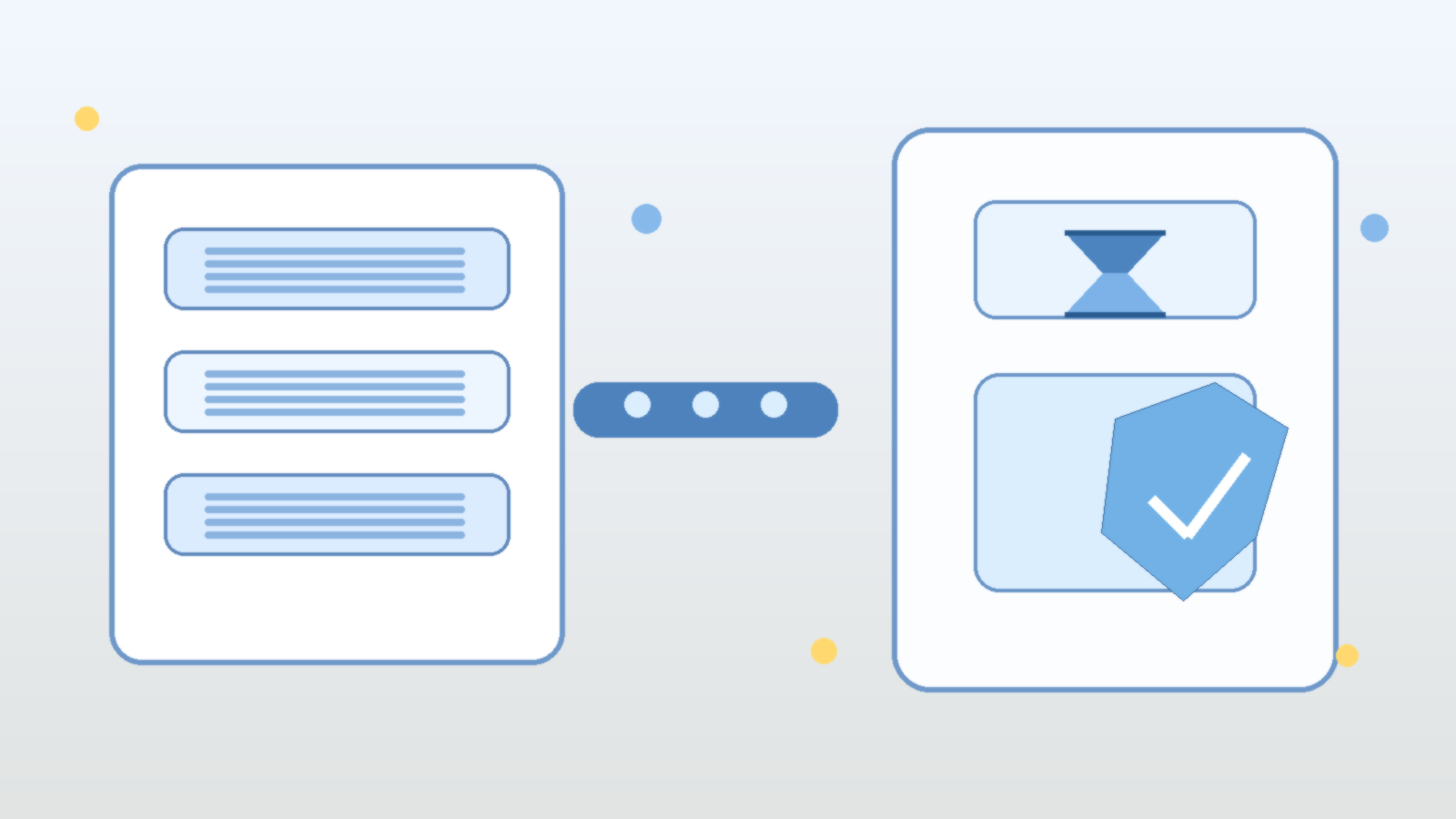
    Abstract illustration of layered AI log records flowing into a governance panel with a shield and hourglass

    Teams love AI logs right up until they realize how much sensitive context those logs can accumulate. Prompt histories, tool traces, retrieval snippets, user feedback, and model outputs are incredibly useful when you are debugging quality or proving that a workflow actually worked. They are also exactly the kind of data exhaust that expands quietly until nobody can explain what is stored, how long it stays around, or who should still have access to it.

    That is why AI logging needs a retention policy early, not after the first uncomfortable incident review. If your copilot or agent stack is handling internal documents, support conversations, system prompts, identity context, or privileged tool output, your logs are no longer harmless telemetry. They are operational records with security, privacy, and governance consequences.

    AI Logs Age Into Risk Faster Than Teams Expect

    In a typical application, logs are often short, structured, and relatively repetitive. In an AI system, logs can be much richer. They may include chunks of retrieved knowledge, free-form user questions, generated recommendations, exception traces, and even copies of third-party responses. That richness is what makes them helpful for troubleshooting, but it also means they can collect far more business context than traditional observability data.

    The risk is not only that one sensitive item shows up in a trace. It is that weeks or months of traces can slowly create a shadow knowledge base full of internal decisions, credentials accidentally pasted into prompts, customer details, or policy language that should not sit in a debugging system forever. The longer that material lingers without clear rules, the more likely it is to be rediscovered in the wrong context.

    Retention Rules Force Teams to Separate Useful From Reckless

    A retention policy forces a mature question: what do we genuinely need to keep? Some logs support short-term debugging and can expire quickly. Some belong in longer-lived audit records because they show approvals, policy decisions, or tool actions that must be reviewable later. Some data should never be retained in raw form at all and should be redacted, summarized, or dropped before storage.

    Without that separation, the default outcome is usually infinite accumulation. Storage is cheap enough that nobody feels pain immediately, and the system appears more useful because everything is searchable. Then a compliance request, security review, or incident investigation forces the team to admit it has been keeping far more than it can justify.

    Different AI Data Streams Deserve Different Lifetimes

    One of the biggest mistakes in AI governance is treating all generated telemetry the same way. User prompts, retrieval context, execution traces, moderation events, and model evaluations serve different purposes. They should not all inherit one blanket retention period just because they land in the same platform.

    A practical policy usually starts by classifying data streams according to sensitivity and operational value. Prompt and response content might need aggressive expiration or masking. Tool execution events may need longer retention because they show what the system actually did. Aggregated metrics can often live much longer because they preserve performance trends without preserving raw content.

    • Keep short-lived debugging traces only as long as they are actively useful for engineering work.
    • Retain approval, audit, or policy enforcement events long enough to support reviews and investigations.
    • Mask or exclude secrets, tokens, and highly sensitive fields before they reach log storage.
    • Prefer summaries and metrics when raw conversational content is not necessary.

    Redaction Is Not a Substitute for Retention

    Redaction helps, but it does not remove the need for expiration. Even well-scrubbed logs still reveal patterns about user behavior, internal operations, and system structure. They can also retain content that was not recognized as sensitive at ingestion time. Assuming that redaction alone solves the problem is a comfortable shortcut, not a governance strategy.

    The safer posture is to combine both controls. Redact aggressively where you can, restrict access tightly, and then delete data on a schedule that reflects why it was collected in the first place. That approach keeps the team honest about purpose instead of letting “maybe useful later” become a permanent excuse.

    Retention Policy Design Changes Product Behavior

    Good retention rules do more than satisfy auditors. They influence product design upstream. Once teams know certain classes of raw prompt content will expire quickly, they become more deliberate about what they persist, what they hash, and what they aggregate. They also start building review workflows that do not depend on indefinite access to every historical interaction.

    That is healthy pressure. It pushes the platform toward deliberate observability instead of indiscriminate hoarding. It also makes it easier to explain the system to customers and internal stakeholders, because the answer to “what happens to my data?” becomes concrete instead of awkwardly vague.

    Start With a Policy That Engineers Can Actually Operate

    The best retention policy is not the most elaborate one. It is the one your platform can enforce consistently. Define categories of AI telemetry, assign owners, specify retention windows, and document which controls apply to raw content versus summaries or metrics. If you cannot automate expiration yet, at least document the gap clearly instead of pretending the data is under control.

    AI systems create powerful new records of how people ask questions, how tools act, and how decisions are made. That makes logging valuable, but it also makes indefinite logging a bad default. Before your copilot becomes a liability, decide what deserves to stay, what needs to fade quickly, and what should never be stored in the first place.

  • Why Every RAG Project Needs a Content Freshness Policy Before Users Trust the Answers

    Why Every RAG Project Needs a Content Freshness Policy Before Users Trust the Answers

    Retrieval-augmented generation, usually shortened to RAG, often gets pitched as the practical fix for stale model knowledge. Instead of relying only on a model’s training data, a RAG system pulls in documents from your own environment and uses them as context for an answer. That sounds reassuring, but it creates a new problem that many teams underestimate: the system is only as trustworthy as the freshness of the content it retrieves.

    If outdated policies, old product notes, retired architecture diagrams, or superseded runbooks stay in the retrievable set for too long, the model will happily cite and summarize them. To an end user, the answer still looks polished and current. Under the hood, however, the system may be grounding itself in documents that no longer reflect reality.

    Fresh Retrieval Is Not the Same Thing as Accurate Retrieval

    Many RAG conversations focus on ranking quality, chunking strategy, vector similarity, and prompt templates. Those matter, but they do not solve the governance problem. A retriever can be technically excellent and still return the wrong material if the index contains stale, duplicated, or no-longer-approved content.

    This is why freshness needs to be treated as a first-class quality signal. When users ask about pricing, internal procedures, product capabilities, or security controls, they are usually asking for the current truth, not the most semantically similar historical answer.

    Stale Context Creates Quiet Failure Modes

    The dangerous part of stale context is that it does not usually fail in dramatic ways. A RAG system rarely announces that its source document was archived nine months ago or that a newer policy replaced the one it found. Instead, it produces an answer that sounds measured, complete, and useful.

    That kind of failure is hard to catch because it blends into normal success. A support assistant may quote an obsolete escalation path. A security copilot may recommend an access pattern that the organization already banned. An internal knowledge bot may pull from a migration guide that applied before the platform team changed standards. The result is not just inaccuracy. It is misplaced trust.

    Every Corpus Needs Lifecycle Rules

    A content freshness policy gives the retrieval layer a lifecycle instead of a pileup. Teams should define which sources are authoritative, how often they are re-indexed, when documents expire, and what happens when a source is replaced or retired. Without those rules, the corpus tends to grow forever, and old material keeps competing with the documents people actually want the assistant to use.

    The policy does not have to be complicated, but it does need to be explicit. A useful starting point is to classify sources by operational sensitivity and change frequency. Security standards, HR policies, pricing pages, API references, incident runbooks, and architecture decisions all age differently. Treating them as if they share the same refresh cycle is a shortcut to drift.

    • Define source owners for each indexed content domain.
    • Set expected refresh windows based on how quickly the source changes.
    • Mark superseded or archived documents so they drop out of normal retrieval.
    • Record version metadata that can be shown to users or reviewers.

    Metadata Should Help the Model, Not Just the Admin

    Freshness policies work better when metadata is usable at inference time, not just during indexing. If the retrieval layer knows a document’s publication date, review date, owner, status, and superseded-by relationship, it can make better ranking decisions before the model ever starts writing.

    That same metadata can also support safer answer generation. For example, a system can prefer reviewed documents, down-rank stale ones, or warn the user when the strongest matching source is older than the expected freshness window. Those controls turn freshness from an internal maintenance task into a visible trust feature.

    Trust Improves When the System Admits Its Boundaries

    One of the smartest things a RAG product can do is refuse false confidence. If the newest authoritative document is too old, missing, or contradictory, the assistant should say so clearly. That may feel less impressive than producing a seamless answer, but it is much better for long-term credibility.

    In practice, this means designing for uncertainty. A mature implementation might respond with the best available answer while also exposing source dates, linking to the underlying documents, or noting that the most relevant policy has not been reviewed recently. Users do not need perfection. They need enough signal to judge whether the answer is current enough to act on.

    Freshness Is a Product Decision, Not Just an Indexing Job

    It is tempting to assign content freshness to the search pipeline and call it done. In reality, this is a cross-functional decision involving platform owners, content teams, security reviewers, and product leads. The retrieval layer reflects the organization’s habits. If content ownership is vague and document retirement is inconsistent, the RAG experience will eventually inherit that chaos.

    The strongest teams treat freshness like part of product quality. They decide what “current enough” means for each use case, measure it, and design visible safeguards around it. That is how a RAG assistant stops being a demo and starts becoming something people can rely on.

    Final Takeaway

    RAG does not remove the need for knowledge management. It raises the cost of doing it badly. If your system retrieves content that is old, superseded, or ownerless, the model can turn that drift into confident-looking answers at scale.

    A content freshness policy is what keeps retrieval grounded in the present instead of the archive. Before users trust your answers, make sure your corpus has rules for staying current.

  • Why Every AI Pilot Needs a Data Retention Policy Before Launch

    Why Every AI Pilot Needs a Data Retention Policy Before Launch

    Most AI pilot projects begin with excitement and speed. A team wants to test a chatbot, summarize support tickets, draft internal content, or search across documents faster than before. The technical work starts quickly because modern tools make it easy to stand something up in days instead of months.

    What usually lags behind is a decision about retention. People ask whether the model is accurate, how much the service costs, and whether the pilot should connect to internal data. Far fewer teams stop to ask a simple operational question: how long should prompts, uploaded files, generated outputs, and usage logs actually live?

    That gap matters because retention is not just a legal concern. It shapes privacy exposure, security review, troubleshooting, incident response, and user trust. If a pilot stores more than the team expects, or keeps it longer than anyone intended, the project can quietly drift from a safe experiment into a governance problem.

    AI Pilots Accumulate More Data Than Teams Expect

    An AI pilot rarely consists of only a prompt and a response. In practice, there are uploaded files, retrieval indexes, conversation history, feedback labels, exception traces, browser logs, and often a copy of generated output pasted somewhere else for later use. Even when each piece looks harmless on its own, the combined footprint becomes much richer than the team planned for.

    This is why a retention policy should exist before launch, not after the first success story. Once people start using a helpful pilot, the data trail expands fast. It becomes harder to untangle what is essential for product improvement versus what is simply leftover operational residue that nobody remembered to clean up.

    Prompts and Outputs Deserve Different Rules

    Many teams treat all AI data as one category, but that is usually too blunt. Raw prompts may contain sensitive context, copied emails, internal notes, or customer fragments. Generated outputs may be safer to retain in some cases, especially when they become part of an approved business workflow. System logs may need a shorter window, while audit events may need a longer one.

    Separating these categories makes the policy more practical. Instead of saying “keep AI data for 90 days,” a stronger rule might say that prompt bodies expire quickly, approved outputs inherit the retention of the destination system, and security-relevant audit records follow the organization’s existing control standards.

    Retention Decisions Shape Security Exposure

    Every extra day of stored AI interaction data extends the window in which that information can be misused, leaked, or pulled into discovery work nobody anticipated. A pilot that feels harmless in week one may become more sensitive after users realize it can answer real work questions and begin pasting in richer material.

    Retention is therefore a security control, not just housekeeping. Shorter storage windows reduce blast radius. Clear deletion behavior reduces ambiguity during incident response. Defined storage locations make it easier to answer basic questions like who can read the data, what gets backed up, and whether the team can actually honor a delete request.

    Vendors and Internal Systems Create Split Responsibility

    AI pilots often span a vendor platform plus one or more internal systems. A team might use a hosted model, store logs in a cloud workspace, send analytics into another service, and archive approved outputs in a document repository. If retention is only defined in one layer, the overall policy is incomplete.

    That is where teams get surprised. They disable one history feature and assume the data is gone, while another copy still exists in telemetry, exports, or downstream collaboration tools. A launch-ready retention policy should name each storage point clearly enough that operations and security teams can verify the behavior instead of guessing.

    A Good Pilot Policy Should Be Boring and Specific

    The best retention policies are not dramatic. They are clear, narrow, and easy to execute. They define what data is stored, where it lives, how long it stays, who can access it, and what event triggers deletion or review. They also explain what the pilot should not accept, such as regulated records, source secrets, or customer data that has no business purpose in the test.

    Specificity beats slogans here. “We take privacy seriously” does not help an engineer decide whether prompt logs should expire after seven days or ninety. A simple table in an internal design note, backed by actual configuration, is far more valuable than broad policy language nobody can operationalize.

    Final Takeaway

    An AI pilot is not low risk just because it is temporary. Temporary projects often have the weakest controls because everyone assumes they will be cleaned up later. If the pilot is useful, later usually never arrives on its own.

    That is why retention belongs in the launch checklist. Decide what will be stored, separate prompts from outputs, map vendor and internal copies, and set deletion rules early. Teams that do this before users pile in tend to move faster with fewer surprises once the pilot starts succeeding.