Tag: AI Gateway

  • Why More Companies Need an Internal AI Gateway Before AI Spend Gets Out of Control

    Why More Companies Need an Internal AI Gateway Before AI Spend Gets Out of Control

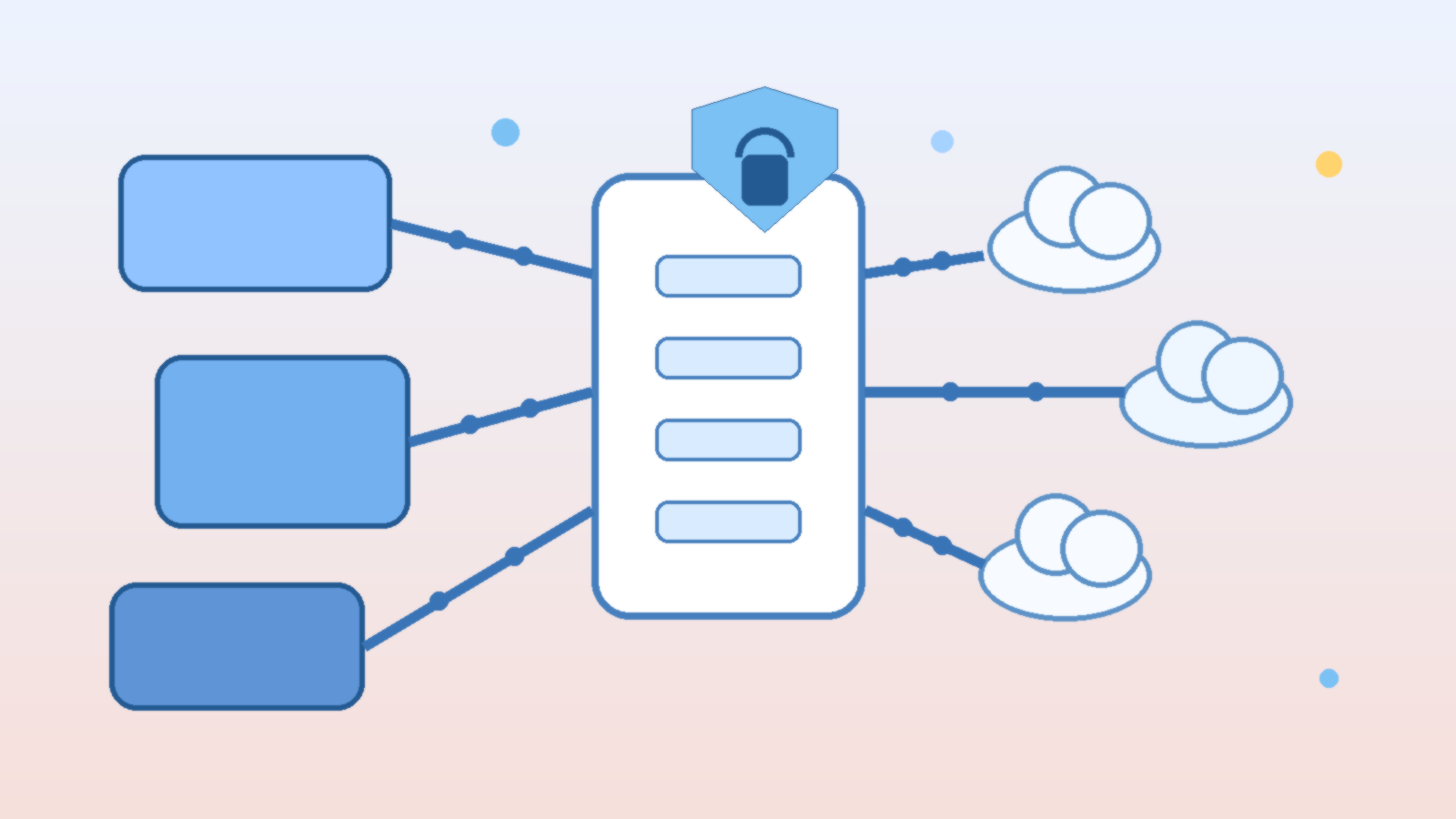
    Most companies do not have a model problem. They have a control problem. Teams adopt one model for chat, another for coding, a third for retrieval, and a fourth for document workflows, then discover that costs, logs, prompts, and policy enforcement are scattered everywhere. The result is avoidable sprawl. An internal AI gateway gives the business one place to route requests, apply policy, measure usage, and swap providers without forcing every product team to rebuild the same plumbing.

    The term sounds architectural, but the idea is practical. Instead of letting every application call every model provider directly, you place a controlled service in the middle. That service handles authentication, routing, logging, fallback logic, guardrails, and budget controls. Product teams still move quickly, but they do it through a path the platform, security, and finance teams can actually understand.

    Why direct-to-model integration breaks down at scale

    Direct integrations feel fast in the first sprint. A developer can wire up a provider SDK, add a secret, and ship a useful feature. The trouble appears later. Different teams choose different providers, naming conventions, retry patterns, and logging formats. One app stores prompts for debugging, another stores nothing, and a third accidentally logs sensitive inputs where it should not. Costs rise faster than expected because there is no shared view of which workflows deserve premium models and which ones could use smaller, cheaper options.

    That fragmentation also makes governance reactive. Security teams end up auditing a growing collection of one-off integrations. Platform teams struggle to add caching, rate limits, or fallback behavior consistently. Leadership hears about AI productivity gains, but cannot answer simple operating questions such as which providers are in use, what business units spend the most, or which prompts touch regulated data.

    What an internal AI gateway should actually do

    A useful gateway is more than a reverse proxy with an API key. It becomes the shared control plane for model access. At minimum, it should normalize authentication, capture structured request and response metadata, enforce policy, and expose routing decisions in a way operators can inspect later. If the gateway cannot explain why a request went to a specific model, it is not mature enough for serious production use.

    • Model routing: choose providers and model tiers based on task type, latency targets, geography, or budget policy.
    • Observability: log token usage, latency, failure rates, prompt classifications, and business attribution tags.
    • Guardrails: apply content filters, redaction, schema validation, and approval rules before high-risk actions proceed.
    • Resilience: provide retries, fallbacks, and graceful degradation when a provider slows down or fails.
    • Cost control: enforce quotas, budget thresholds, caching, and model downgrades where quality impact is acceptable.

    Those capabilities matter because AI traffic is rarely uniform. A customer-facing assistant, an internal coding helper, and a nightly document classifier do not need the same models or the same policies. The gateway gives you a single place to encode those differences instead of scattering them across application teams.

    Design routing around business intent, not model hype

    One of the biggest mistakes in enterprise AI programs is buying into a single-model strategy for every workload. The best model for complex reasoning may not be the right choice for summarization, extraction, classification, or high-volume support automation. An internal gateway lets you route based on intent. You can send low-risk, repetitive work to efficient models while reserving premium reasoning models for tasks where the extra cost clearly changes the outcome.

    That routing layer also protects you from provider churn. Model quality changes, pricing changes, API limits change, and new options appear constantly. If every application is tightly coupled to one vendor, changing course becomes a portfolio-wide migration. If applications talk to your gateway instead, the platform team can adjust routing centrally and keep the product surface stable.

    Make observability useful to engineers and leadership

    Observability is often framed as an operations feature, but it is really the bridge between technical execution and business accountability. Engineers need traces, error classes, latency distributions, and prompt version histories. Leaders need to know which products generate value, which workflows burn budget, and where quality problems originate. A good gateway serves both audiences from the same telemetry foundation.

    That means adding context, not just raw token counts. Every request should carry metadata such as application name, feature name, environment, owner, and sensitivity tier. With that data, cost spikes stop being mysterious. You can identify whether a sudden increase came from a product launch, a retry storm, a prompt regression, or a misuse case that should have been throttled earlier.

    Treat policy enforcement as product design

    Policy controls fail when they arrive as a late compliance add-on. The best AI gateways build governance into the request lifecycle. Sensitive inputs can be redacted before they leave the company boundary. High-risk actions can require a human approval step. Certain workloads can be pinned to approved regions or approved model families. Output schemas can be validated before downstream systems act on them.

    This is where platform teams can reduce friction instead of adding it. If safe defaults, standard audit logs, and approval hooks are already built into the gateway, product teams do not have to reinvent them. Governance becomes the paved road, not the emergency brake.

    Control cost before finance asks hard questions

    AI costs usually become visible after adoption succeeds, which is exactly the wrong time to discover that no one can manage them. A gateway helps because it can enforce quotas by team, shift routine workloads to cheaper models, cache repeated requests, and alert owners when usage patterns drift. It also creates the data needed for showback or chargeback, which matters once multiple departments rely on shared AI infrastructure.

    Cost control should not mean blindly downgrading model quality. The better approach is to map workloads to value. If a premium model reduces human review time in a revenue-generating workflow, that may be a good trade. If the same model is summarizing internal status notes that no one reads, it probably is not. The gateway gives you the levers to make those tradeoffs deliberately.

    Start small, but build the control plane on purpose

    You do not need a massive platform program to get started. Many teams begin with a small internal service that standardizes model credentials, request metadata, and logging for one or two important workloads. From there, they add policy checks, routing logic, and dashboards as adoption grows. The key is to design for central control early, even if the first version is intentionally lightweight.

    AI adoption is speeding up, and model ecosystems will keep shifting underneath it. Companies that rely on direct, unmanaged integrations will spend more time untangling operational messes than delivering value. Companies that build an internal AI gateway create leverage. They gain model flexibility, clearer governance, better resilience, and a saner cost story, all without forcing every team to solve the same infrastructure problem alone.
  • Why AI Gateway Policy Matters More Than Model Choice Once Multiple Teams Share the Same Platform

    Why AI Gateway Policy Matters More Than Model Choice Once Multiple Teams Share the Same Platform

    Enterprise AI teams love to debate model quality, benchmark scores, and which vendor roadmap looks strongest this quarter. Those conversations matter, but they are rarely the first thing that causes trouble once several internal teams begin sharing the same AI platform. In practice, the cracks usually appear at the policy layer. A team gets access to an endpoint it should not have, another team sends more data than expected, a prototype starts calling an expensive model without guardrails, and nobody can explain who approved the path in the first place.

    That is why AI gateways deserve more attention than they usually get. The gateway is not just a routing convenience between applications and models. It is the enforcement point where an organization decides what is allowed, what is logged, what is blocked, and what gets treated differently depending on risk. When multiple teams share models, tools, and data paths, strong gateway policy often matters more than shaving a few points off a benchmark comparison.

    Model Choice Is Visible, Policy Failure Is Expensive

    Model decisions are easy to discuss because they are visible. People can compare price, latency, context windows, and output quality. Gateway policy is less glamorous. It lives in rules, headers, route definitions, authentication settings, rate limits, and approval logic. Yet that is where production risk actually gets shaped. A mediocre policy design can turn an otherwise solid model rollout into a governance mess.

    For example, one internal team may need access to a premium reasoning model for a narrow workflow, while another should only use a cheaper general-purpose model for low-risk tasks. If both can hit the same backend without strong gateway control, the platform loses cost discipline and technical separation immediately. The model may be excellent, but the operating model is already weak.

    A Gateway Creates a Real Control Plane for Shared AI

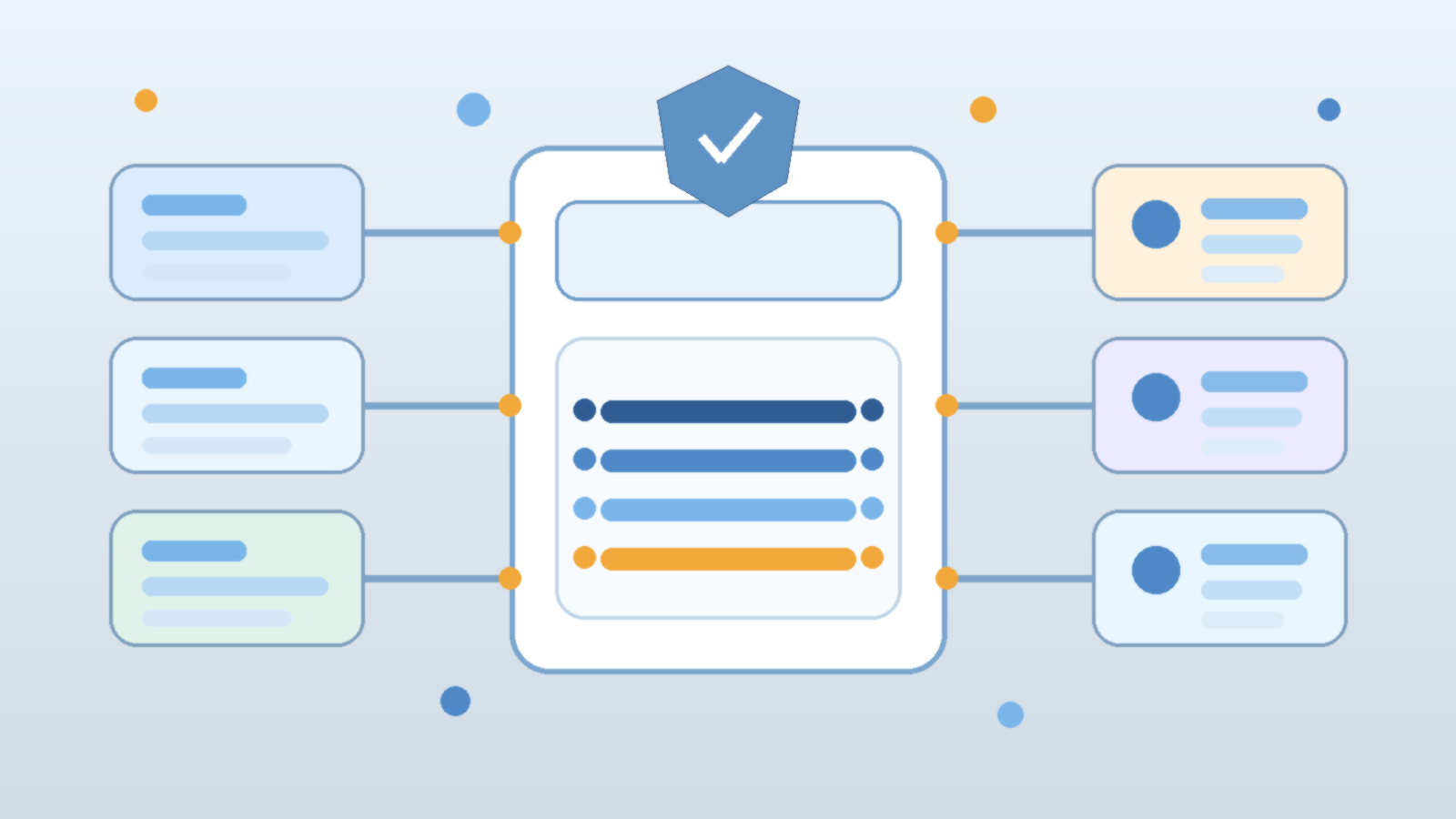
    Organizations usually mature once they realize they are not managing one chatbot. They are managing a growing set of internal applications, agents, copilots, evaluation jobs, and automation flows that all want model access. At that point, direct point-to-point access becomes difficult to defend. An AI gateway creates a proper control plane where policies can be applied consistently across workloads instead of being reimplemented poorly inside each app.

    This is where platform teams gain leverage. They can define which models are approved for which environments, which identities can reach which routes, which prompts or payload patterns should trigger inspection, and how quotas are carved up. That is far more valuable than simply exposing a common endpoint. A shared endpoint without differentiated policy is only centralized chaos.

    Route by Risk, Not Just by Vendor

    Many gateway implementations start with vendor routing. Requests for one model family go here, requests for another family go there. That is a reasonable start, but it is not enough. Mature gateways route by risk profile as well. A low-risk internal knowledge assistant should not be handled the same way as a workflow that can trigger downstream actions, access sensitive enterprise data, or generate content that enters customer-facing channels.

    Risk-based routing makes policy practical. It allows the platform to require stronger controls for higher-impact workloads: stricter authentication, tighter rate limits, additional inspection, approval gates for tool invocation, or more detailed audit logging. It also keeps lower-risk workloads from being slowed down by controls they do not need. One-size-fits-all policy usually ends in two bad outcomes at once: weak protection where it matters and frustrating friction where it does not.

    Separate Identity, Cost, and Content Controls

    A useful mental model is to treat AI gateway policy as three related layers. The first layer is identity and entitlement: who or what is allowed to call a route. The second is cost and performance governance: how often it can call, which models it can use, and what budget or quota applies. The third is content and behavior governance: what kind of input or output requires blocking, filtering, review, or extra monitoring.

    These layers should be designed separately even if they are enforced together. Teams get into trouble when they solve one layer and assume the rest is handled. Strong authentication without cost policy can still produce runaway spend. Tight quotas without content controls can still create data handling problems. Output filtering without identity separation can still let the wrong application reach the wrong backend. The point of the gateway is not to host one magic control. It is to become the place where multiple controls meet in a coherent way.

    Logging Needs to Explain Decisions, Not Just Traffic

    One underappreciated benefit of good gateway policy is auditability. It is not enough to know that a request happened. In shared AI environments, operators also need to understand why a request was allowed, denied, throttled, or routed differently. If an executive asks why a business unit hit a slower model during a launch week, the answer should be visible in policy and logs, not reconstructed from guesses and private chat threads.

    That means logs should capture policy decisions in human-usable terms. Which route matched? Which identity or application policy applied? Was a safety filter engaged? Was the request downgraded, retried, or blocked? Decision-aware logging is what turns an AI gateway from plumbing into operational governance.

    Do Not Let Every Application Bring Its Own Gateway Logic

    Without a strong shared gateway, development teams naturally recreate policy in application code. That feels fast at first. It is also how organizations end up with five different throttling strategies, three prompt filtering implementations, inconsistent authentication, and no clean way to update policy when the risk picture changes. App-level logic still has a place, but it should sit behind platform-level rules, not replace them.

    The practical standard is simple: application teams should own business behavior, while the platform owns cross-cutting enforcement. If every team can bypass that pattern, the platform has no real policy surface. It only has suggestions.

    Gateway Policy Should Change Faster Than Infrastructure

    Another reason the policy layer matters so much is operational speed. Model options, regulatory expectations, and internal risk appetite all change faster than core infrastructure. A gateway gives teams a place to adapt controls without redesigning every application. New model restrictions, revised egress rules, stricter prompt handling, or tighter quotas can be rolled out at the gateway far faster than waiting for every product team to refactor.

    That flexibility becomes critical during incidents and during growth. When a model starts behaving unpredictably, when a connector raises data exposure concerns, or when costs spike, the fastest safe response usually happens at the gateway. A platform without that layer is forced into slower, messier mitigation.

    Final Takeaway

    Once multiple teams share an AI platform, model choice is only part of the story. The gateway policy layer determines who can access models, which routes are appropriate for which workloads, how costs are constrained, how risk is separated, and whether operators can explain what happened afterward. That makes gateway policy more than an implementation detail. It becomes the operating discipline that keeps shared AI from turning into shared confusion.

    If an organization wants enterprise AI to scale cleanly, it should stop treating the gateway as a simple pass-through and start treating it as a real policy control plane. The model still matters. The policy layer is what makes the model usable at scale.

  • How to Build an AI Gateway Layer Without Locking Every Workflow to One Model Provider

    How to Build an AI Gateway Layer Without Locking Every Workflow to One Model Provider

    Teams often start with the fastest path: wire one application directly to one model provider, ship a feature, and promise to clean it up later. That works for a prototype, but it usually turns into a brittle operating model. Pricing changes, model behavior shifts, compliance requirements grow, and suddenly a simple integration becomes a dependency that is hard to unwind.

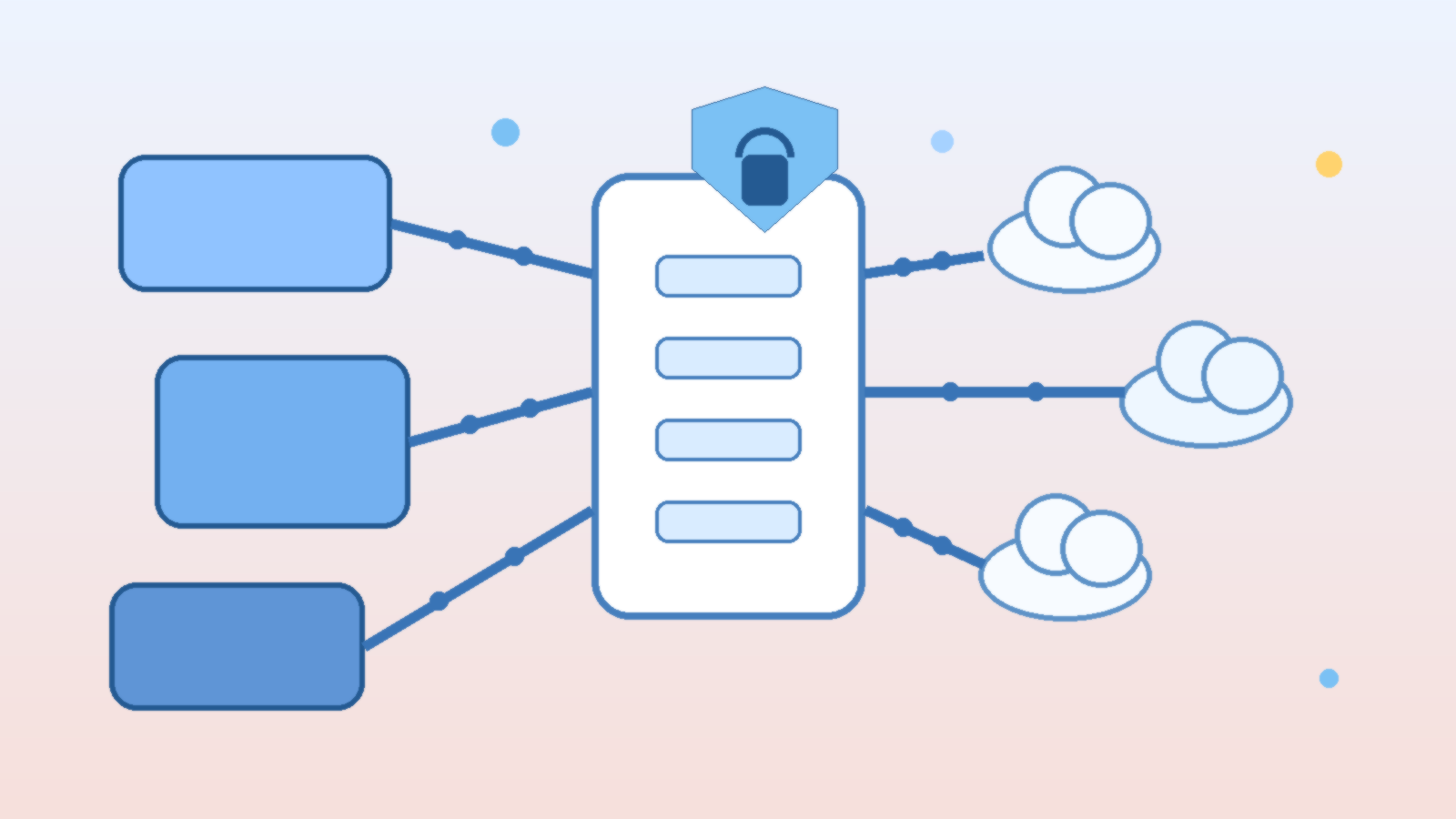
    An AI gateway layer gives teams a cleaner boundary. Instead of every app talking to every provider in its own custom way, the gateway becomes the control point for routing, policy, observability, and fallback behavior. The mistake is treating that layer like a glorified pass-through. If it only forwards requests, it adds latency without adding much value. If it becomes a disciplined platform boundary, it can make the rest of the stack easier to change.

    Start With the Contract, Not the Vendor List

    The first job of an AI gateway is to define a stable contract for internal consumers. Applications should know how to ask for a task, pass context, declare expected response shape, and receive traceable results. They should not need to know whether the answer came from Azure OpenAI, another hosted model, or a future internal service.

    That contract should include more than the prompt payload. It should define timeout behavior, retry policy, error categories, token accounting, and any structured output expectations. Once those rules are explicit, swapping providers becomes a controlled engineering exercise instead of a scavenger hunt through half a dozen apps.

    Centralize Policy Where It Can Actually Be Enforced

    Many organizations talk about AI policy, but enforcement still lives inside application code written by different teams at different times. That usually means inconsistent logging, uneven redaction, and a lot of trust in good intentions. A gateway is the natural place to standardize the controls that should not vary from one workflow to another.

    For example, the gateway can apply request classification, strip fields that should never leave the environment, attach tenant or project metadata, and block model access that is outside an approved policy set. That approach does not eliminate application responsibility, but it does remove a lot of duplicated security plumbing from the edges.

    Make Routing a Product Decision, Not a Secret Rule Set

    Provider routing tends to get messy when it evolves through one-off exceptions. One team wants the cheapest model for summarization, another wants the most accurate model for extraction, and a third wants a regional endpoint for data handling requirements. Those are all valid needs, but they should be expressed as routing policy that operators can understand, review, and change deliberately.

    A good gateway supports explicit routing criteria such as task type, latency target, sensitivity class, geography, or approved model tier. That makes the system easier to govern and much easier to explain during incident review. If nobody can tell why a request went to a given provider, the platform is already too opaque.

    Observability Has To Include Cost and Behavior

    Normal API monitoring is not enough for AI traffic. Teams need to see token usage, response quality drift, fallback rates, blocked requests, and structured failure modes. Otherwise the gateway becomes a black box that hides the real health of the platform behind a simple success code.

    Cost visibility matters just as much. An AI gateway should make it easy to answer practical questions: which workflows are consuming the most tokens, which teams are driving retries, and which provider choices are no longer justified by the value they deliver. Without those signals, multi-provider flexibility can quietly become multi-provider waste.

    Design for Graceful Degradation Before You Need It

    Provider independence sounds strategic until the first outage, quota cap, or model regression lands in production. That is when the gateway either proves its worth or exposes its shortcuts. If every internal workflow assumes one model family and one response pattern, failover will be more theoretical than real.

    Graceful degradation means identifying which tasks can fail over cleanly, which can use a cheaper backup path, and which should stop rather than produce unreliable output. The gateway should carry those rules in configuration and runbooks, not in tribal memory. That way operators can respond quickly without improvising under pressure.

    Keep the Gateway Thin Enough to Evolve

    There is a real danger on the other side: a gateway that becomes so ambitious it turns into a monolith. If the platform owns every prompt template, every orchestration step, every evaluation flow, and every application-specific quirk, teams will just recreate tight coupling at a different layer.

    The healthier model is a thin but opinionated platform. Let the gateway own shared concerns like contracts, policy, routing, auditability, and telemetry. Let product teams keep application logic and domain-specific behavior close to the product. That split gives the organization leverage without turning the platform into a bottleneck.

    Final Takeaway

    An AI gateway is not valuable because it makes diagrams look tidy. It is valuable because it gives teams a stable internal contract while the external model market keeps changing. When designed well, it reduces lock-in, improves governance, and makes operations calmer. When designed poorly, it becomes one more opaque hop in an already complicated stack.

    The practical goal is simple: keep application teams moving without letting every workflow hard-code today’s provider assumptions into tomorrow’s architecture. That is the difference between an integration shortcut and a real platform capability.

  • How to Build an AI Gateway Layer Without Locking Every Workflow to One Model Provider

    How to Build an AI Gateway Layer Without Locking Every Workflow to One Model Provider

    Teams often start with the fastest path: wire one application directly to one model provider, ship a feature, and promise to clean it up later. That works for a prototype, but it usually turns into a brittle operating model. Pricing changes, model behavior shifts, compliance requirements grow, and suddenly a simple integration becomes a dependency that is hard to unwind.

    An AI gateway layer gives teams a cleaner boundary. Instead of every app talking to every provider in its own custom way, the gateway becomes the control point for routing, policy, observability, and fallback behavior. The mistake is treating that layer like a glorified pass-through. If it only forwards requests, it adds latency without adding much value. If it becomes a disciplined platform boundary, it can make the rest of the stack easier to change.

    Start With the Contract, Not the Vendor List

    The first job of an AI gateway is to define a stable contract for internal consumers. Applications should know how to ask for a task, pass context, declare expected response shape, and receive traceable results. They should not need to know whether the answer came from Azure OpenAI, another hosted model, or a future internal service.

    That contract should include more than the prompt payload. It should define timeout behavior, retry policy, error categories, token accounting, and any structured output expectations. Once those rules are explicit, swapping providers becomes a controlled engineering exercise instead of a scavenger hunt through half a dozen apps.

    Centralize Policy Where It Can Actually Be Enforced

    Many organizations talk about AI policy, but enforcement still lives inside application code written by different teams at different times. That usually means inconsistent logging, uneven redaction, and a lot of trust in good intentions. A gateway is the natural place to standardize the controls that should not vary from one workflow to another.

    For example, the gateway can apply request classification, strip fields that should never leave the environment, attach tenant or project metadata, and block model access that is outside an approved policy set. That approach does not eliminate application responsibility, but it does remove a lot of duplicated security plumbing from the edges.

    Make Routing a Product Decision, Not a Secret Rule Set

    Provider routing tends to get messy when it evolves through one-off exceptions. One team wants the cheapest model for summarization, another wants the most accurate model for extraction, and a third wants a regional endpoint for data handling requirements. Those are all valid needs, but they should be expressed as routing policy that operators can understand, review, and change deliberately.

    A good gateway supports explicit routing criteria such as task type, latency target, sensitivity class, geography, or approved model tier. That makes the system easier to govern and much easier to explain during incident review. If nobody can tell why a request went to a given provider, the platform is already too opaque.

    Observability Has To Include Cost and Behavior

    Normal API monitoring is not enough for AI traffic. Teams need to see token usage, response quality drift, fallback rates, blocked requests, and structured failure modes. Otherwise the gateway becomes a black box that hides the real health of the platform behind a simple success code.

    Cost visibility matters just as much. An AI gateway should make it easy to answer practical questions: which workflows are consuming the most tokens, which teams are driving retries, and which provider choices are no longer justified by the value they deliver. Without those signals, multi-provider flexibility can quietly become multi-provider waste.

    Design for Graceful Degradation Before You Need It

    Provider independence sounds strategic until the first outage, quota cap, or model regression lands in production. That is when the gateway either proves its worth or exposes its shortcuts. If every internal workflow assumes one model family and one response pattern, failover will be more theoretical than real.

    Graceful degradation means identifying which tasks can fail over cleanly, which can use a cheaper backup path, and which should stop rather than produce unreliable output. The gateway should carry those rules in configuration and runbooks, not in tribal memory. That way operators can respond quickly without improvising under pressure.

    Keep the Gateway Thin Enough to Evolve

    There is a real danger on the other side: a gateway that becomes so ambitious it turns into a monolith. If the platform owns every prompt template, every orchestration step, every evaluation flow, and every application-specific quirk, teams will just recreate tight coupling at a different layer.

    The healthier model is a thin but opinionated platform. Let the gateway own shared concerns like contracts, policy, routing, auditability, and telemetry. Let product teams keep application logic and domain-specific behavior close to the product. That split gives the organization leverage without turning the platform into a bottleneck.

    Final Takeaway

    An AI gateway is not valuable because it makes diagrams look tidy. It is valuable because it gives teams a stable internal contract while the external model market keeps changing. When designed well, it reduces lock-in, improves governance, and makes operations calmer. When designed poorly, it becomes one more opaque hop in an already complicated stack.

    The practical goal is simple: keep application teams moving without letting every workflow hard-code today’s provider assumptions into tomorrow’s architecture. That is the difference between an integration shortcut and a real platform capability.