There’s a new word floating around developer circles: vibe coding. It refers to the practice of prompting an AI assistant with a vague description of what you want — and then letting it write the code, more or less end to end. You describe the vibe, the AI delivers the implementation. You ship it.
It sounds like science fiction. It isn’t. Tools like GitHub Copilot, Cursor, and several enterprise coding assistants have made vibe coding a real workflow for developers and non-developers alike. And in many cases, the code these tools produce is genuinely impressive — readable, functional, and often faster to produce than writing it by hand.
But speed and impressiveness are not the same as correctness or safety. As vibe coding moves from hobby projects into production systems, teams are learning a hard lesson: AI-generated code still needs human guardrails before it ships.
What Vibe Coding Actually Looks Like
Vibe coding is not a formal methodology. It is a description of a behavior pattern. A developer opens their AI assistant and types something like: “Build me a REST API endpoint that accepts a user ID and returns their order history, including item names, quantities, and totals.”
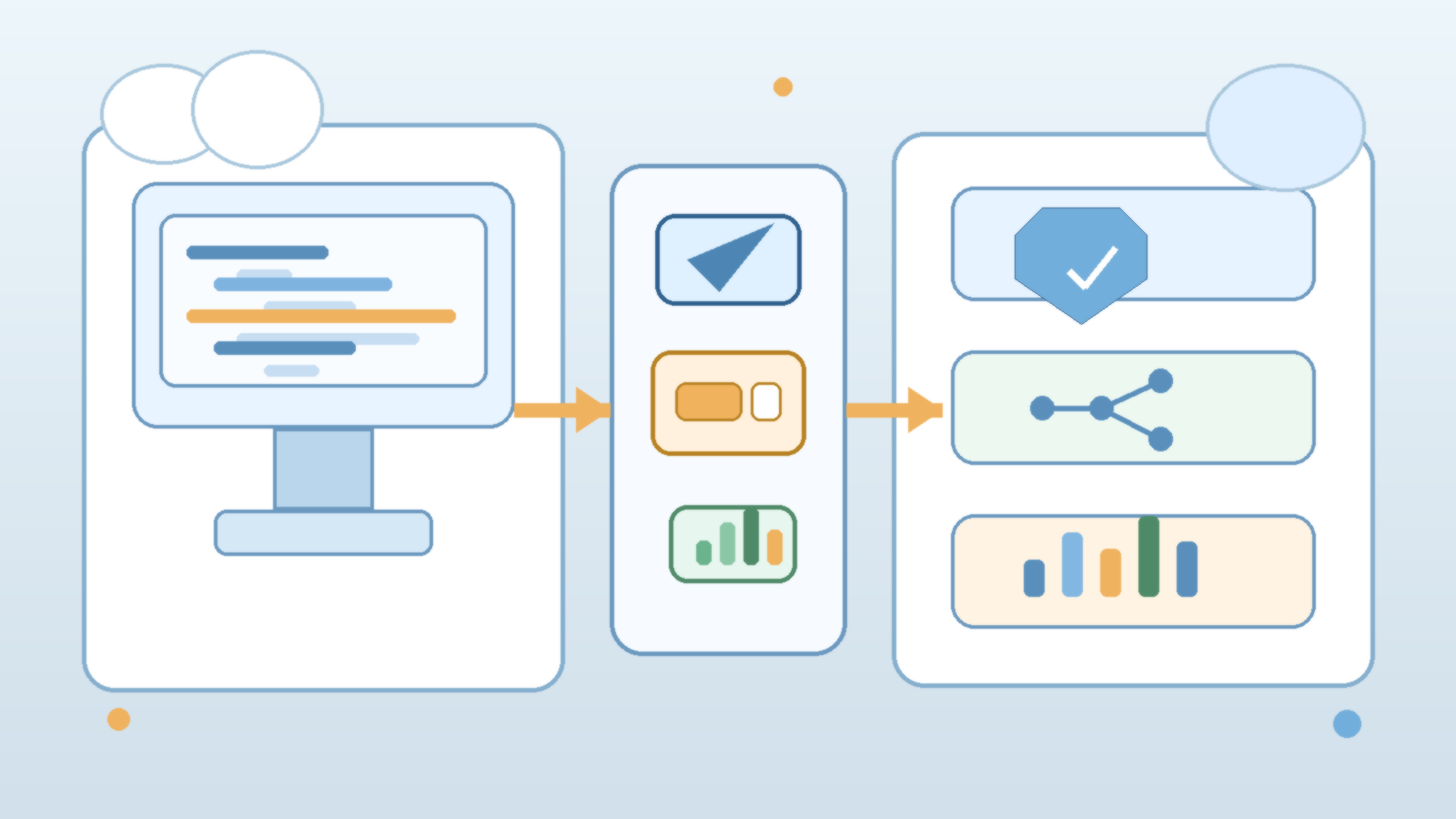
The AI writes the handler, the database query, the serialization logic, and maybe the error handling. The developer reviews it — sometimes carefully, sometimes briefly — and merges it. This loop repeats dozens of times a day.
When it works well, vibe coding is genuinely transformative. Boilerplate disappears. Developers spend more time on architecture and less on implementation details. Prototypes get built in hours. Teams ship faster.
When it goes wrong, the failure modes are subtle. The code looks right. It compiles. It passes basic tests. But it contains a SQL injection vector, leaks data across tenant boundaries, or silently swallows errors in ways that only surface in production under specific conditions.
Why AI Code Fails Quietly
AI coding assistants are trained on enormous volumes of existing code — most of which is correct, but some of which is not. More importantly, they optimize for plausible code, not provably correct code. That distinction matters enormously in production systems.
Security Vulnerabilities Hidden in Clean-Looking Code
AI assistants are good at writing code that looks like secure code. They will use parameterized queries, validate input fields, and include error messages. But they do not always know the full context of your application. A data access function that looks perfectly safe in isolation may expose data from other users if it is called in a multi-tenant context the AI was not aware of.
Similarly, AI tools frequently suggest authentication patterns that are syntactically correct but miss a critical authorization check — the difference between “is this user logged in?” and “is this user allowed to see this data?” That gap is where breaches happen.
Error Handling That Is Too Optimistic
AI-generated code often handles the happy path exceptionally well. The edge cases are where things get wobbly. A try-catch block that catches a generic exception and logs a message — without re-raising, retrying, or triggering an alert — can cause silent data loss or service degradation that takes hours to notice in production.
Experienced developers know to ask: what happens if this external call fails? What if the database is temporarily unavailable? What if the response is malformed? AI models do not always ask those questions unprompted.
Performance Issues That Only Emerge at Scale
Code that works fine with ten records can become unusable with ten thousand. AI tools regularly produce N+1 query patterns, missing index hints, or inefficient data transformations that are not visible in unit tests or small-scale testing environments. These patterns often look perfectly reasonable — just not at scale.
Dependency and Versioning Risks
AI models are trained on code from a point in time. They may suggest libraries, APIs, or patterns that have since been deprecated, replaced, or found to have security vulnerabilities. Without human review, your codebase can quietly accumulate dependencies that your security scanner will flag next quarter.
Building Guardrails That Actually Work
The answer is not to stop using AI coding tools. The productivity gains are real and teams that ignore them will fall behind. The answer is to build systematic guardrails that catch what AI tools miss.
Treat AI-Generated Code as an Unreviewed Draft
This sounds obvious, but many teams have quietly shifted to treating AI output as a first pass that “probably works.” Culturally, that is a dangerous position. AI-generated code should receive the same scrutiny as code written by a new hire you do not yet trust implicitly.
Reviews should explicitly check for authorization logic — not just authentication — data boundaries in multi-tenant systems, error handling coverage for failure paths, query efficiency under realistic data volumes, and dependency versions against known vulnerability databases.
Add AI-Specific Checkpoints to Your CI/CD Pipeline
Static analysis tools like SAST scanners, dependency vulnerability checks, and linters are more important than ever when AI is generating large volumes of code quickly. These tools catch the patterns that human reviewers might miss when reviewing dozens of AI-generated changes in a day.
Consider also adding integration tests that specifically target multi-tenant data isolation and permission boundaries. AI tools miss these regularly. Automated tests that verify them are cheap insurance.
Prompt Engineering Is a Security Practice
The quality and safety of AI-generated code is heavily influenced by the quality of the prompt. Vague prompts produce vague implementations. Teams that invest time in developing clear, security-conscious prompting conventions — shared across the engineering organization — consistently get better output from AI tools.
A good prompting convention for security-sensitive code might include: “Assume multi-tenant context. Include explicit authorization checks. Handle errors explicitly with appropriate logging. Avoid silent failures.” That context changes what the AI produces.
Set Context Boundaries for What AI Can Generate Autonomously
Not all code carries the same risk. Boilerplate configuration, test data setup, documentation, and utility functions are relatively low risk for vibe coding. Authentication flows, payment processing, data access layers, and anything touching PII are high risk and deserve mandatory senior review regardless of whether a human or AI wrote them.
Document this boundary explicitly and enforce it in your review process. Teams that treat all code the same — regardless of risk level — end up either bottlenecked on review or exposing themselves unnecessarily in high-risk areas.
The Organizational Side of the Problem
One of the subtler risks of vibe coding is the organizational pressure it creates. When AI can produce code faster than humans can review it, review becomes the bottleneck. And when review is the bottleneck, there is organizational pressure — sometimes explicit, often implicit — to review faster. Reviewing faster means reviewing less carefully. That is where things go wrong.
Engineering leaders need to actively resist this dynamic. The right framing is that AI tools have dramatically increased how much code your team writes, but they have not reduced how much care is required to ship safely. The review process is where judgment lives, and judgment does not compress.
Some teams address this by investing in better tooling — automated checks that take some burden off human reviewers. Others address it by triaging code into risk tiers, so reviewers can calibrate their attention appropriately. Both approaches work. The important thing is making the decision explicitly rather than letting velocity pressure erode review quality gradually and invisibly.
The Bigger Picture
Vibe coding is not a fad. AI-assisted development is going to continue improving, and the productivity benefits for engineering teams are real. The question is not whether to use these tools, but how to use them responsibly.
The teams that will get the most value from AI coding tools are the ones who treat them as powerful junior developers: capable, fast, and genuinely useful — but still requiring oversight, context, and judgment from experienced engineers before their work ships.
The guardrails are not bureaucracy. They are how you get the speed benefits of vibe coding without the liability that comes from shipping code you did not really understand.